The Foibe massacres were the mass killings and deportations of Italians living in the areas between Trieste and Dalmatia in Croatia by Tito’s Yugoslav Partisans during and immediately after WWII.
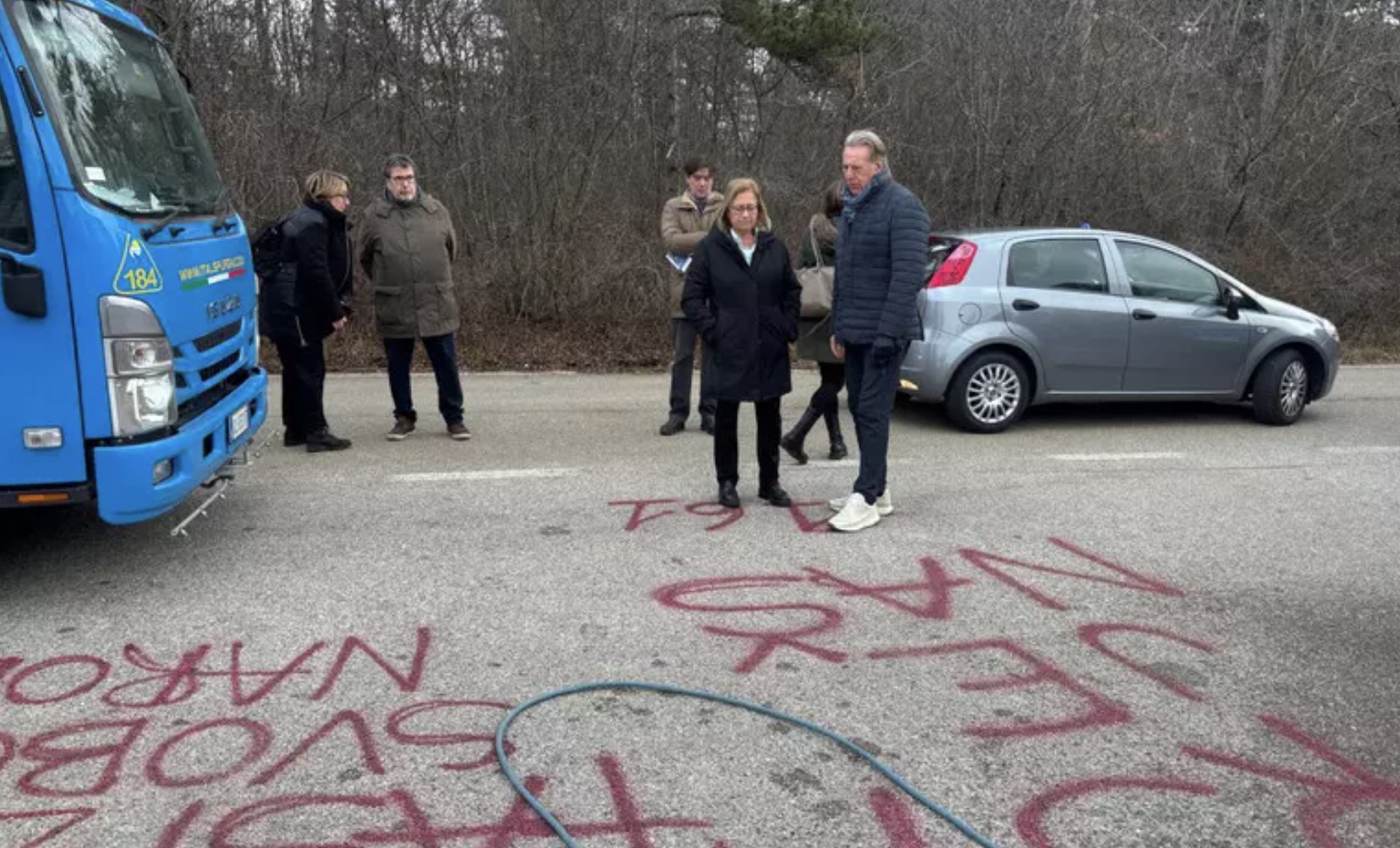
The area around the memorial of the Basovizza Foiba, near Trieste, has been defaced with graffiti two days before Italy’s Foibe Remembrance Day.
One message declared ‘Trst je nas’ (Trieste is ours) and was joined by two other statements in Slovenian.
“The Basovizza Foiba is a sacred place, a national monument, to be honoured with silence and prayer,” Meloni said.
“Offending Basovizza with repugnant writings that recall dramatic pages of our history not only tramples on the memory of the Foibe martyrs, it’s also an outrage to the entire nation.
“What happened is an act of unprecedented gravity, which cannot go unpunished.”
Most of the Foibe were natural pit-like karst sinkholes typically found in Friuli Venezia Giulia and the Slovenian part of Istria into which victims were thrown, sometimes alive.
The Basovizza Foiba, however, was a mineshaft.
It is estimated that as many as 15,000 Italians who largely, but not always, identified with fascism were tortured or killed by Yugoslav communists.
The communists occupied the Istrian peninsula during the last two years of the war.
Many of the victims were thrown into the narrow mountain gorges during anti-Fascist uprisings in the area.
The exact number of victims of these atrocities is unknown, in part because Tito’s forces destroyed local population records to cover up their crimes.
Many Italians were forced to flee their homes because of the massacres.
Italy established Foibe Remembrance Day only in 2004, as the tragedy had been swept under the carpet by anti-Fascists in the postwar years.
ANSA