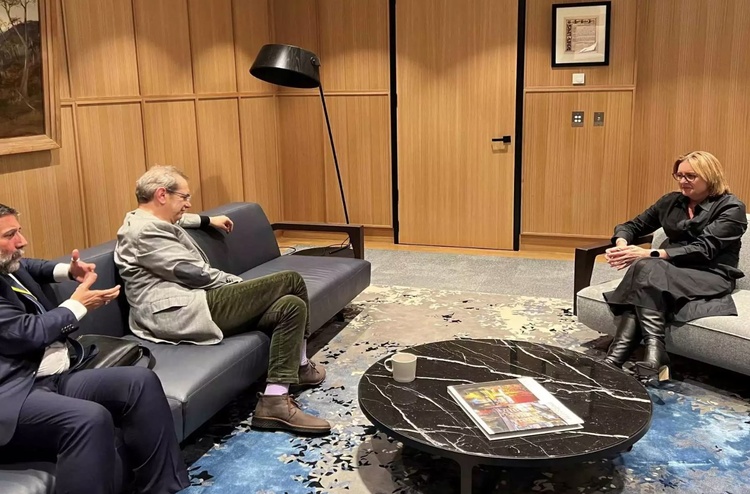

Described by the premier as “awful and sickening”, the case involves an educator who is alleged to have worked at more than twenty centres across the state. “How could this have happened is the question that every parent, every grandparent, every Victorian has been asking,” Allan said, emphasising that while the government is taking action, it won’t make comments that could jeopardise the ongoing police investigation.
The new register, which is set to be operational within two months, will allow authorities to continuously track early childhood workers across different centres, creating a system similar to the one already in place for teachers. Meanwhile, the mandatory ban on personal mobile phones in childcare centres and early learning services will be brought forward to September 30. Until now, this measure had been optional.
The premier stressed that the vast majority of workers in the sector are honest people deeply shaken by the recent revelations, but added that the entire system needs review. Reforms are underway to strengthen background checks under the Working with Children framework, including changes to suitability standards that will enable the automatic cancellation of a person’s clearance to work with minors if they face disciplinary action.
The conversation also turned to the state of Victoria’s finances. While acknowledging the challenges of the state’s debt, Allan reiterated the government’s commitment to not cut essential services. “We are the only state in Australia to have a fiscal strategy,” Allan noted.
“We’re sticking to the plan and the recent state budget that demonstrated that, as a percentage ratio, the debt numbers are stabilising and starting to drop down over the forward estimates.”
The premier also highlighted the differences between Victoria and Western Australia, explaining that unlike WA, which relies heavily on mining royalties, Victoria must fund its services largely through revenue sources like a property and payroll tax. Asked about the potential impact of increasing these taxes on low and middle-income earners, as well as small and medium-sized businesses, Allan pointed to measures already introduced. These include lifting the payroll tax threshold to $1 million from July 1 last year, which will exempt over six thousand businesses. She also referenced expanded stamp duty concessions for off-the-plan purchases, such as apartments and townhouses, and more favourable tax regimes for businesses operating in regional areas.
The interview also offered Allan an opportunity to address broader intergovernmental issues, with the premier criticising the current distribution of GST for not giving Victoria its “fair share”. Since 2000, Victoria has been a net contributor of $31 billion, a figure Allan argues needs review. “We deliver the services that a productive economy relies on,” she said, and pointed to the lack of federal support for major infrastructure projects like the Metro Tunnel and the West Gate Tunnel, both of which have been fully funded by the state government.
Beyond domestic policy and economic recovery, Allan has her sights set on global dynamics, recognising that the state’s future also depends on its international engagement. In this context, the premier reaffirmed the strategic value of the memorandum of understanding signed in 2022 with the Region of Lombardy in Italy. “It’s been a really important partnership,” said Allan, “It’s not just a cultural exchange, it’s a really important economic [one] as well.”
This partnership, she stressed, is also not merely economic diplomacy, but reflects the deep ties between Victoria and its multicultural communities. It is thanks to the active and longstanding presence of communities like the Italian community, the premier suggested, that Victoria has been able to build strong, lasting international relationships that deliver tangible benefits. Nurturing these connections is not just desirable, but essential as the state’s cultural roots extend overseas. In today’s interconnected world, economic growth also depends on diplomacy, mutual trust and maintaining links with the homelands of those who have contributed (and continue to contribute) to Victoria’s development.
Looking ahead to the 2026 state election, Allan has set out a clear path: the Labor Party will go to the voters with a platform built on its record, with a focus on protecting essential public services, practical measures to ease cost-of-living pressures and a long-term vision grounded in strategic investments for Victoria’s future. “We’ll put the choice before the electorate,” Allan said, “The Labor government is a government that invests … in frontline services. We don’t cut those services like Liberal governments have in the past. We’re on the side of working people and families.”
Finally, Allan added to the critique of her Liberal opponents. “We’ll be continuing to present that really positive set of offerings,” she said, “[Whereas] look at the way they (Liberals) treat each other and think of how they’d treat Victorians if they had the chance.”