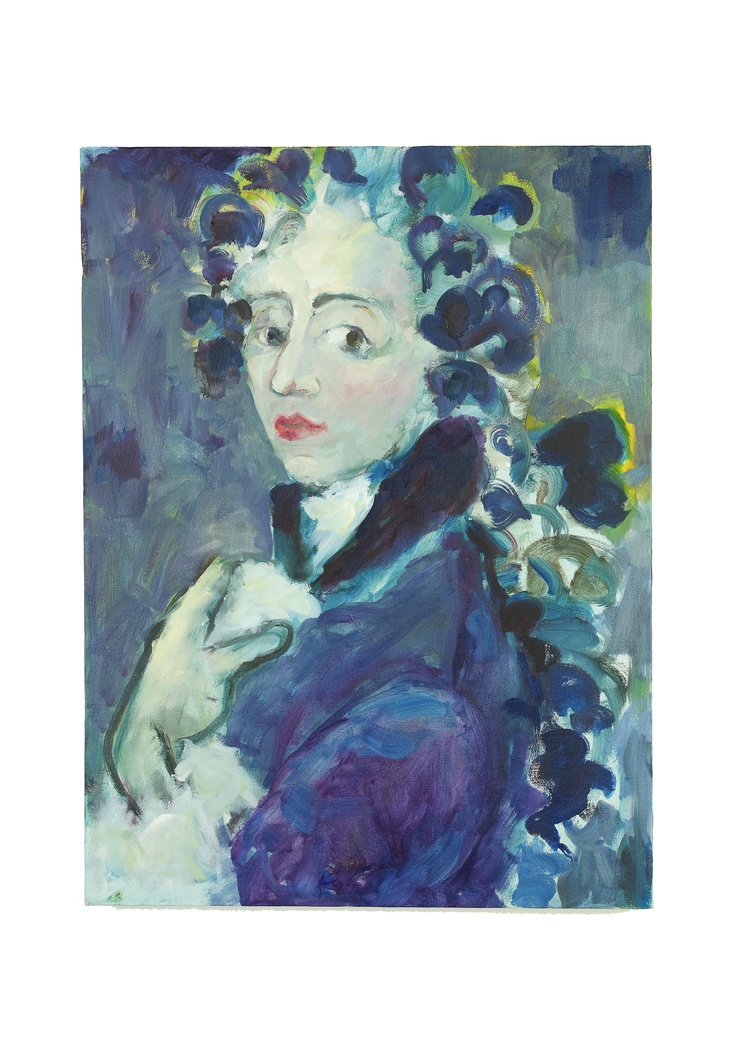
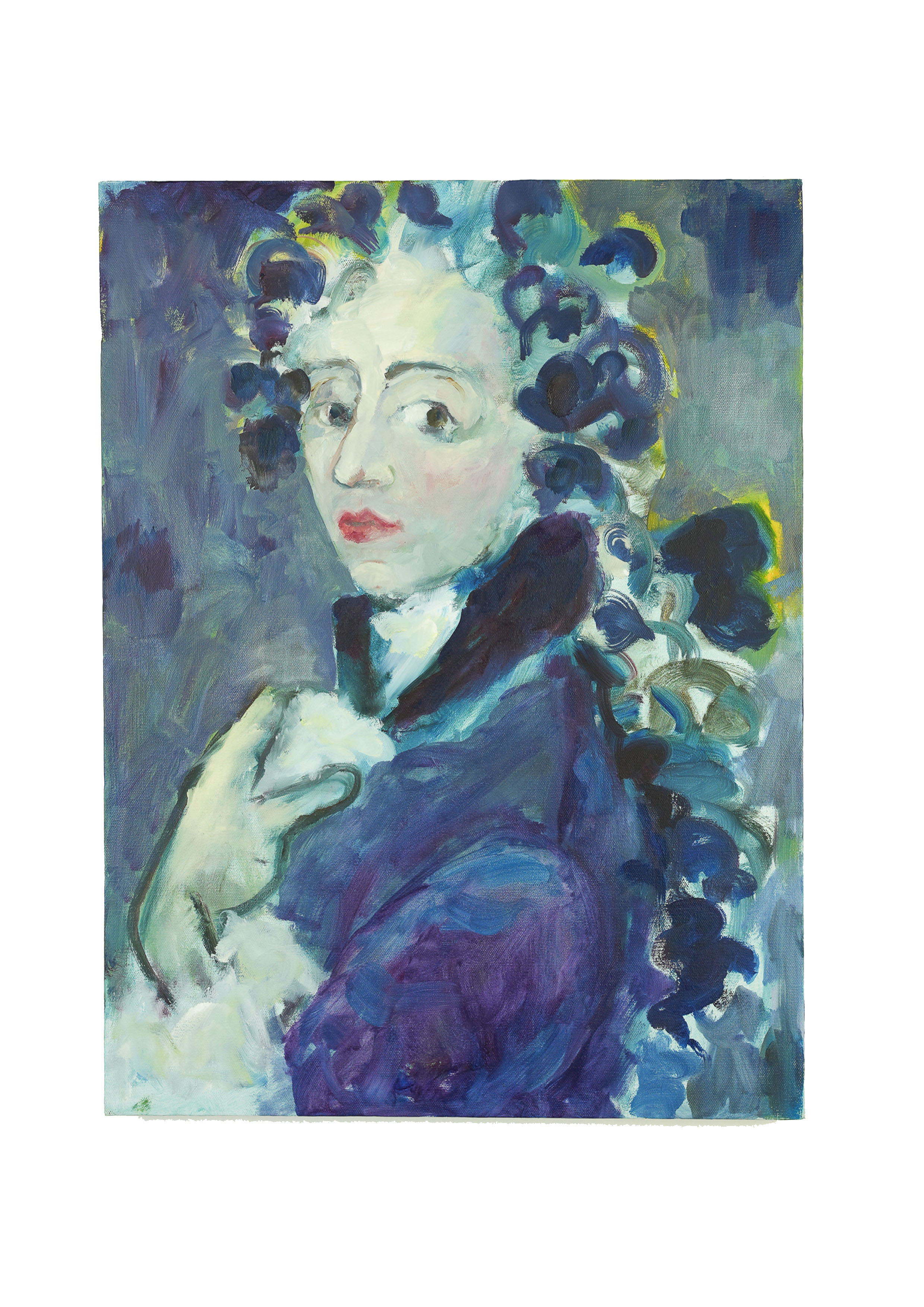
Titled Visage, Pezzimenti’s exhibition offers a sensory experience through rich textures and expressive marks.
Visage delves into two fundamental elements: identity and culture. It prompts viewers to consider how these elements shape self-perception and influence how individuals present themselves to others.
Pezzimenti reveals that she drew inspiration from the opulence and symbolism of 18th Century portraiture, specifically citing Marie Antoinette as a starting point. She reflects on Marie Antoinette as an enigmatic figure who has not been fully portrayed by history. She questions the depth of the historical figure’s identity beyond her carefully styled attire, mannerisms and coiffured hair.
Pezzimenti’s exploration of identity resonates with the works and legacy of Artemesia Gentileschi, whose life and art have always fascinated the Italo-Australian artist. Gentileschi employed art to challenge societal constraints and defy the conventions of her era. Pezzimenti takes up that challenge.
Visage is a collection of oil paintings on canvas and charcoal drawings on paper. These artworks are marked by intricate details, dynamic forms, vivid colours, chiaroscuro and the ability to draw attention to both a subject’s expression and engage in the possibilities of the underlying narrative, balancing abstraction and figuration.
Art has been integral to Pezzimenti’s life since childhood, serving as a medium for expression and interpretation of her observations and experiences. She attributes her creativity to her Italian cultural heritage, particularly the influence of her father. He enriched her upbringing through his own love of Italian classical music, opera, poetry and storytelling.
Unknowingly, he fostered his daughters’ artistic development by proudly displaying her work around the house. A traditional father’s way of acknowledging his quiet, unassuming daughter’s talent.
Pezzimenti’s father, a skilled tailor and dressmaker, was instrumental in shaping her early worldview. His creative approach to fashion inspired her to collect items from his shop and decorate the windows - a cherished activity that nurtured her imaginative abilities.
Pezzimenti’s parents migrated from Motticella in Reggio Calabria. Like many other migrants, they had come seeking a better life. They settled in Footscray and raised a family of three. Traditions remained strong, as well as language. Pezzimenti learnt English at school. The regional dialect of Motticella was the main form of communication in her inner circle. Her early sense of identity formed by the bi-cultural, bi-lingual world around her.
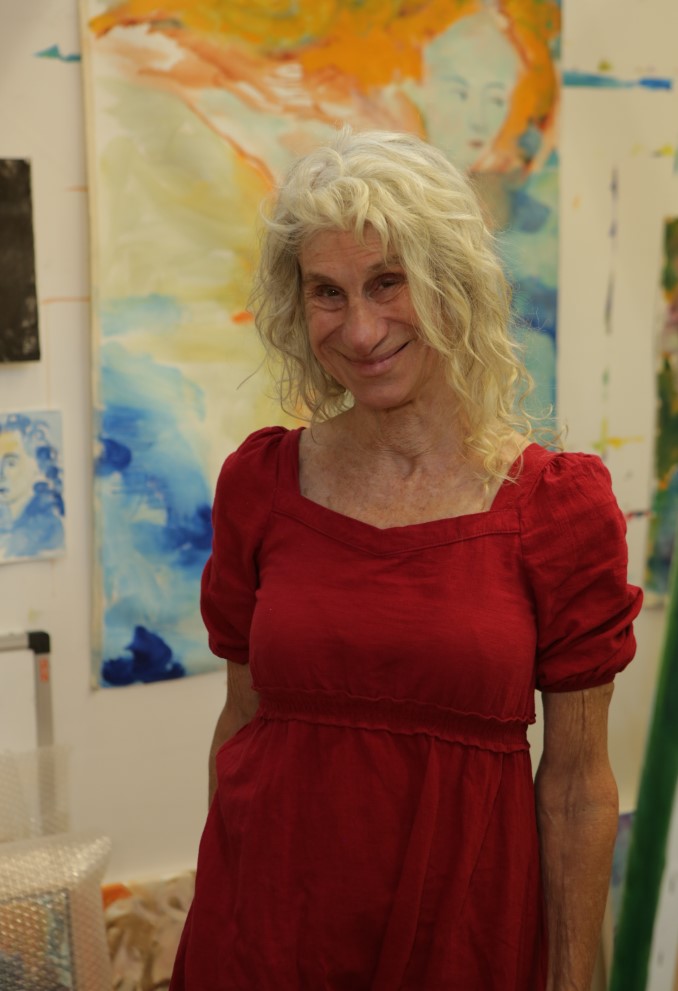
Artist Francesca Pezzimenti
The house was always full of people, and zie and comare would often comment on the young Pezzimenti’s talent, encouraging her parents to let her follow her passion.
“However, my parents were in survival mode as migrants to Australia and so my materials would be very basic – pencils, chalk mainly,” Pezzimenti explains.
“There were many limits, but I didn’t seem to feel them then. I still found a way to spend time alone as a child etching something on whatever surfaces I found.”
Reflecting on her life in Footscray and her family visit to Motticella, Pezzimenti notes that each place was almost identical. “The orto (vegetable plot), the passata, vino, oregano, parmigiano and the smells were the same,” she says. The people spoke the same dialect and had similar mannerisms and expressions. Dinner was always lengthy, with lots of noise and conversation. Women fussed in the kitchen while men conversed outside. Children were often running around, weaving between the groups and the garden.
Growing up, the artist was aware of her position within a traditional Italian family. Although she was encouraged to pursue higher education, an opportunity she relished, she feels her cultural background predetermined her path as a future wife and mother. Something which she found restrictive and resisted.
Leaving home early allowed Pezzimenti to experience life outside the family home and it was those experiences which influenced her artworks. Importantly, it allowed her to break away from traditional expectations and enabled her to follow her passion for art.
Later in life, discussions with her father provided an opportunity for understanding, “He too had wanted to explore the world, create and experience life fully,” she reveals, “The migrant experience did not allow him this opportunity.”
Pezzimenti’s work Visage examines the interplay between Italian and Australian cultures, shaping her perspectives on identity. She credits the Italian emphasis on beauty, ritual and expression as foundational, while Australian life challenged these notions and helped form her self-identity.
Pezzimenti has produced various artistic works, including a mural at the Austin Hospital, numerous exhibitions and several large-scale private commissions. Through Visage, she appears to have found a consistent rhythm and expression in her art.
Nonetheless, her exploration of identity remains an ongoing journey, both personally and artistically. In fact, she is already planning her next body of work, continuing themes from her current collection.
Visage opens at North Gallery on Saturday, June 7 at 3 p.m. and runs till the June 14.