
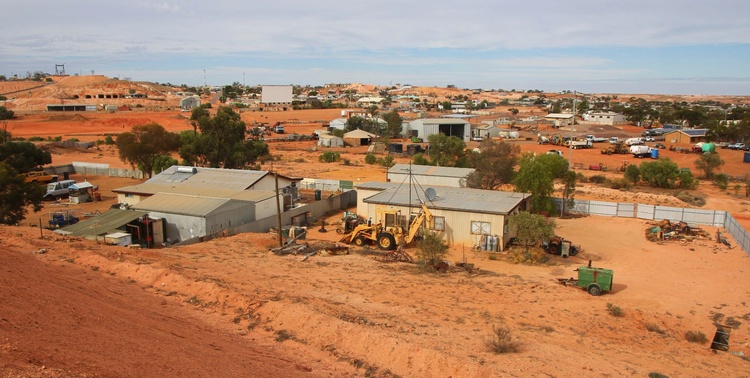
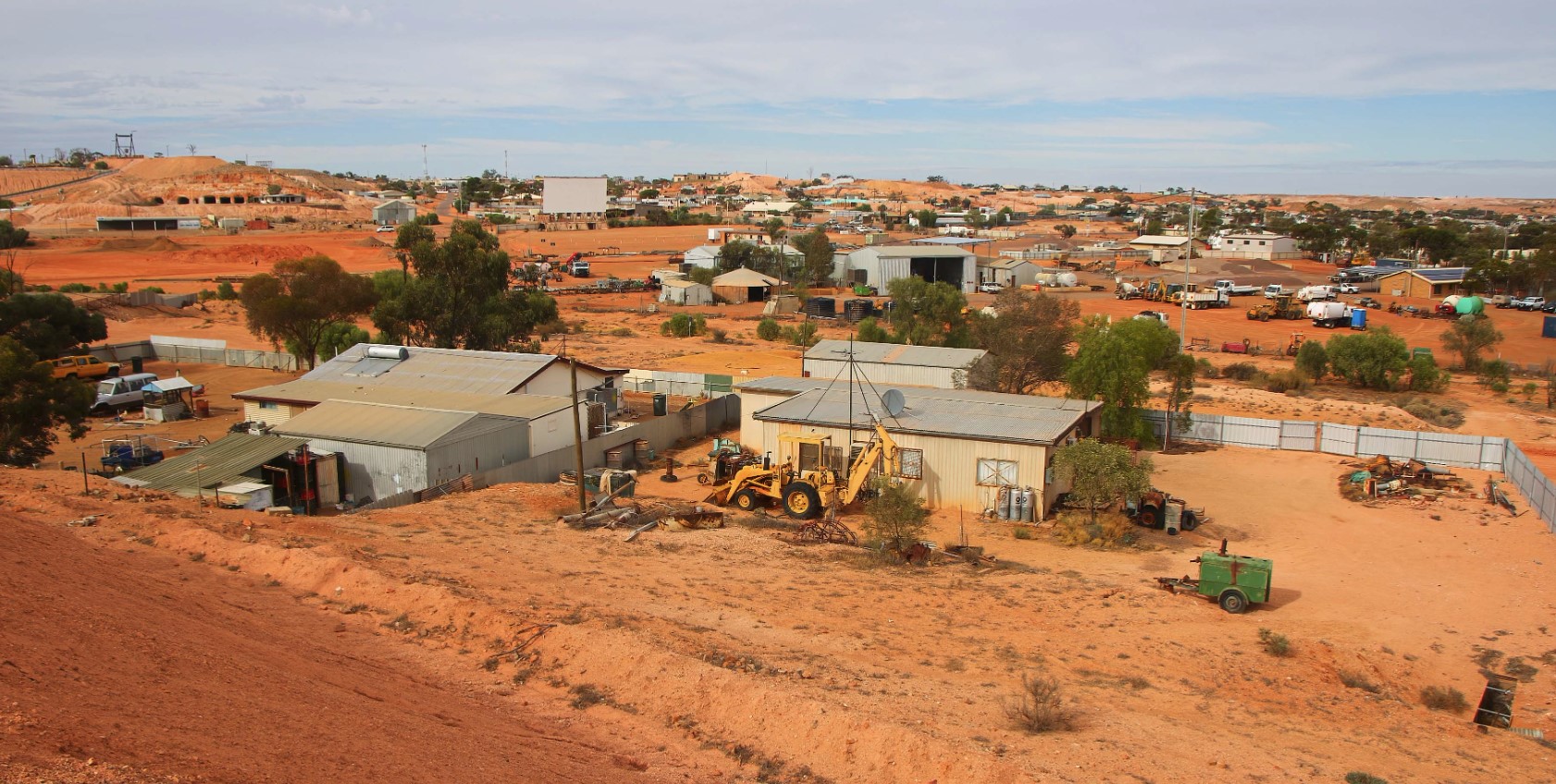
The town, with about 1500 inhabitants, is located in a very hot and dry desert. In summer, outside temperatures can rise above 45 degrees, making life on the surface very uncomfortable.
To escape the heat, residents began building their homes underground. This underground way of life began more than one hundred years ago, when miners founded Coober Pedy in search of opal, a precious stone.
The miners needed a cool place to rest after a long day of work and discovered that the soft rock around the town was easy to dig into, and that the temperature inside the rock was much more comfortable.
So, they created underground rooms and tunnels, which became their “homes”. These underground houses are called “dugouts”.
Today, many people in Coober Pedy still live in dugouts. These homes are surprisingly comfortable. They have bedrooms, kitchens and bathrooms just like normal houses, with an indoor temperature that stays around 23 degrees all year round.
They also have living rooms, skylights for natural light and beautiful stone walls that show the colours of the desert.
Homes aren’t the only thing under this town. Coober Pedy also has hotels, churches and even a museum carved into the rock. One of the most famous buildings is the Serbian Orthodox Church, carved into the rock with beautiful decorations and soft lighting. And we must not forget the Catholic Church of St Peter and St Paul.
Living underground in Coober Pedy shows how people can adapt to their physical environment. Instead of fighting the desert heat, they found a creative way to live with it. Their homes are cool, quiet and part of the landscape.
Coober Pedy is a great example of how humans can use intelligence and design to survive and live well, even in some of the most challenging places in Australia.