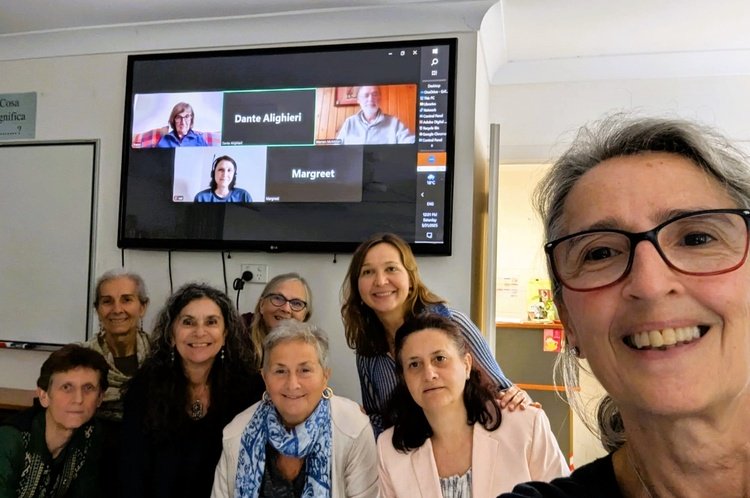
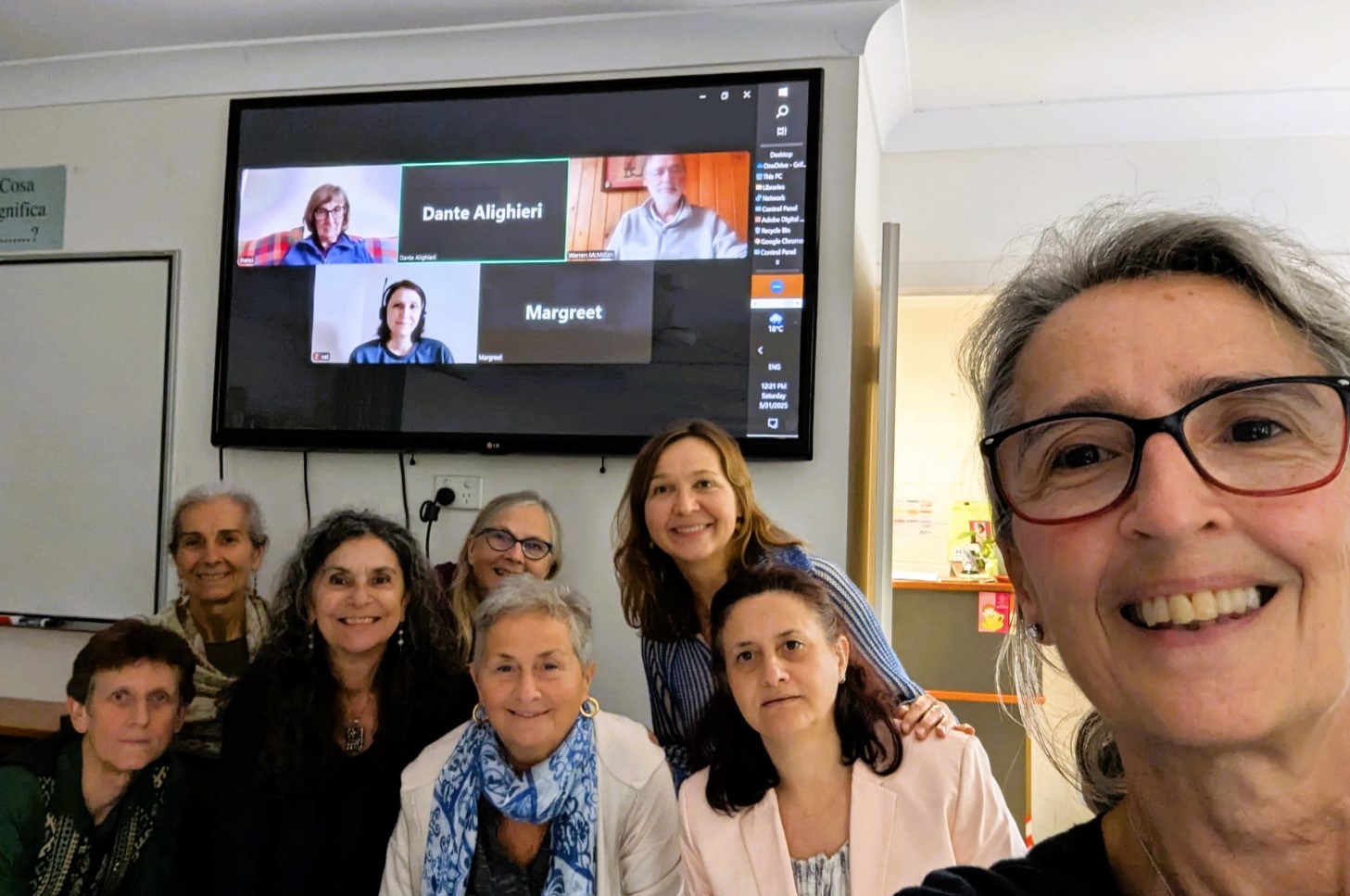
BRISBANE - “The Società Dante Alighieri has a collective vote as a central seat and gathers the preferences of the various literary presidiums,” explains Claire Kennedy, president of the Brisbane branch.
“And while numerically it counts for little, our sense of participation and responsibility was very high. It was wonderful to take part in this event; to participate from here and have our say on the books being read in Italy and in other parts of the world.”
It’s a great source of pride for Kennedy and the whole committee, who over the years have patiently and passionately nurtured not only the ambition of building a well-stocked library, one of the conditions for becoming a literary presidium, but have also consistently offered members a series of engaging and quality experiences.
“As of today, there are 100 literary presidiums around the world,” adds vice president Rosalia Miglioli.
“Along with access to the book collection, we also offer book presentations, reading circles and language courses at many levels,” she continues.
“For the more advanced levels, we always include literature, both classical and contemporary. For example, in the Costume e società level, which is the highest, we read Il treno dei bambini, which was later adapted into a film.”
But the greatest thrill came with the announcement of their participation in the voting for the Premio Strega, one of the most important moments of the year for every lover of Italian literature.
“Not all literary presidiums take part in the Strega vote every year,” says Kennedy. “This year, for example, there were 34 of us, and it was wonderful to know that for the Bellocci Foundation and the Premio Strega it’s important to hear opinions and judgments from abroad, because the winners have a good chance of being translated.”
A small group of 12 avid readers (the maximum number allowed under the rules is 13) committed themselves to reading as many books as possible to present them to the others.
“We tried to read some books in depth and at least get to know or glance through the others,” she recounts. “We must confess that not all 12 of us read all the books carefully, because we only had one month.”
During those 30 days, mostly spent with their noses buried, the participants organised three meetings. “And, speaking of the sense of responsibility, no one ever missed a meeting,” Kennedy adds.
Some meetings were held online and others in person, making things easier for everyone.
“Many of us read books and then presented them during the meetings, discussing and comparing views. The discussions were always very engaging; factions were even formed,” she recalls.
Avid readers know it’s easy to become passionate about a story, get attached to the characters and feel almost personally offended if someone doesn’t have the same feelings about the book.
Fortunately, everyone was able to express three personal preferences. In Brisbane, there was one book favoured by the majority, but Kennedy wouldn’t reveal what that was.
“As for the collective vote of all the literary presidiums that participated, the winner was Michele Ruol, with Inventario di quel che resta dopo che la foresta Brucia (The inventory of what remains after the forest burns), which entered the shortlist of five finalists. “We also liked this book very much,” assures the president.
Dante Alighieri in Brisbane hopes to participate again in the future, because even though the Society’s collective vote is worth just one out of a total of 400, “on a personal level it was interesting to compare ourselves with each other”, shares Kennedy.
“It was clear the great impact of this experience on those who participated, but also on those who didn’t,” adds Miglioli. “Personally, I was able to sense the enthusiasm of the group that came to the Dante and talked about these books.
“They infected us with their energy and motivated us to do even more. More book clubs, more discussions among us, involving other people of all ages.”
Another interesting fact highlighted by Kennedy is that about a third of the group involved in the Premio Strega vote does not speak Italian as their first language. Despite this, both the reading and the discussions took place entirely in Italian.
With so many projects under way and many more in mind, the momentum of the Dante Alighieri committee is unstoppable.