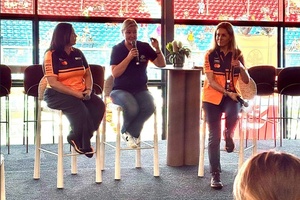
Today, Formichelli is a key figure in Italian language and performing arts education at Holy Trinity Primary School in Wantirna South, Victoria, where she has worked for 15 years, turning language learning into a space shaped by music, dance and theatre.
“I was looking for a job as a teacher in 1992 when my mum saw an ad in Il Globo for Italian teachers and said, ‘Why don’t you give it a go?’” she recalls.
What started as a tentative step has grown into a career spanning more than three decades, beginning in the public system and continuing in a Catholic school, where Formichelli has developed an approach that blends identity, creativity and inclusion.
From early on, she embraced an engaging teaching style built around singing and dance—a personal passion that became central to her method and widely appreciated by the school community.
Music, she explains, helps students retain vocabulary and develop natural pronunciation, with many former students still able to recall song lyrics years later.
A pivotal moment came in 2016, when the school’s Performing Arts teacher left unexpectedly. “The principal asked if I would take on the role as well as Italian,” she says.
The condition was that Formichelli would need to stage the school’s annual production in a bilingual format. Initial doubts gave way to strong support, and the project has since become a much-anticipated fixture, featuring scripts written by Formichelli with original songs and an evolving narrative.
Over time, the productions have taken on the structure of a family saga centred on the characters of Nonna and Nonno, inspired by her own parents.
“The story came from my love for mum and dad,” she explains.
The first show, Quando sarò grande, told the story of a father frustrated with children constantly on their phones. Watching from the audience, her own parents recognised familiar phrases.
“Of course they do—it’s about you,” she later told them.
Students have become deeply attached to the characters and look forward to their moment on stage each year.
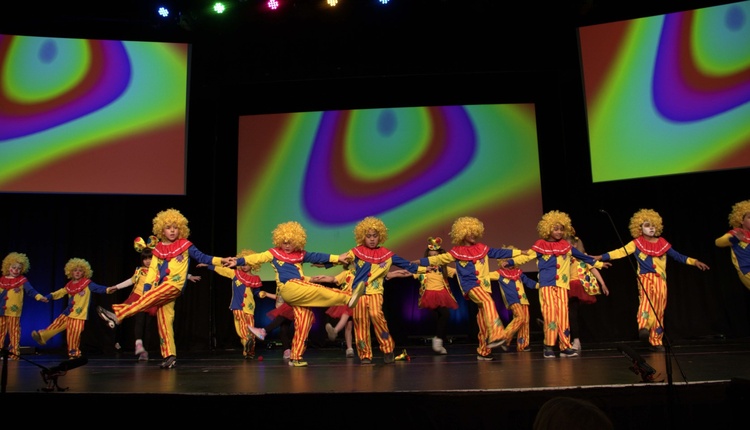
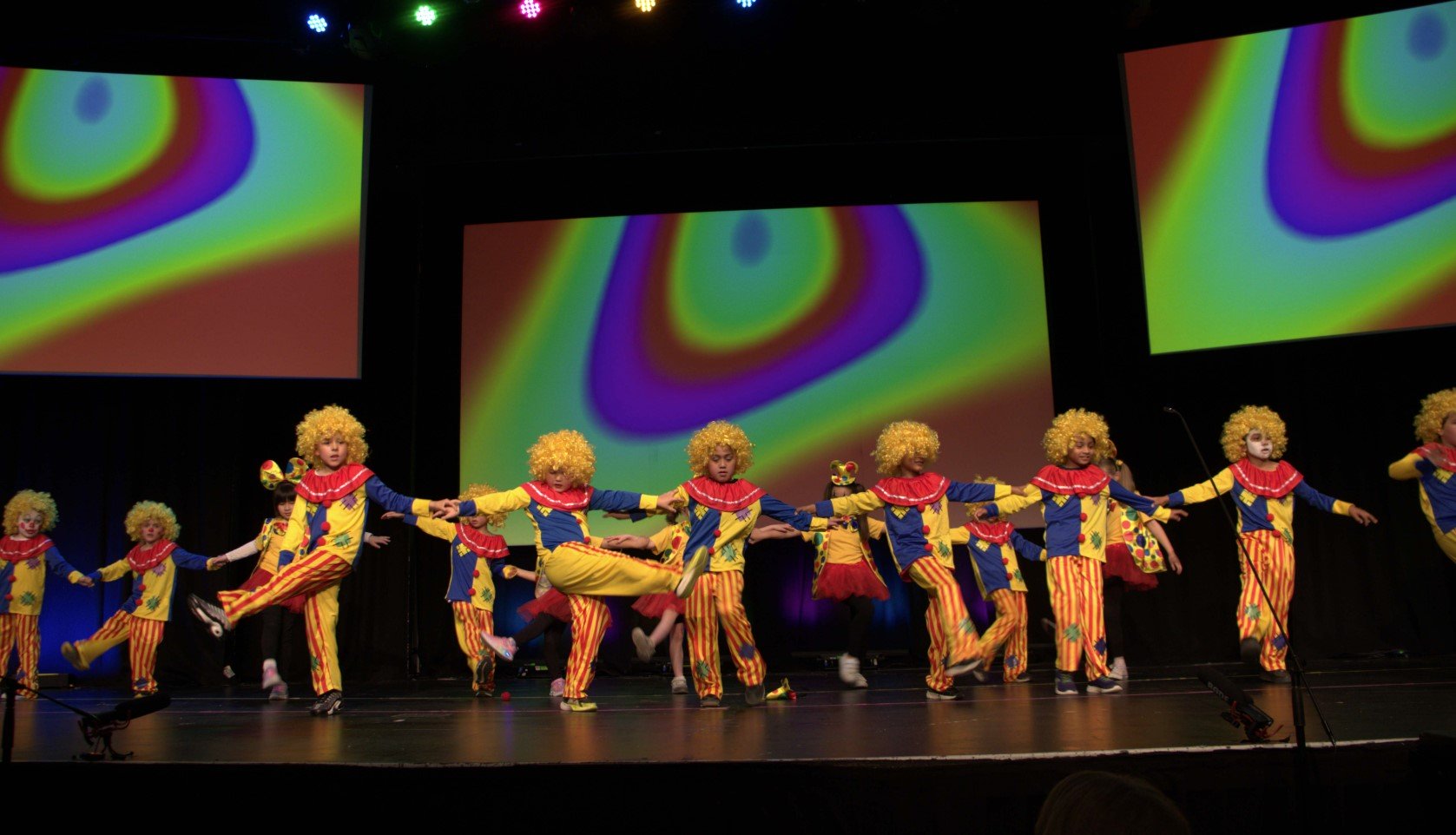
With the new school year underway, Formichelli now faces the challenge of matching the success of last year’s production, La magia del circo, which involved around 220 students from Prep to Grade 6.
The storyline followed concerns that “no one goes to the circus anymore” and the effort to bring back excitement and participation. Each class contributed a different act, reflecting the spirit of the circus.
Younger students performed a circus-themed dance, while others took on roles as animals, performers and a marching band with flags and choreography.
One group introduced a magic segment, guided by Tim, a friend of the teacher who taught students tricks to perform live.
Senior students in Grades 5 and 6 presented juggling, acrobatics and comedic sketches inspired by classic circus strongmen, before a final group performance featuring singing in Italian, English and Auslan.
The school includes students from St Mary’s College for the Deaf, who take part in Holy Trinity’s activities.
“When I started these productions, I told the principal I wanted to include Auslan,” Formichelli says.
Over time, she has developed an approach that combines Auslan gestures with Italian, ensuring that each production includes at least one piece where students perform using both voice and sign.
Coordinating the production is a major undertaking, but Formichelli remains focused on one priority: giving students a central role.
“They present the show, open it and deliver the final thanks,” she says.
Plans for this year are already underway with two ideas in development, shaped, as always, by student input.
For now, details remain under wraps. But one thing is clear: as long as there is a language to sing, a story to tell and a stage to share, Josie Formichelli will continue the tradition.