The journey wasn’t without its obstacles and moments of doubt, especially for a student “always striving for perfection”, as he admits he is.
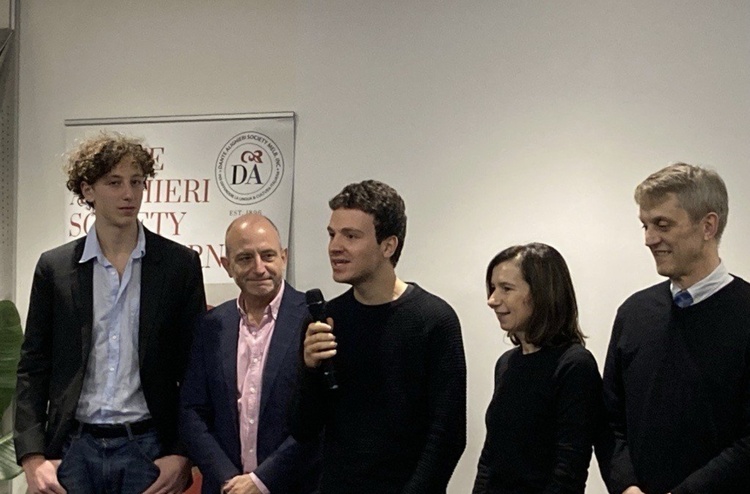
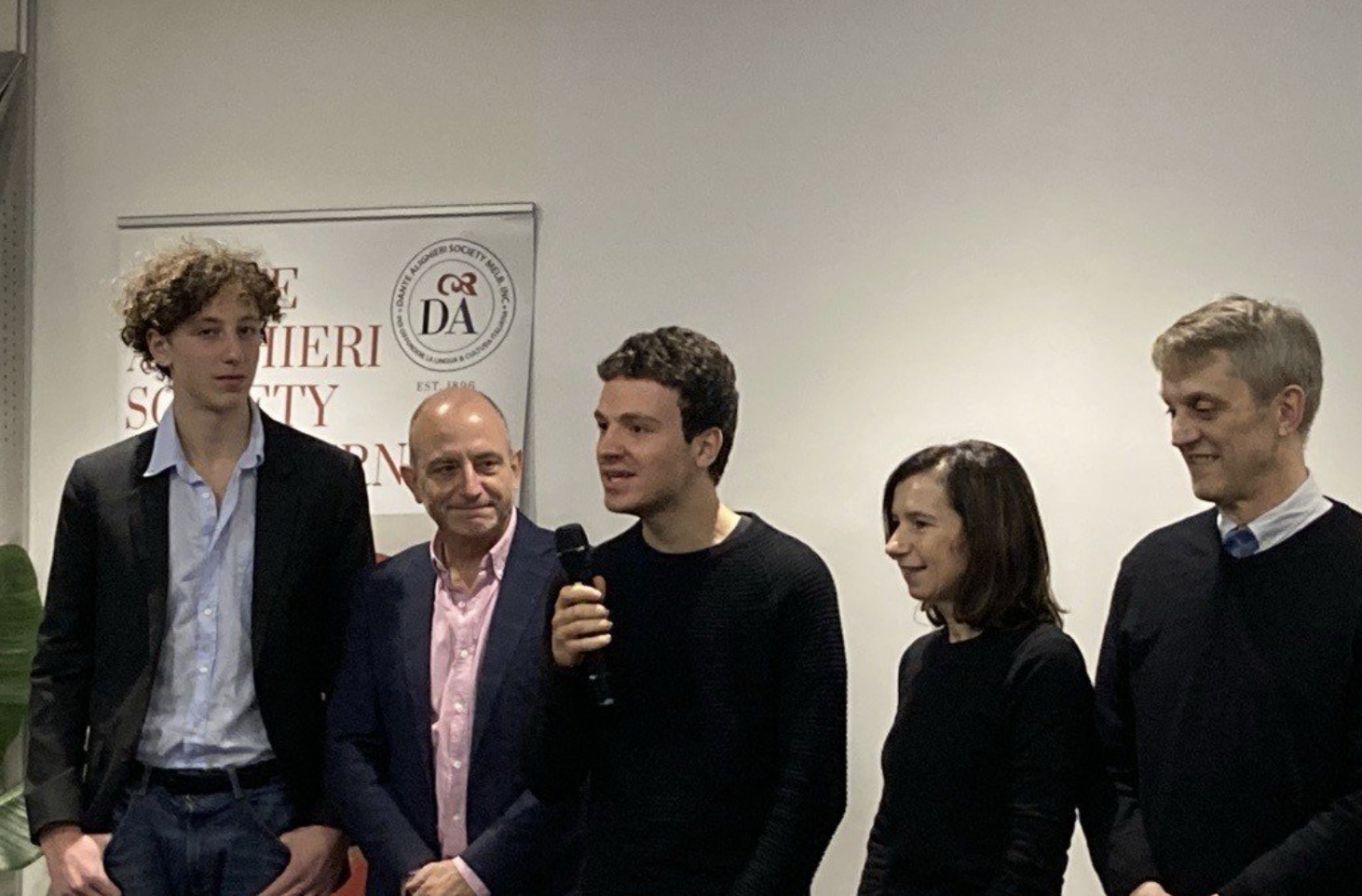
After completing his university degree in Italian at the University of Melbourne last year, Bokan was recently awarded the Dante Alighieri Society’s Prize for Excellence, which included one of the memorial scholarships honouring Dr. Soccorso Santoro.
“Passion has always kept me going, pushing me to improve as much as possible,” he says. “It wasn’t so much about the grades, but about reaching a milestone despite my doubts and insecurities. Receiving this award felt like being told, ‘You did well.’”
Now a psychology and Spanish student, Matthew works as an Italian language assistant at Marcellin College, the very high school he once attended. He also volunteers with Lifeline.
Bokan recalls a specific turning point in his language journey. “It was in Year 10, in class with my teacher Angela Bottari. I was nervous about speaking Italian for fear of making mistakes,”
he shares.
“We had to give a five-minute oral presentation, and she asked me a very simple question. As I answered, I realised I hadn’t translated from English in my head. In that moment, I felt free and capable of speaking in another language.”
Bokan’s passion for literature began early, leading him to tackle Dante’s Inferno at just 13. It became a constant motivation to deepen his skills and explore both language and culture.
“I’ve also read simpler things,” he says with a smile, “like Little Red Riding Hood or the children’s books I loved, Geronimo and Thea Stilton. Another book that left its mark on me was In Other Words by Jhumpa Lahiri, an American author of Bengali heritage who writes about her experience learning Italian.
“Then there was Arturo’s Island by Elsa Morante, which I struggled through, partly because I was going through a tough time personally. I also enjoyed Cannoli siciliani by Roberta Corradin, a light book but with lots of dialogue, and finally Alessandra Celentano’s Call Me Maestra, which my university professor definitely did not approve of,” he laughs.
“There’s a beautiful quote in that book that really reflects my own language journey: ‘Perfection in life doesn’t exist, but the pursuit of it does.’”
A devoted viewer of Amici di Maria De Filippi, “even if it’s a bit trashy”, Bokan follows it not just for entertainment but because, as he explains, “to learn and maintain a language, you have to weave it into your daily life”.
“So why not do it through the things you enjoy?”
This year, Bokan has also begun studying Croatian, his grandparents’ language. He explored their story as refugees in Italy in one of the many short stories he has written - another outlet for his talent.
“As a volunteer with Lifeline, I was chosen to give a speech at a fundraising event, to thank the volunteers and donors,” he explains.
“While preparing that speech, I realised I wouldn’t have been able to stand on that stage without Italian. It hasn’t just helped me express myself better in English, it’s made me more confident.
“Working with a language makes you hyper-aware of the meaning of words and sentence structures, and it gives you an entirely different perspective.
“Often, when I need to see a situation from another angle, I start thinking in Italian and it opens up a new way of understanding.
“It’s like gaining another world. I wouldn’t have read certain books, learned certain histories or watched certain films without it. For me, it’s been life changing.”