SYDNEY - “At the time,” she admits, “the grammar seemed complex, but the literature, with authors like Luigi Pirandello and works such as Il fu Mattia Pascal, won me over”.
After graduating, she continued studying Italian at university, focusing on literature. But the real turning point in her language skills came during the year and a half she spent in Macerata, in Marche, where she experienced full immersion for the first time. There, she reached an intermediate level and savoured the everyday life of Italy.
After earning her degree and teaching qualification, Lucy began her career in Cairns, teaching English and Italian. From there, she made a bold move by relocating to Naples, leaving behind tropical calm for what she calls “the capital of chaos”.
She lived there for over seven years, teaching English in both public and private schools, often in challenging environments with limited resources.
She worked in schools on the outskirts of the city, from Pianura to Marano di Napoli, as part of European Union funded projects, that brought native speakers into classrooms.
She witnessed firsthand the challenges facing local education: motivated teachers lacking adequate tools, students with low English proficiency despite years of study, and a one-size-fits-all system ill-suited to diverse learning needs.
At the same time, she worked at the International School of Naples, a prestigious private institution where she experienced an international environment, stable contracts and innovative teaching methods.
Her connection with the city grew deep, and she was embraced as “one of them”. Friends invited her into their homes and encouraged her to live with Italians to improve her language skills. “They told me, ‘If you really want to learn, you have to live with Italians,’” she recalls.
Her years in Naples gave her near-native fluency, a nuanced cultural understanding and a special sensitivity when working with students from different backgrounds.
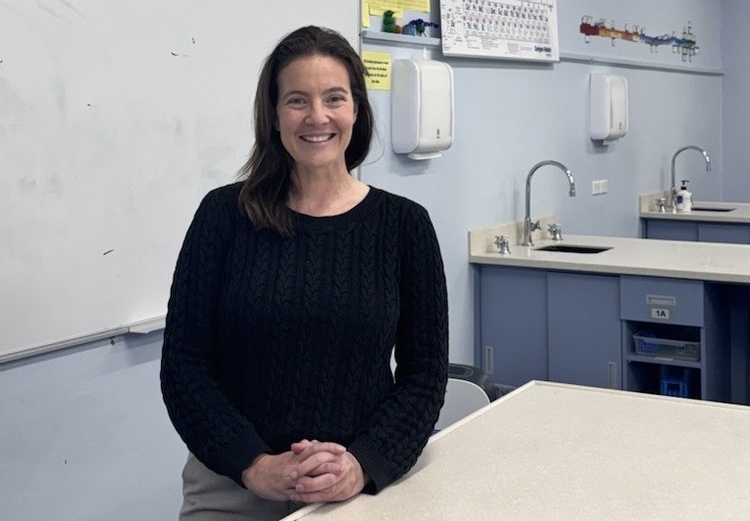
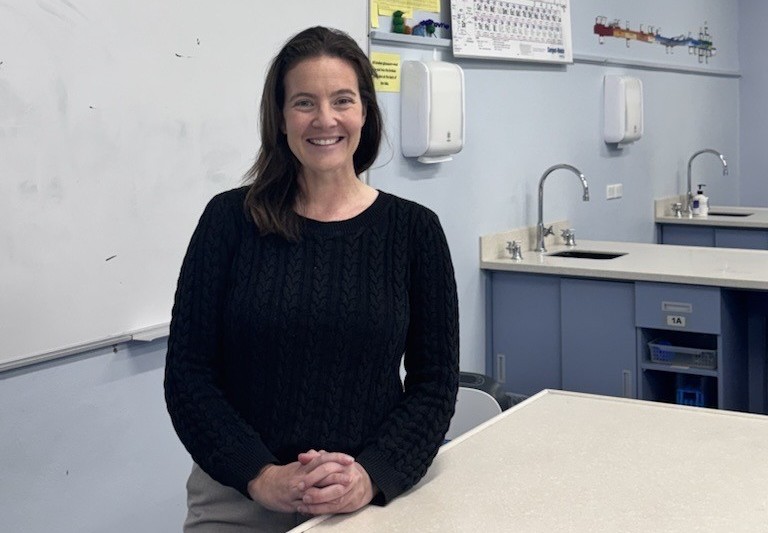
Back in Australia, Lucy now teaches Italian at Loreto Normanhurst, a girls’ school north of Sydney, mainly working with Year 7 and 8 students.
She’s aware of current challenges: enrolments in Italian are declining and many schools now prioritise languages seen as strategic for the future, such as Mandarin, Spanish or Arabic. At Loreto, there’s even a beginners’ Italian class with only three students, a rarity in that most schools wouldn’t maintain a class with such low numbers.
Her teaching style blends traditional tools with interactive resources: visual and tactile materials, online grammar games, clear verb charts and plenty of repetition to help vocabulary stick in students’ minds.
For Lucy, it’s essential to train all language skills - listening, reading, writing and speaking - and to address the most common gap: real-world language practice. She therefore encourages direct experiences in Italy, such as high school exchange programs.
She summarises her teaching philosophy in one phrase: “Connection before correction.” For her, building trust with students is the foundation of learning. This approach also reflects her sensitivity to working with neurodivergent students, especially those with ADHD, an issue often underestimated or unrecognised by families.
Lucy Neylan’s journey shows that mastering a language doesn’t depend on heritage but on passion, dedication and the ability to adapt to new cultural contexts.
From the classrooms of Macerata and Naples to those of Sydney, the thread remains the same: teaching Italian with skill, curiosity and care for the people in front of her.