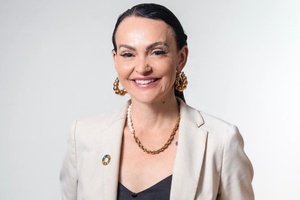
Katya Crema, former Australian Olympic ski cross athlete, has arrived in the Dolomites with a key role: Deputy Chef de Mission for the Australian team set to compete at the Winter Olympics in Italy.
It’s a complex position. Working alongside Alisa Camplin—former Olympic gold medallist in freestyle skiing and Australia’s Chef de Mission—Crema will act as a key point of reference for athletes competing across the cluster of venues.
“With seven competition venues and five Olympic villages, it would be impossible for one person to manage everything,” she explained. Her role in Italy is to ensure athletes are supported in the best possible way.
“It’s a big responsibility, and it feels good to be able to give something back to the sport.”
That same commitment to service led her to join the board of Snow Australia as a non-executive director and Chair of the Athletes’ Committee. It’s a role she balances alongside her work as an entrepreneur—something she says gives her “an external perspective”.
By day, Crema runs Hip V. Hype with her partner Liam, a sustainable property development and consultancy business, with their latest project based in Brunswick.
Then there is family life, with their two young children, Elio and Massimo, aged three and five, already being introduced to the mountains and skiing.
In many ways, it’s a full-circle moment. Crema herself discovered the magic of snow through her parents, Luciano and Monica, both passionate skiers, despite one being from Veneto and the other from Sicily.
“We spent weekends at Mount Buller, and at 12 I joined the local ski club,” she recalled.
From there, the leap from competition to Olympic ambition came quickly. “I worked hard, made the national team and then started competing on the World Cup circuit, which opened the door to everything else.”
Her early career was in alpine skiing, which she pursued until the age of 20 before switching to ski cross just over a year before the Olympics.
“It’s like motocross or BMX, but on skis,” she said of the high-adrenaline discipline, which made its Olympic debut in 2010, following snowboard cross at Torino 2006.
The change appealed to her after years of travelling alone on the alpine circuit. Ironically, those same travels had earlier given her the opportunity to spend an entire season staying with Italian skiing legend Piero Gros, Olympic gold medallist at Innsbruck 1976.
Ski cross introduced Crema to a more social and dynamic environment. “Men and women travel together, you race in groups, and there was a real sense of sharing—it was much more fun,” she said. “It’s a crazy, wild sport, but incredibly fascinating.”
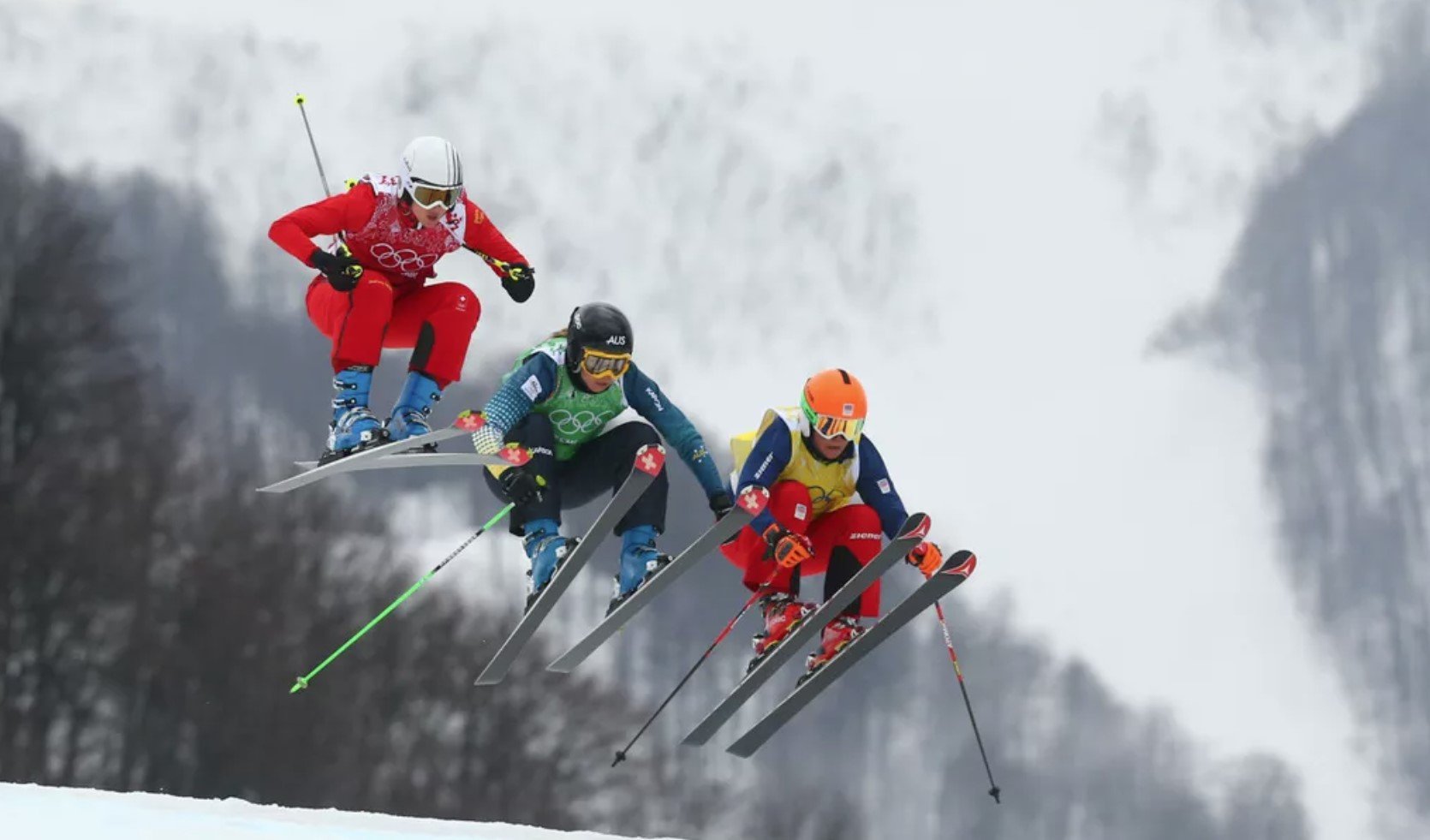
While the sport’s technical element is similar to alpine skiing, ski cross adds obstacles and jumps of up to 35 metres, with the added challenge of racing side by side with three other competitors.
Control and composure are essential, and Crema has always combined both with strong determination. She recalls a defining moment at 14, after winning the Australian national alpine giant slalom championships.
“I received a handwritten note from my idol, Zali Steggall—the only Australian ever to win an Olympic medal in alpine skiing—saying, ‘See you at the Olympics one day.’”
For a young athlete, receiving such a message was transformative. “It was incredibly inspiring and made me think, ‘This is what I want to do.’”
Crema fulfilled that promise in 2010, earning selection for the Vancouver Olympics at just 21 years old, qualifying only three weeks before the Games.
“I was just happy to be there,” she said, noting that her entire family had already booked flights and accommodation for Canada before she had even secured her spot.
Despite the pressure, her youth allowed her to embrace the experience with enthusiasm and fully enjoy the moment.
Four years later in Sochi, her mindset had shifted. “I was a much more established and mature athlete,” she said, “I knew myself better and was there to achieve a strong result.
“The Olympics were still incredibly emotional, but it was a very different experience.”
Crema finished seventh—one of the best results of her career. “It was an extraordinary race and a really important lesson,” she shared.
“I learned to focus more on the competition itself, rather than everything happening around it.”