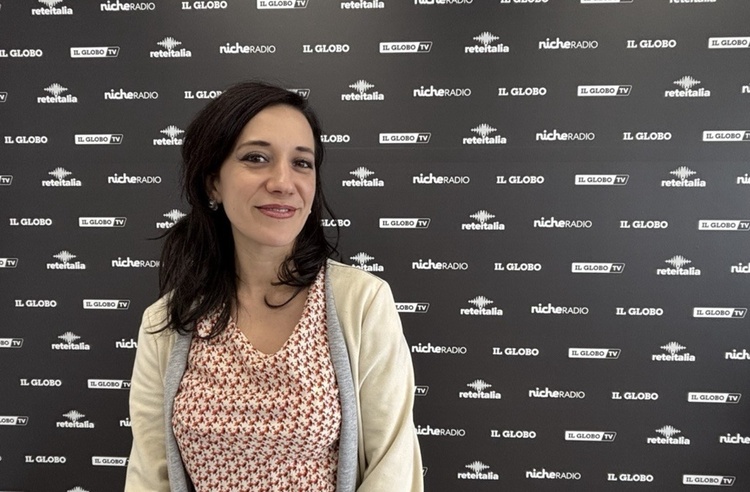
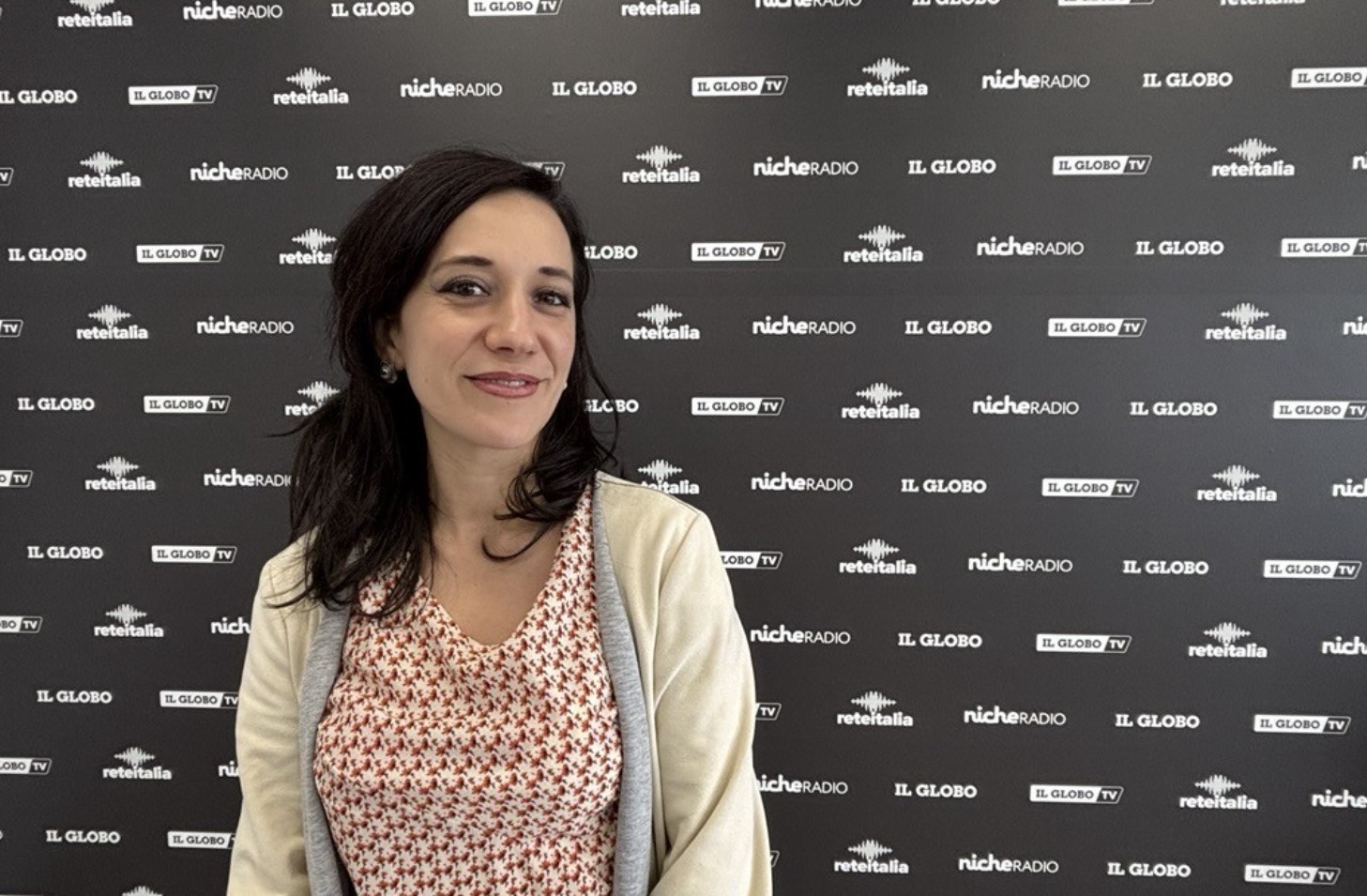
Maria Lucenti is a researcher and professor of history of education at the University of Genoa.
Lucenti is currently in Australia for a project aimed at reconstructing the teaching practices of four Australian bilingual schools, to understand which model of bilingualism is being applied.
Starting with two primary schools in Victoria, located in Footscray and Brunswick South, she then travelled to the ACT to observe the progress of Yarralumla Primary School, before ending her tour in New South Wales at the Italian Bilingual School run by Co.As.It.
“During the first days of observation, I had the opportunity to see how various teachers in Melbourne’s schools work, analysing what kinds of teaching resources are used,” Lucenti explained.
Each institution observed is a language immersion school, where Italian is not taught as a second language. Instead, the entire curriculum is split evenly between Italian and English. For this reason, the teachers often create their own teaching resources to meet the specific needs of their classes.
Lucenti was pleasantly surprised by the bilingual schools in Victoria, which are “public schools that welcome students living in the local area”.
“As a result, the classes are very diverse, with students often immersed in a language with which they have no prior connection,” she said.
Lucenti immediately observed “an awareness of promoting the benefits of bilingualism, regardless of the language being studied”.
“Even the teachers emphasised that children who already speak a second language at home learn a third language much more easily, as confirmed by numerous studies,” she explained.
Her interest in Australian bilingual schools was sparked by a visit last year from Anna Antoniazzi, a children’s literature professor and Lucenti’s colleague at the University of Genoa.
Antoniazzi, who was in Melbourne to speak at the 2024 National Conference of Italian Teachers in Australia, found the activities of the bilingual schools she visited fascinating, and shared her desire to develop a research project with Lucenti.
“We realised there was a total lack of data about these schools, partly because they are very recent experiments,” Lucenti explained.
“There’s very little written about the history of education in Australia, and we wanted to fill that gap through this project, which has been co-funded by the University of Genoa and the Co.As.It. organisations in Melbourne and Sydney, with the participation of the Italian Embassy in Canberra and its cultural attaché, Valentina Biguzzi.”
Throughout her career, Lucenti has encountered numerous bilingual education settings around the world, starting with her own PhD at the University of Carthage in Tunisia, followed by postdoctoral work in Canada and several projects that took her to England and Germany.
“What intrigued me particularly about Australia is how a fully Italian school has never been established, despite the large Italian population,” she shared.
“Probably the fact that Italian is already widely taught explains this in part. Italian was already present in schools, and therefore perhaps the need to create a separate Italian school, as has happened in many other countries, wasn’t felt.”
Lucenti noted significant differences in the Australian approach to teaching compared to Italy and other parts of the world.
But perhaps the most striking aspect, she said, is that primary schools in Australia do not use textbooks. “[This is] a distinctive Australian trait,” she claimed, “The result of a teaching approach that favours play, experimentation and skills-based learning.”