
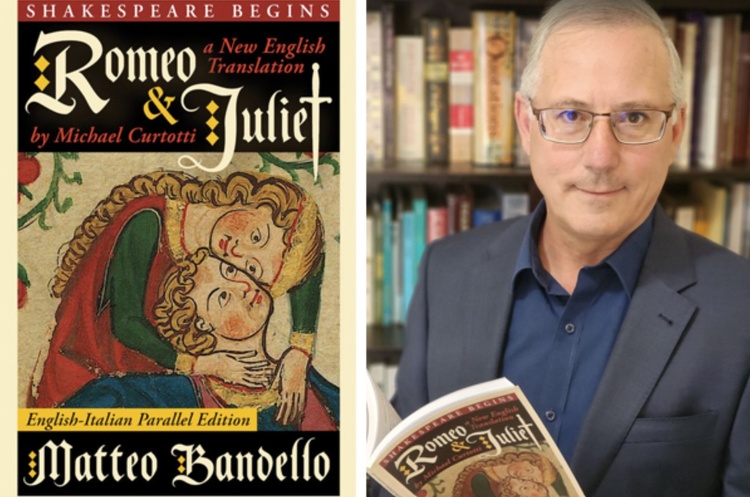
Romeo and Juliet, written between 1594 and 1596 and celebrated worldwide for its heartbreaking love story, is based on a story by the Italian storyteller Matteo Bandello.
Bandello, who lived between 1485 and 1561 during the Italian Renaissance, wrote 214 novellas that portrayed the society he lived in. During that period, many of Bandello’s works were translated into both English and French, and his stories served as a rich source of inspiration for Shakespeare.
Two of the English writer’s most important works - Much Ado About Nothing and Romeo and Juliet - are derived from Bandello’s novellas.
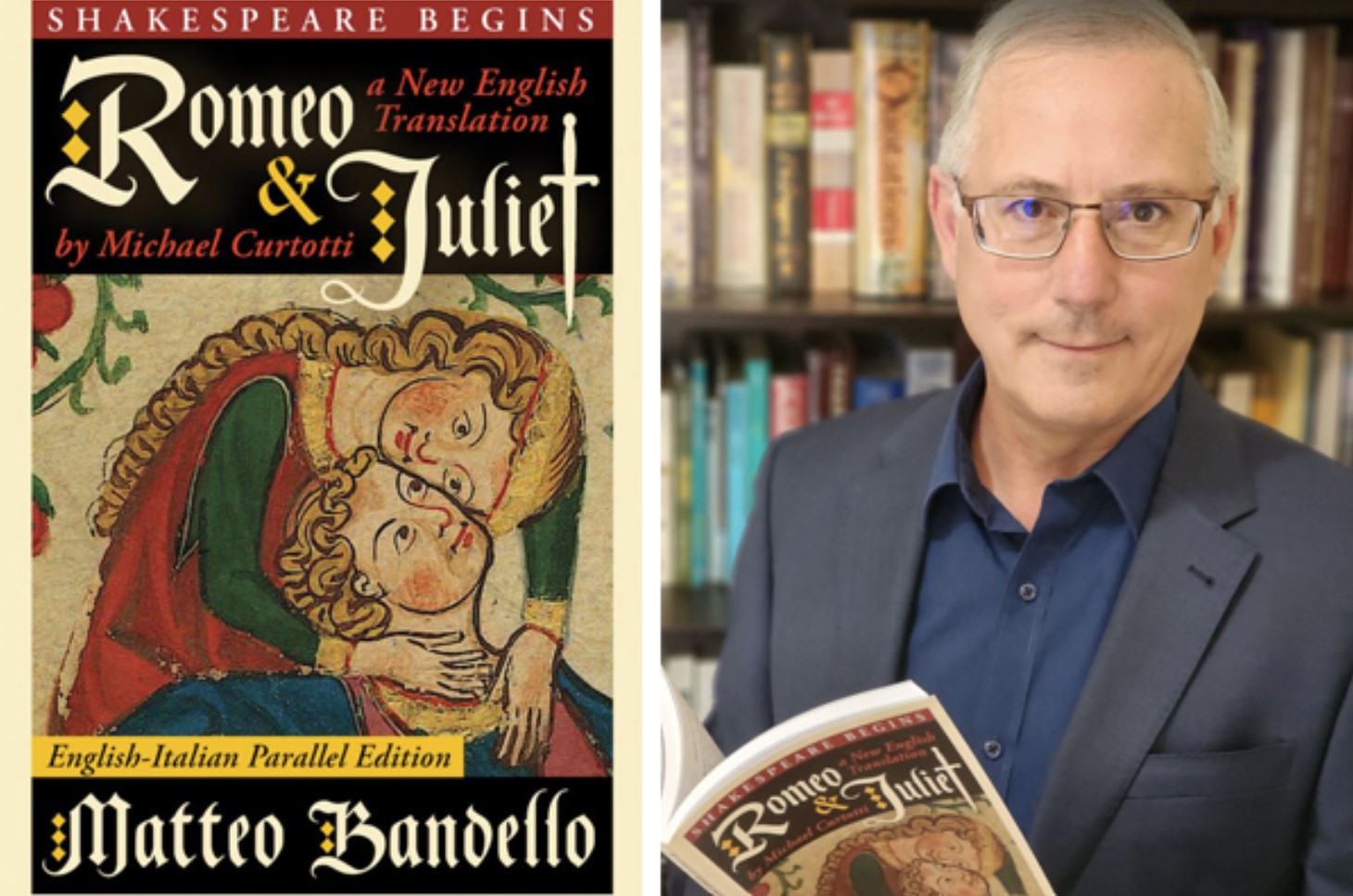
Bandello’s version of the story about the lovers from Verona has been studied and recently translated into English by Michael Curtotti, an enthusiast of Italian literature with a particular interest in Renaissance-era Italian novellas.
“Being born into an Italian family, I’ve always been surrounded by that culture, but it was only later in life that I became curious about its literature and history, especially from the Renaissance period,” he said.
Wanting to make Bandello’s version of the story accessible to as many people as possible, Curtotti decided to translate it. He was also slightly motivated by the film Shakespeare in Love, which suggested that the inspiration for Romeo and Juliet instead came from the London theatre impresario Christopher Marlowe.
“That was simply a great narrative device,” Curtotti explained, “but I wanted to bring Bandello’s work to light.”
And so, the lawyer who provides pro bono legal support to students at the Australian National University became a dedicated translator.
“Translating a work requires a very different approach than simply reading it,” he said, “You have to examine the words closely, understanding not just their meaning but also the emotions they’re trying to express.”
And while the two versions of Romeo and Juliet are very similar in both plot and characters, what truly sets them apart is the emotional tone of the protagonists.
“Bandello’s world is much more emotional and direct,” the Curtotti emphasised, “Whereas Shakespeare tends to express emotions poetically, Bandello chooses to convey the character’s direct experience.
“The two authors are clearly influenced by their respective cultures. For instance, Juliet’s mother plays a central role in Bandello’s version, becoming an important character. Whereas in Shakespeare’s version, she does not.”
Another area where cultural difference is on display is in the portrayal of masculinity. On one hand, Shakespeare, reflective of his time, avoids depicting Romeo as a man capable of having strong emotions. Meanwhile, the Italian Romeo’s feelings overwhelm him as he fluctuates between guilt and despair over the loss of his beloved, unable to contain his grief.
Shakespeare’s mastery is evident in certain details, as Curtotti pointed out, explaining how the English poet managed to “make key parts of the story more dramatic by shifting the perspective, bringing to the forefront elements that, in the lesser-known version, were merely in the background, such as the rivalry between the Montagues and Capulets”.
The process of translating this moving work was so captivating for Curtotti that it drove him translate other stories such as, most recently, Desdemona by Giovan Battista Giraldi (commonly known as Cinthio), which was the inspiration for Shakespeare’s Othello.
Curtotti translates poetry as well as drama, both from Italian and Arabic (his other passion) to form part of a collection he made available through the small publishing house he founded, Beyond Foreignness, offering side-by-side Italian or Arabic and English text.
Through this endeavour, he has reconnected with the deep roots of his family, who were originally from San Severo in Puglia, where he lived for two years before moving to Australia with his parents.
“It’s been a journey that has helped me reconnect with my culture and bring to light a kind of literature that few people know about.”