She recently returned from the Boston Marathon, the oldest in the world (first held in 1897) and has another race lined up for this year. “In November, I’ll take part in the New York Marathon, and then I still need to complete Berlin, London and Tokyo,” she revealed.
Her goal is to complete the seven major marathons (with Sydney added to the circuit this year), a milestone that only 17,679 runners worldwide have achieved in marathon history.
Running 42 kilometres requires resilience, consistency and tenacity - qualities the teacher brings into the classroom as well. It was in 2014 that Casu left Sardinia for Australia, where she initially taught French in Canberra, continuing the work she had started in Italy.
She then moved to Sydney to teach Italian at Co.As.It. and the Dante Alighieri Society, before joining the team at the IGS, a school founded in 1984 “from the dream of a great man, Reginald St Leon”, as Casu explains.
“His idea was to create a school that offered bilingual education, but at the time, foreign language teaching wasn’t well regarded, and the Department of Education even shut the school down.”
Thanks to protests from staff and the entire school community, as well as numerous letters sent to the minister for education by families and students, the school was eventually recognised. Today, it has around 1200 students.
IGS also places special emphasis on music, but languages remain fundamental, as the founder intended.
“From Grade 3, students begin learning a second language, which they must continue through to Year 11,” says Casu, noting that the school offers five languages: Italian, French, German, Chinese and Japanese.
The program is designed to be intensive, with language used throughout the lessons. “In primary school, we use an approach similar to CLIL (Content and Language Integrated Learning) for interdisciplinary teaching. From Year 7, students also begin a third language, choosing between Spanish and Chinese.”
In Year 9, top students are selected for an accelerated program that allows them to complete the curriculum for Years 9 and 10 together, giving them the opportunity to take their final exams a year early in Year 11.
Cultural aspects also play a significant role in the language journey of IGS students, and are incorporated in various ways. “In the extended course, for example, we analyse the film Il campione by director Leonardo D’Agostini,” she explains, “It’s a way to be immersed in the culture by analysing social elements. We also dedicate time in class to reading articles and books, and watching videos.
“These are all ways to expose students to a variety of resources and more authentic language,” Casu emphasised.
The idea that language should surround students is the guiding principle of the teaching team, which is why, from Year 3, they organise a three-day camp where children are immersed in the language through engaging and playful activities.
“Each year we choose a theme,” says Casu, “This year we picked Carnevale, which allowed us to talk about Commedia dell’arte and organise a parade of all the masks made during those days.
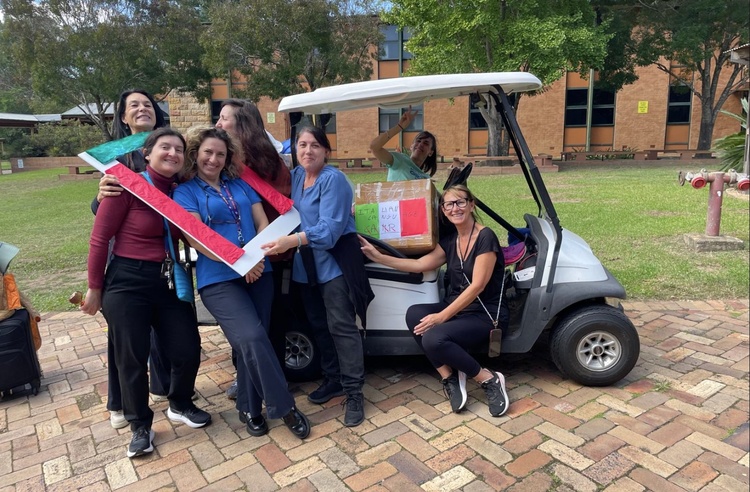
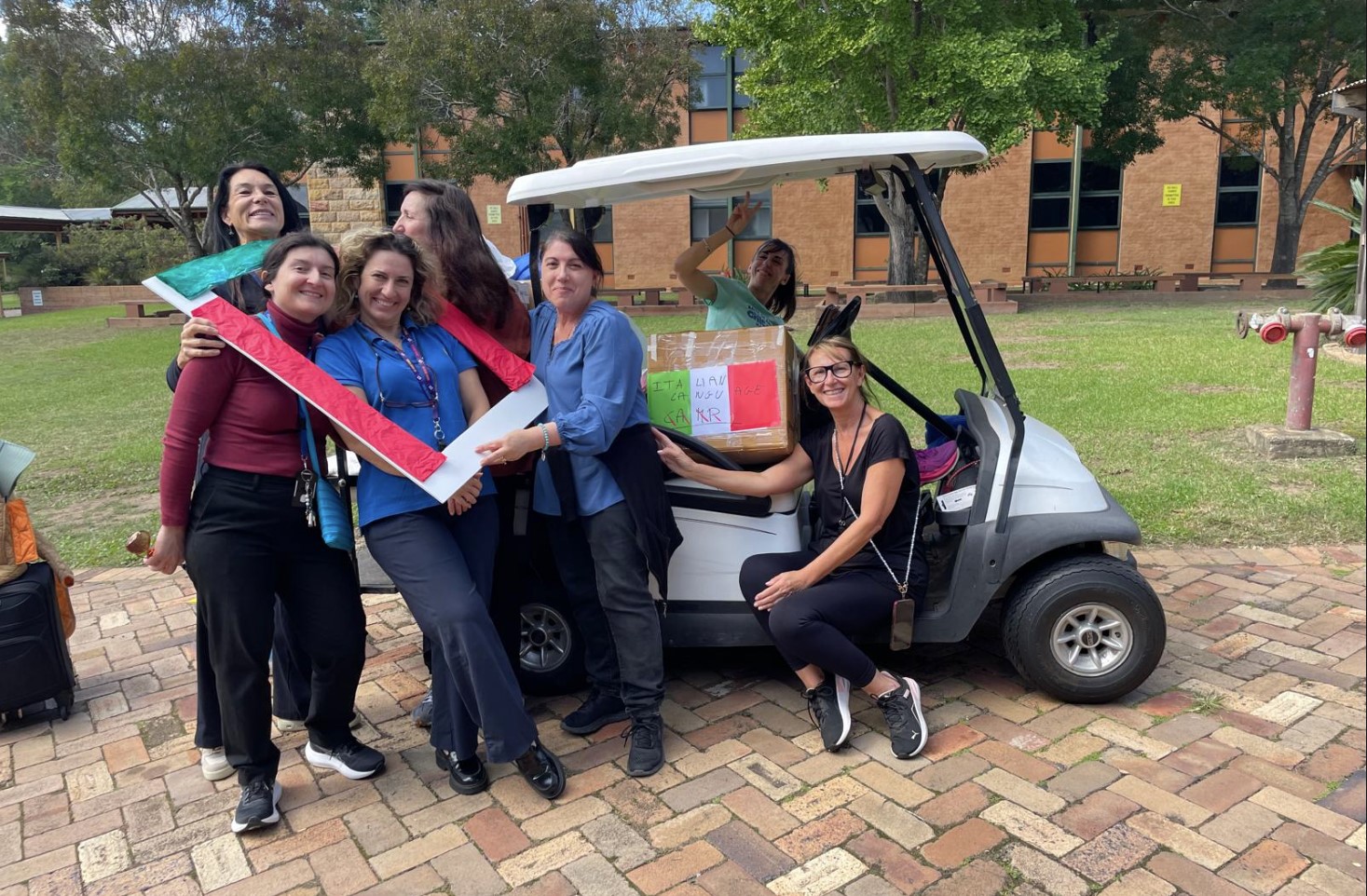
“The children then had to describe their costume and personality in Italian, and we created metres and metres of paper chains to spell out the word Carnevale,” she recalls.
Language and culture, once again, blend to create an unforgettable experience in preparation for overseas trips.
“For some languages, exchanges start as early as Grades 5 and 6, and again in Years 8 and 9,” she reveals, “But the most significant experience comes in Year 10, when students travel to Italy for six weeks.
“In November, the group will go to Rovereto, in the province of Trento, and attend the Antonio Rosmini high school with which we are partnered.”
The visit is preceded by the arrival of the Italian students in June - a chance for students to meet and form strong bonds that often last a lifetime. “It’s a highly anticipated program that generates a lot of motivation and enthusiasm. And the students’ progress improves significantly after such an experience,” the teacher attests.
But to maintain high engagement, work must be done in the classroom - not only by creating personal relationships with students but also by equipping them with tools for continuous improvement and growth.
“Personally,” she explains, “I find that giving students ongoing feedback yields great results, helping them reflect on areas where they can improve.
“I believe in the value of receiving feedback, both from peers and teachers. I write very detailed comments to provide students with tools to improve, especially in writing. And thanks to the constant feedback they receive, the students are achieving excellent results.”
Sabrina Casu also emphasises how much the support of IGS Principal Shauna Colnan and the close collaboration with her colleagues in the department contribute to achieving the high standards the school is known for.
These standards are made possible “thanks to everyone’s contributions and the experience of teachers like Rita Morabito, the school’s first Italian teacher and now head of drama, and Vilam Rotellini, along with all the others.”