The touring exhibition Mosaic of Marks, Words, Material, developed by Reggio Children, has just concluded after stops in Adelaide, Sydney and Rockhampton, bringing to Australia one of the most innovative educational projects in the world.
The exhibition transformed the three cities into spaces for exploring children’s graphic marks and ways of thinking, inviting adults, educators and families to look at drawing not as a finished product but as a process of understanding.
The project was created in Reggio Emilia, within the city’s internationally renowned early-childhood centres of the Reggio Emilia Approach, starting from a simple and radical question: has drawing, now such an everyday gesture, become something we no longer truly see?
To investigate this, educators offered children a range of unusual surfaces and tools: papers with different textures, corrugated cardboard, translucent plastics—materials that react to marks in unexpected ways.
No one asked children “to draw something”, and no subject was suggested. Instead, the focus was on what happens when a tool meets a surface, and how that encounter shapes a child’s thinking.
The Reggio Emilia Approach is not a method to be applied like a formula, but a post-war educational philosophy built on a clear idea: children are competent individuals, already capable of constructing meaning.
Ruth Weinstein, board member of Reggio Emilia Australia, puts it plainly: “A child is not an empty vessel to be filled. Reggio Emilia is a philosophy, a way of working with children.”
It’s a simple statement, but it overturns the long-held assumption that adults know and children follow.
Here, the opposite happens: the child leads, the adult observes. The exhibition panels present real research from Reggio Emilia’s infant-toddler centres and preschools—photographs, transcripts of conversations between children, graphic traces and educator notes.
Each panel is a small story exploring how a line changes when a tool slides across a glossy surface, how rough paper “makes noise”, or how ink “falls inside like rain”.
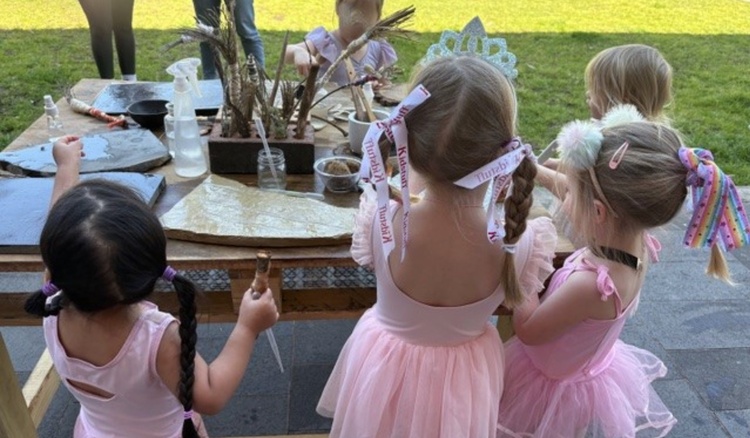
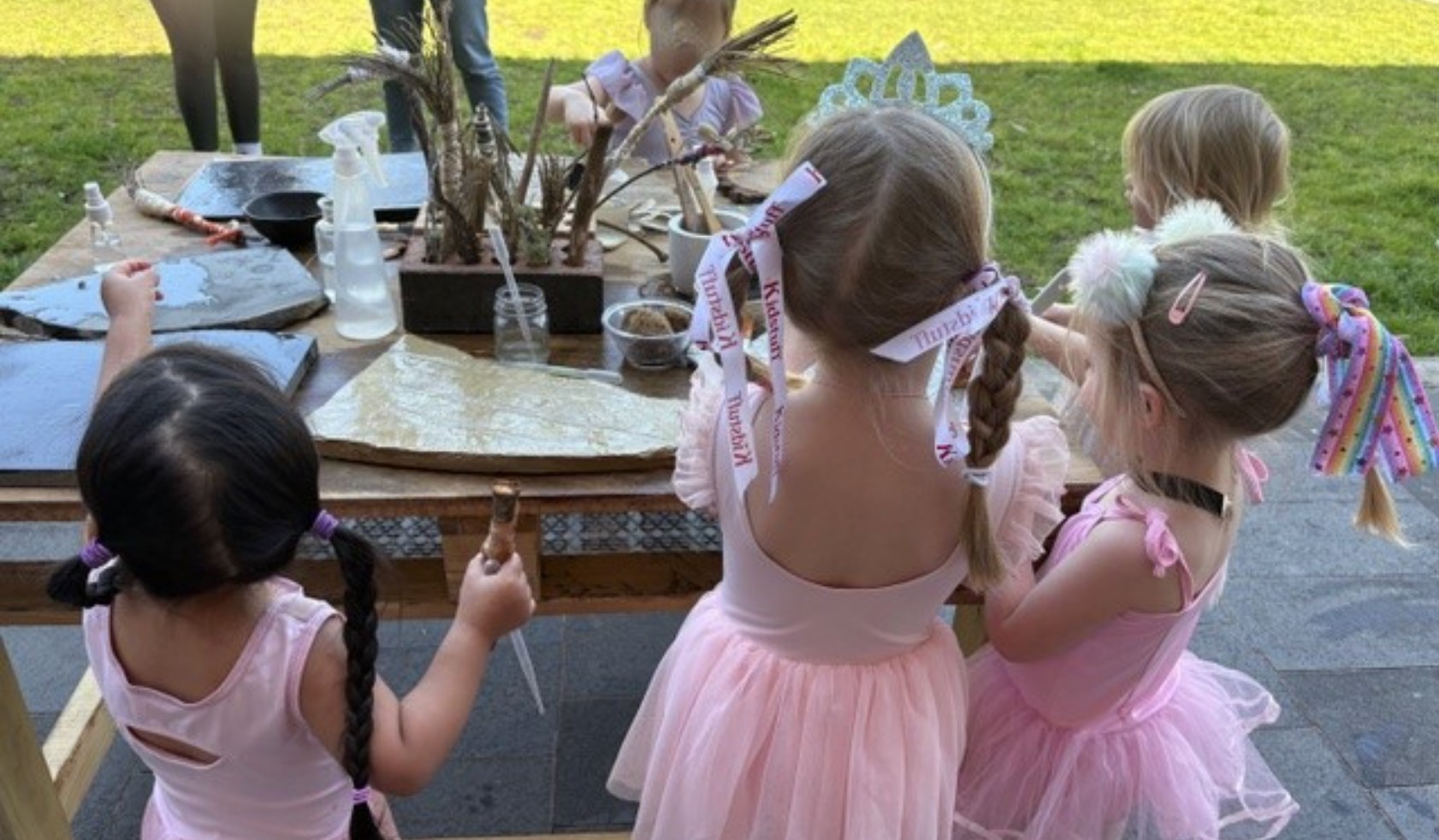
The goal is not to create a “pretty” drawing, but to understand what is happening. At the centre of the exhibit is an interactive workshop—not a place to produce drawings, but a place to observe what happens when a tool meets material.
“It’s like listening to the paper,” one child said.
Alongside the exhibition, which was free and open to the public, Reggio Emilia Australia organised workshops and masterclasses for educators, families and university students. These sessions delved deeper into the material shown in the panels, teaching participants how to read documentation and discuss its educational implications.
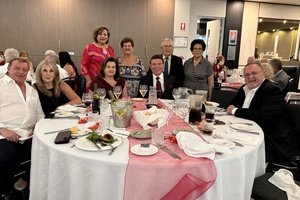
During the Australian tour, the exhibition acted almost like a public square: families, teachers and students from schools and universities moved through the rooms talking, asking questions, touching materials, moving from panel to panel and following the children’s thinking.
It was an “anti-museum” where touching, trying and sensing were encouraged, and where visitors formed a temporary research community rather than remaining passive spectators.
Mosaic of Marks, Words, Material is a travelling exhibition that goes wherever there is a community ready to welcome it. Each stop adapts to its surroundings and takes on a new form through the people who experience it.
“We’re not ticking boxes. We’re searching for ideas, hypotheses and relationships in a continuous process of investigation guided by curiosity,” Weinstein explained.
In an age fixated on performance, the exhibition brings us back to slowness and wonder.
“If you really stop to watch them, children will surprise you. Always,” Weinstein revealed when asked what still amazes her after almost fifty years in the field.