
We have already written in the past about the famous casu martzu (which literally means “rotten cheese”) from Sardinia.
Obviously, its consumption is not limited to that region, and with different names it’s also eaten in other parts of Italy, for example gorgonzola con grilli in Liguria and salterelli in Friuli.
These names clearly indicate the presence of larvae that live in the cheese and can jump out at any moment.
Among the various unusual regional dishes in Italy, we cannot forget cibreo from Tuscany, polenta taragna from Lombardy and ricci di mare from Apulia.
Cibreo is a Tuscan dish prepared with parts of the chicken or rooster that are often no longer used today, such as livers, hearts, combs and wattles. These parts are cooked with eggs, lemon and broth to create a creamy stew.
It comes from the tradition of using every part of the animal, and we really mean every part... Even though it’s not very common today, it is still considered an important example of Tuscan cuisine.
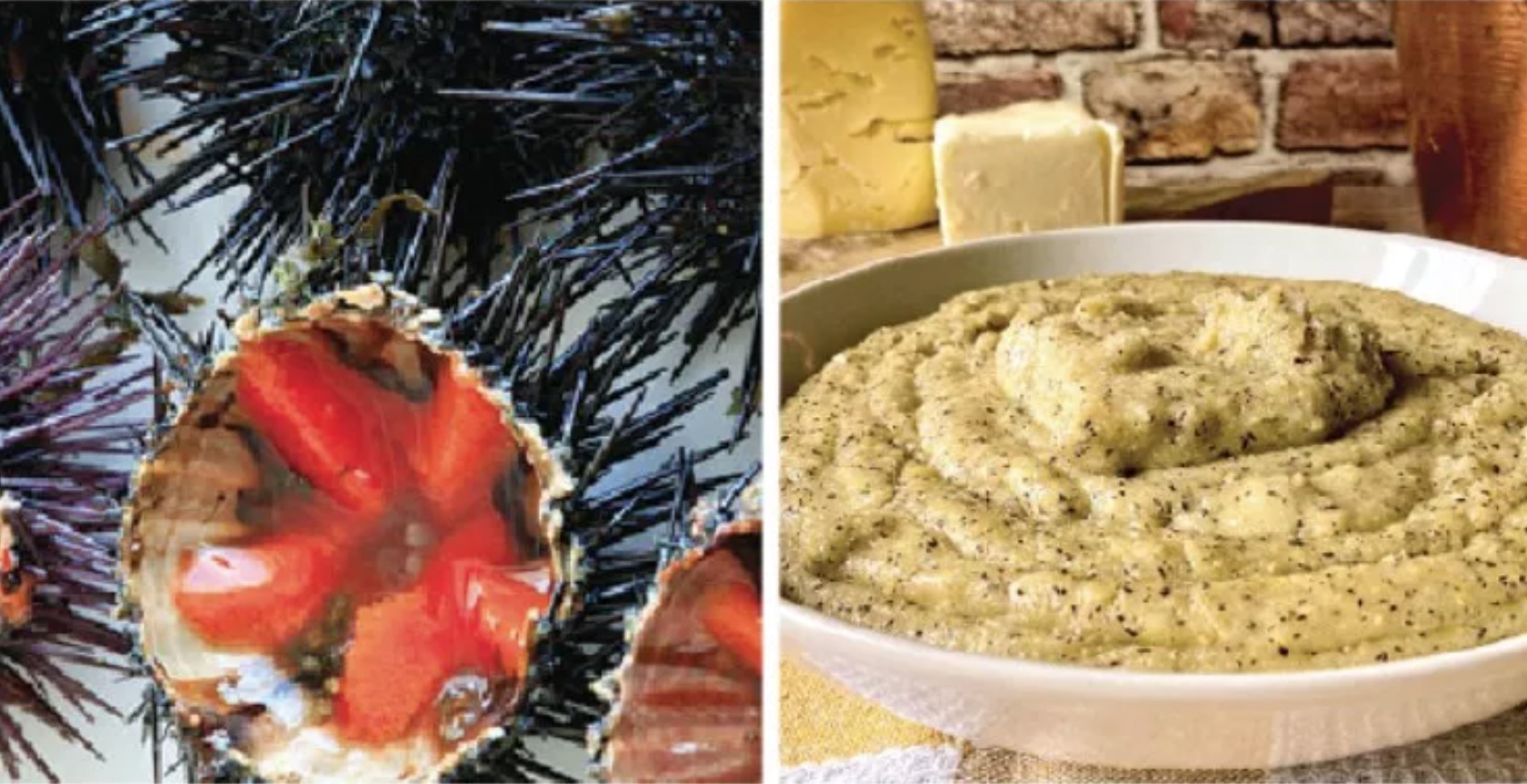
In Lombardy, northern Italy, polenta taragna is a variation of the more familiar polenta. It’s made with corn and buckwheat, which give it a darker appearance and a stronger flavour. Butter and local cheeses are added to make it rich and hearty.
It was once the staple food of farmers and shepherds, and today it’s still popular in mountain areas.
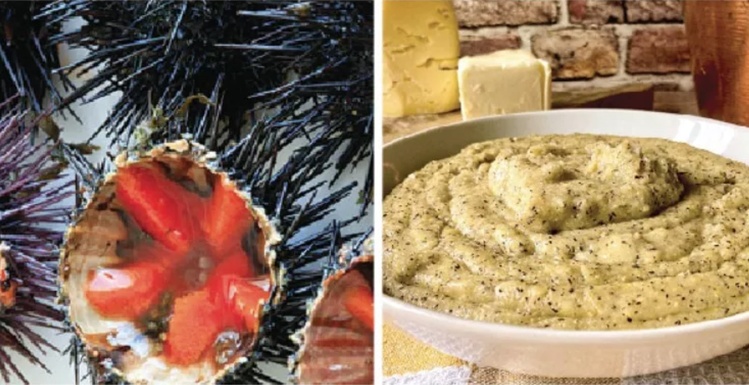
In Apulia and elsewhere, ricci di mare (sea urchins) are eaten. The urchins themselves are eaten raw with bread, or their orange eggs can also be added to pasta.
The flavour is very strong and salty, and may surprise those tasting sea urchins or their eggs for the first time. After years of overconsumption, harvesting sea urchins is currently banned to allow repopulation.
These three dishes show how Italian cuisine is more varied than the famous national classics. Italy truly is a gastronomic paradise.
Buon appetito!