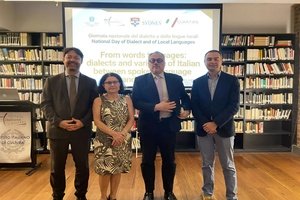
From October 13 to 19, all lovers of Italy, its language and its culture will be able to take part in the program of events, centred this year on the theme Italofonia: Language Beyond Borders.
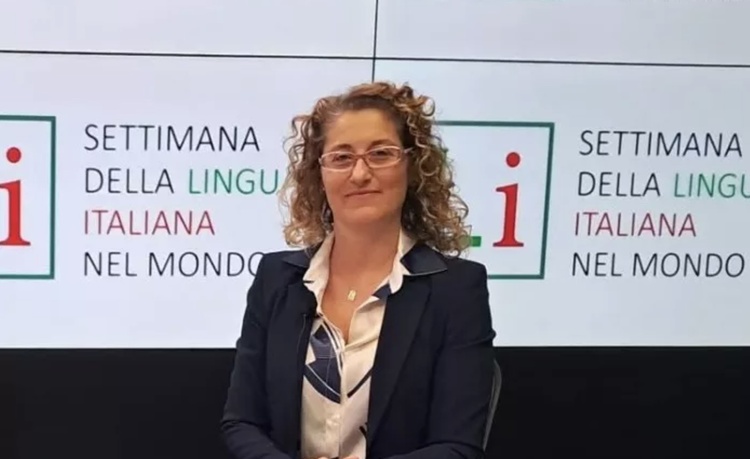
“It is a theme that aims to celebrate the global spread of the Italian language,” explained Consul General of Italy in Melbourne, Chiara Mauri, during an interview with Il Globo TV.
Italian, she noted, is not only among the most studied languages in the world, but also “a vehicle and instrument of culture in every sense”.
The chosen theme for this 25th edition offers an opportunity to honour Italian even in Australia. “[It’s] a geographic area very far from Italy, but home to a very large community, particularly in the State of Victoria, which hosts the biggest Italian community in Australia and plays a fundamental role in promoting our language here,” she said.
As is her usual approach, Consul Mauri involved all of Melbourne’s Italian cultural organisations in the planning process. “Our partners, Co.As.It., Com.It.Es., the Dante Alighieri Society, the bilingual schools (we have two in Melbourne) and the universities that work every day to promote Italian; I created a coordinating table where we all met, and each contributed their proposals.”
The result is a program rich with initiatives, with the main event scheduled for October 15 at the University of Melbourne. Dedicated to the centenary of Andrea Camilleri’s birth, Donne di Sicilia will feature an exhibition, a staged reading of selected passages done remotely by Camilleri scholar and researcher Professor Simona Demontis, and a screening of the documentary Io e la Rai, in which the author offered an unique perspective on his relationship with television.
Camilleri will also be the focus of teaching activities organised by Com.It.Es. in Melbourne’s bilingual schools in Brunswick South and Footscray. The Dante Alighieri Society will award students who took part in the poetry recitation competition, while Co.As.It., in collaboration with Monash University, will host a lecture by Professor Timothy Campbell on the pandemic, The Pandemic in Three Words, exploring the role of language during that historic period.
“It’s a well-rounded program with many different initiatives, but one goal: to promote our language in this fertile context,” said Mauri.
“I’m very pleased because every organisation in Victoria whose mission includes the promotion of Italian has been involved, and if the program is so interesting, it’s thanks to them.”
The institutions are well aware of the challenges Italian faces in Australia and Victoria more specifically, especially given the competition with other languages.
“We operate in a very broad multicultural context, where many communities coexist in an integrated way, but where other languages are also taught,” the Consul noted.
“We must continue working together. The future of Italian in Australia depends on the commitment of institutions, the community and the new generations.”
In this sense, she stressed the importance of keeping the language alive at home in everyday life, because the only way for Italian to remain in schools is through constant, growing demand.
Victoria has shown particular sensitivity to this issue, recently renewing a Memorandum of Understanding with the Department of Education to promote Italian in schools.
“Now in its final stage, the text was negotiated thanks to the input, comments and suggestions of all the Italian and Italian-Australian stakeholders active in Victoria,” Consul Mauri explained, adding that the agreement will establish “a permanent working group that will meet annually”.
“I will take part as representative of the Consulate General and the Italian Cultural Institute, but will also include other partners as necessary,” she said.
This mechanism, she added, will “monitor the state of health of Italian in Victoria’s education system, with the aim of maintaining, if not expanding, its presence”.
Despite the inevitable challenges, Consul Mauri remains optimistic: “Italian is the language of reference for those approaching art, culture, music, fashion and the culinary excellence of our country.”
Seen from this perspective, the Italian language clearly has “a potential for growth that goes beyond the Italian community or Australians of Italian descent, opening itself to a much wider audience interested in our immense artistic and cultural heritage”.