MELBOURNE - Foreign language teaching is the flagship of St. Monica’s College in Epping. The school’s principal, Brian Hanley, together with a team of dedicated teachers and coordinators, has been promoting it for years.
The college offers as many as five foreign languages for its students to choose from: Italian, Spanish, French, Greek and Japanese. In fact, it was with Japan that the school initiated the first homestay exchange program in Australia 23 years ago.
Principal Hanley often reminds his students that “the world is much bigger than Epping”. He wants to give students the opportunity to engage with different ways of thinking and foreign traditions, offering a “researched and genuine approach to different cultures, but at the same time bringing the values of our school, to the world”.
With the aim of celebrating the importance of studying a foreign language, each year the school organises a week of games, food and activities related to discovering cultural aspects of the countries whose language is offered.
This year also saw the revival of a tradition that had been discontinued years ago – outsiders coming to testify to the fundamental role that languages play in the school’s curriculum, as well as the importance of maintaining a connection with the community.
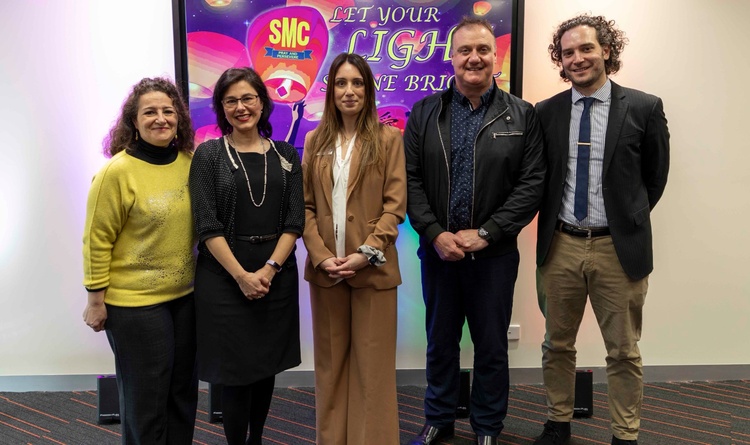
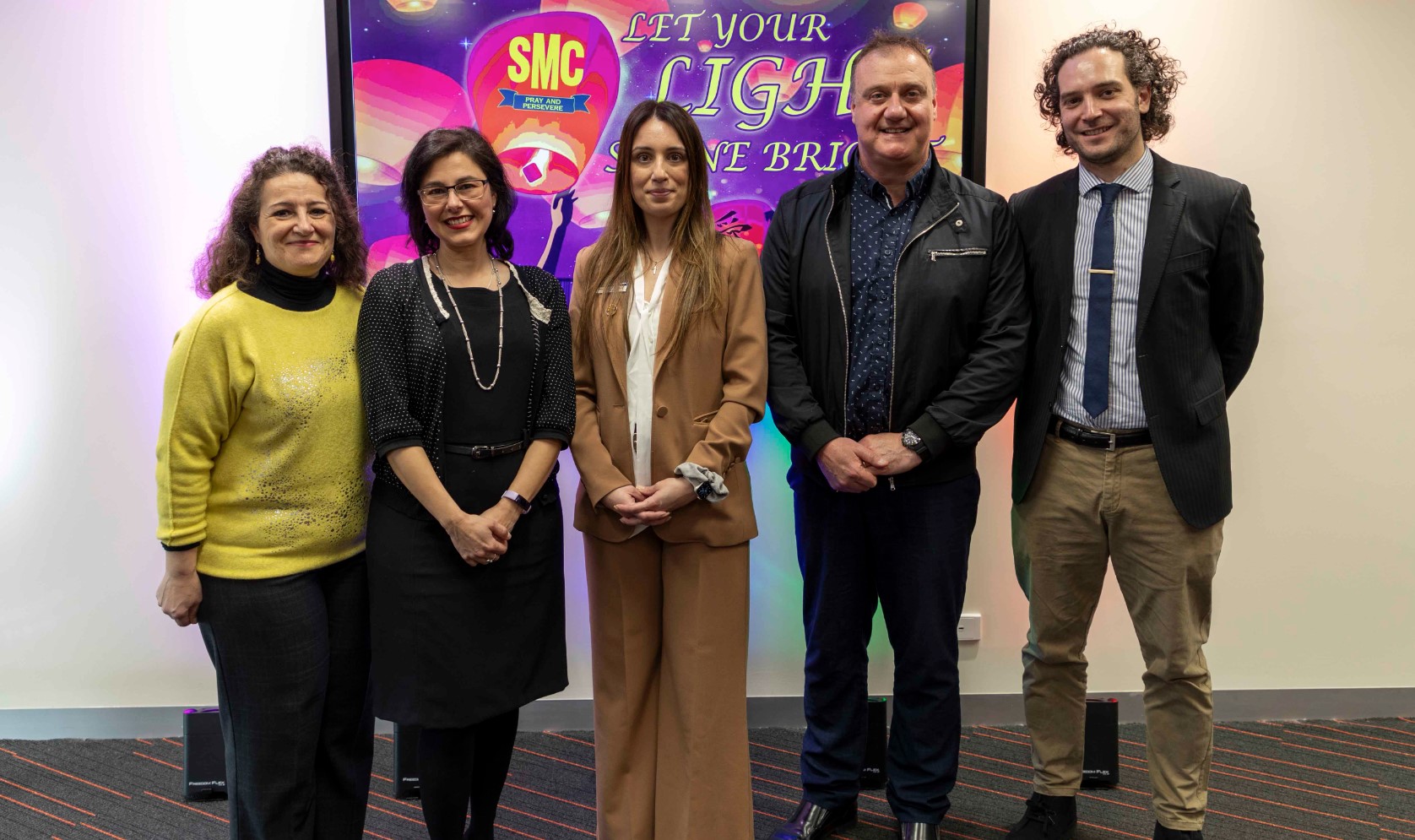
In the presence of consular staff, the head of the school’s Language faculty - Maryanne Theodosis - welcomed the guests before passing the floor to a student who recited an Acknowledgment of Country in Greek. It was followed by the recitation, together with the other students, of prayers in the various languages taught at the school.
Maryanne Theodosis gave those present an overview of the school’s rich language program, which involves choosing one language to study for the first three years of high school. In Year 10, students can decide whether to continue.
The school also offers, for interested students, the option of an ‘immersion program,’ which includes taking certain subjects in the foreign language.
Outside the classroom, pupils also have the opportunity to work on specific aspects of their chosen language within smaller groups.
The percentage of pupils who continue to study a language at St Monica’s is quite high, no doubt due in part to the approach of the teaching team.
“From Year 7 to 9 we focus on the cultural aspect, so that students learn not only how to communicate, but to understand how culture manages to shape influencing people who speak a certain language,” Theodosis explains.
“The school has opted for this approach in the confidence that students, when put in contact with culture, can learn languages with greater enthusiasm.”
The students who took the microphone to present themselves in the foreign language they study showed their willingness, ability and dedication.
Vincent Barillaro, for example, is a Year 12 alumnus who explained that he chose Italian to maintain a strong connection with his family’s origins. Vincent not only took Italian at VCE, but intends to continue studying it at university.
Also organised as part of Language Week was a soccer match, an Olympic games, a ‘cultural snack’ to sample different foods, a selection of foreign films, traditional music and dances.
The event held at St Monica’s last August 1 marked an important moment for the students, who were able to demonstrate their language skills. But it was also important for the guests, who were able to appreciate the results achieved thanks to the passion and skill of motivated and supporting teachers.