There’s a window separating the inside from the outside: the room of a restaurant, and the piazza out front. When Anna and Luciano exchange glances, the division becomes clear. There is history - Fascism, racial segregation, Italy’s entry into the war - and the representation of a more private affair, which takes place amongst diners and kitchen staff.
Thirty-five years after Il grande Blek, director and screenwriter Giuseppe Piccioni returned to his hometown, Ascoli Piceno, in the Marche region, to shoot his film about memory, L’ombra del giorno, adopting a more classic and rigorous cinematic style.
The film is showing at the latest edition of the ST. ALi Italian Film Festival, which has finally crept into Australian cinemas following opening night screenings of Nostalgia by Mario Martone and Belli Ciao with comedy duo Pio and Amedeo.
Now, thousands of enthusiastic spectators will also be able to lose themselves in the quiet streets of the town in the Marche region, in a Renaissance-era, a depopulated Piazza del Popolo, and in one of Italy’s most monumental historic centres.
We find ourselves at the gates of the Second World War - behind us, the tragic legacy of the Great War. It is 1938 and Luciano, the owner of a restaurant in the city centre played by Riccardo Scamarcio, is suggested to be sympathetic to fascism.
At his door arrives Anna, played by the very young Benedetta Porcaroli, who is hired as a waitress after campaigning outside of the restaurant for a long time. The girl quickly settles in, becoming a real asset to the establishment. However, she carries a secret with her, and Luciano’s life will be forever changed.
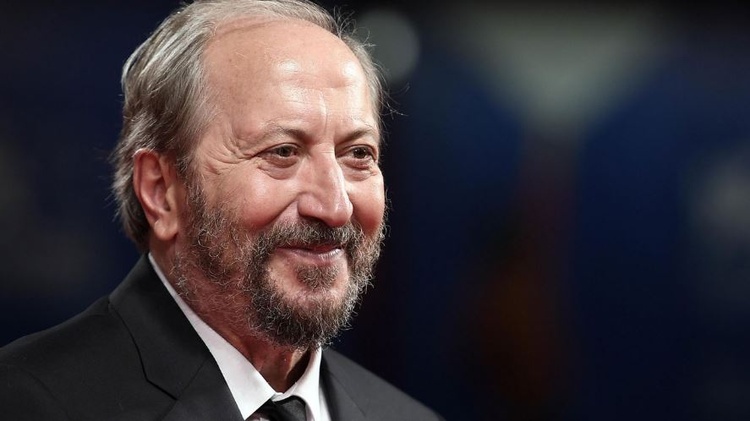
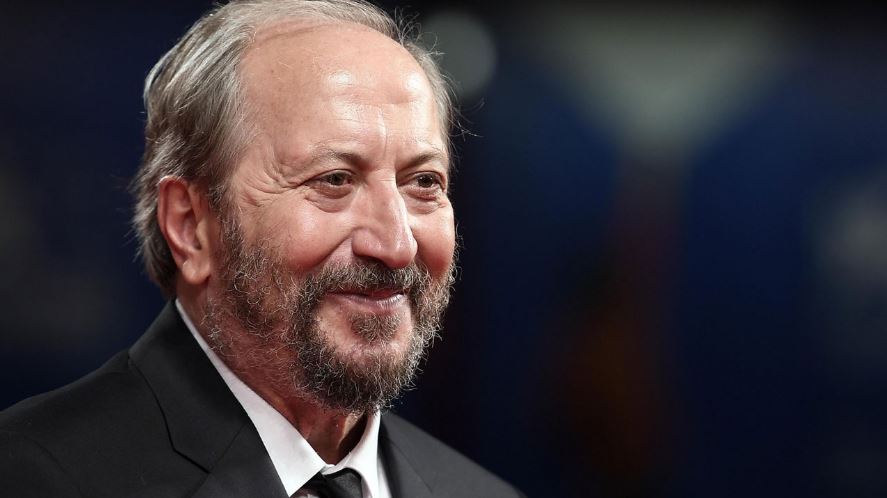
“I had written the film’s subject matter ten years ago,” says director Giuseppe Piccioni during our interview, directly from his home in Ascoli Piceno.
“A producer immediately showed interest in this story. The script was written with great awareness. Even before the rise of fascism, with the First World War... everything changed and democracy vanished into thin air.”
“The mood I wanted to capture was one of a person who could rediscover that dormant spirit of freedom. But in such difficult times, there is always the risk of losing everything; and if there is a war, you do lose everything.”
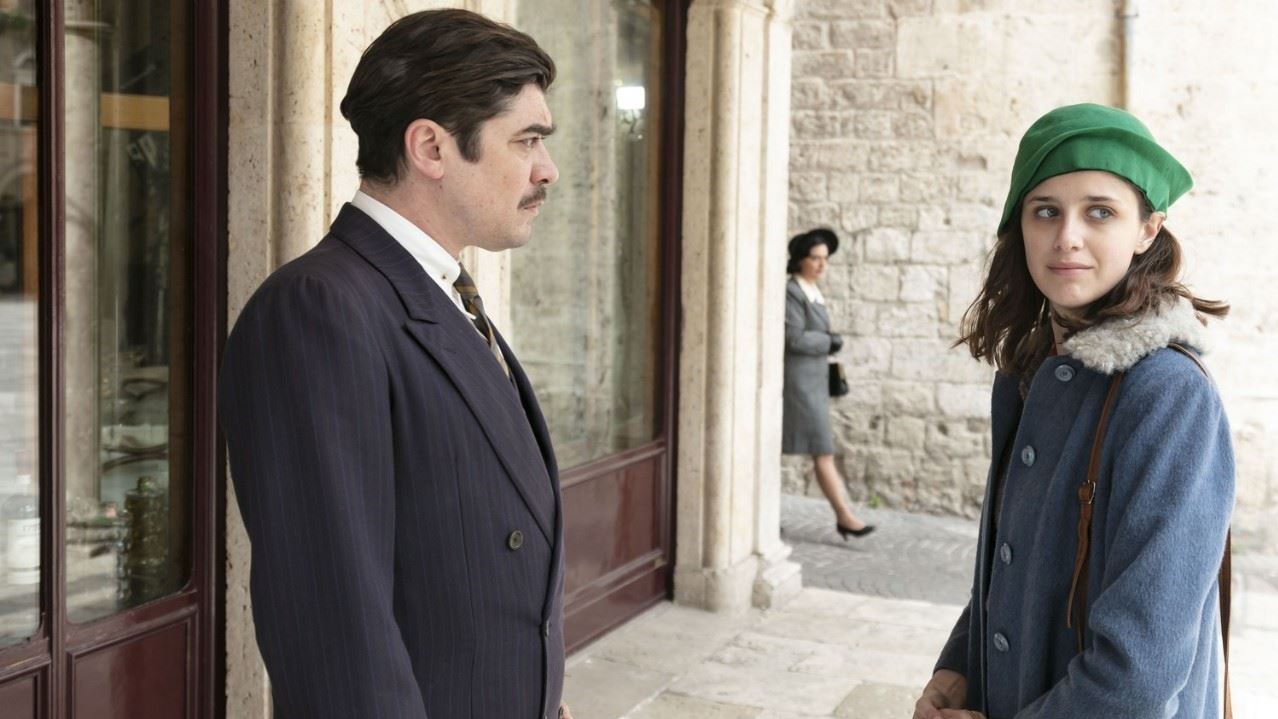
Riccardo Scamarcio and Benedetta Porcaroli in a scene from 'L'ombra del Giorno'. (Image provided)
At the end of the 1930s, fascism’s wall of consensus was continuing to rise, without the shadow of an opposition.
“Mussolini was regarded as a great statesman; people looked at him with great curiosity, at least until the imposition of the racial laws.”
Piccioni, the son of a submariner on the front line during the Second World War, almost feels as if he carries a weight, despite the fact that his generation has done everything it can to forget the horrors of the recent past.
“My father lived in the worst conditions, for hundreds of missions, in what were almost ‘submarine coffins’; it was his apprenticeship to life, being the son of peasants with very limited experience behind him.
“He escaped from Fiume, where his naval base was, during September 8 when Badoglio’s proclamation of armistice was issued, and arrived on a fishing boat in San Benedetto del Tronto with my mother, who had gone to visit him in those days.
“At the port, only the two of them arrived; all the others had been bombed. From there, they left on a carriage to get to Ascoli Piceno. In those years, my father had also received medals of honour for saving drowning comrades. It is stories like these that make you reflect; I have always had tremendous respect for my father.”
In L’ombra del giorno, it is evident how the gaze of the townspeople becomes increasingly hostile, how Luciano’s wall of security slowly breaks down - the impenetrable fortress from which he defends himself against the hostility of others. He begins to make choices at a very critical moment in history.
The change in the air is indicated in the film, in particular by the attention paid to dialogue by the scriptwriters - Giuseppe Piccioni himself, Gualtiero Rosella and Annick Emdin: the use of ‘voi’, typical of the time and the dialect that gives colour to the side characters.
“These are years that are almost impossible to imagine, and yet it is still so easy to fall into that frightening vortex. For me, understanding meant studying, reading a lot; being able to shoot the film in Ascoli Piceno also helped, because in this province there was apparently no extreme conflict, but people knew each other and always expressed themselves in muted tones,” says the director.
The filming of the movie also took place at the height of the pandemic, in a tragically empty and quiet Italy. The squares packed during Benito Mussolini’s declaration of war thus became a deserted city.
“The film was originally supposed to be set in Rome, and we were looking for a restaurant that was empty, in the right location, where there were no traffic issues and where there was parking, which is becoming increasingly complicated in the capital,” he continues.
“In the meantime, I went back to Ascoli for a short period to reunite with family and friends. One afternoon, I was at Caffè Meletti, an early 20th century café, and while I was looking out the window just as Luciano does in the film, I realised I had found our location. I immediately called Scamarcio, the film’s producer, who called me ‘crazy’. It was too late to change anything, but when he saw the photos of the place, he realised how special it was.”
And it is precisely from the window of that restaurant that we retrace Italy’s troublesome years through the gaze of the protagonist, always filled with illusions, with his dignified fear of survival. Through Anna’s desire to survive, who whispers to him, “I don’t see the same things you see”.
Love, salvation, the drama of a precarious tomorrow: Ascoli Piceno in L’ombra del giorno becomes a reflection on a journey of discovery, thanks to characters full of nuances, constantly protected by a glass that, even in a moment of intimacy, turns into a veil of discretion.
“I am so curious to hear how the film will be received in Melbourne,” adds Giuseppe Piccioni.
“Australia is one of those countries that you’re happy to have a film screening in, a bit like the United States or France. I am full of expectations, and I would be very happy if it is appreciated by cinema-goers, and by the people of Ascoli.”