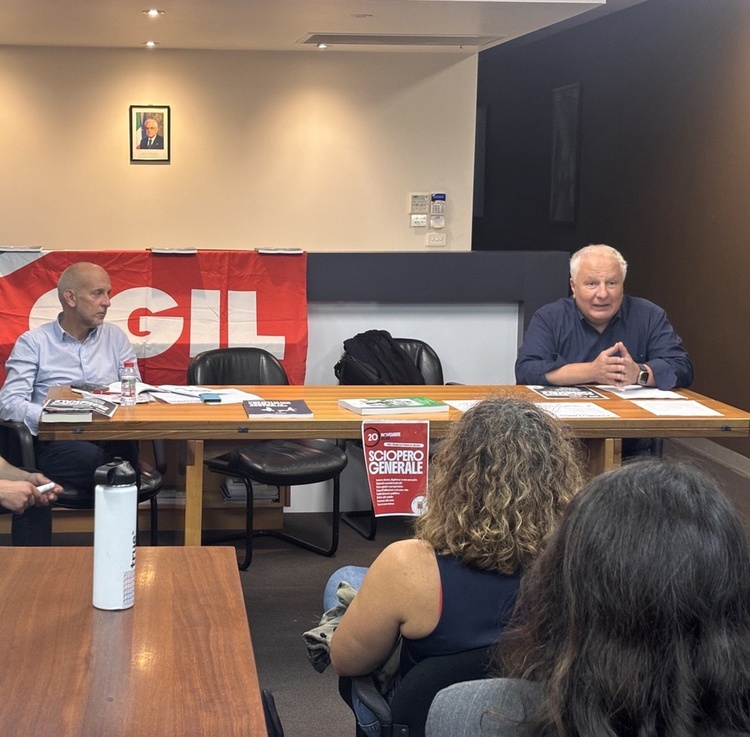
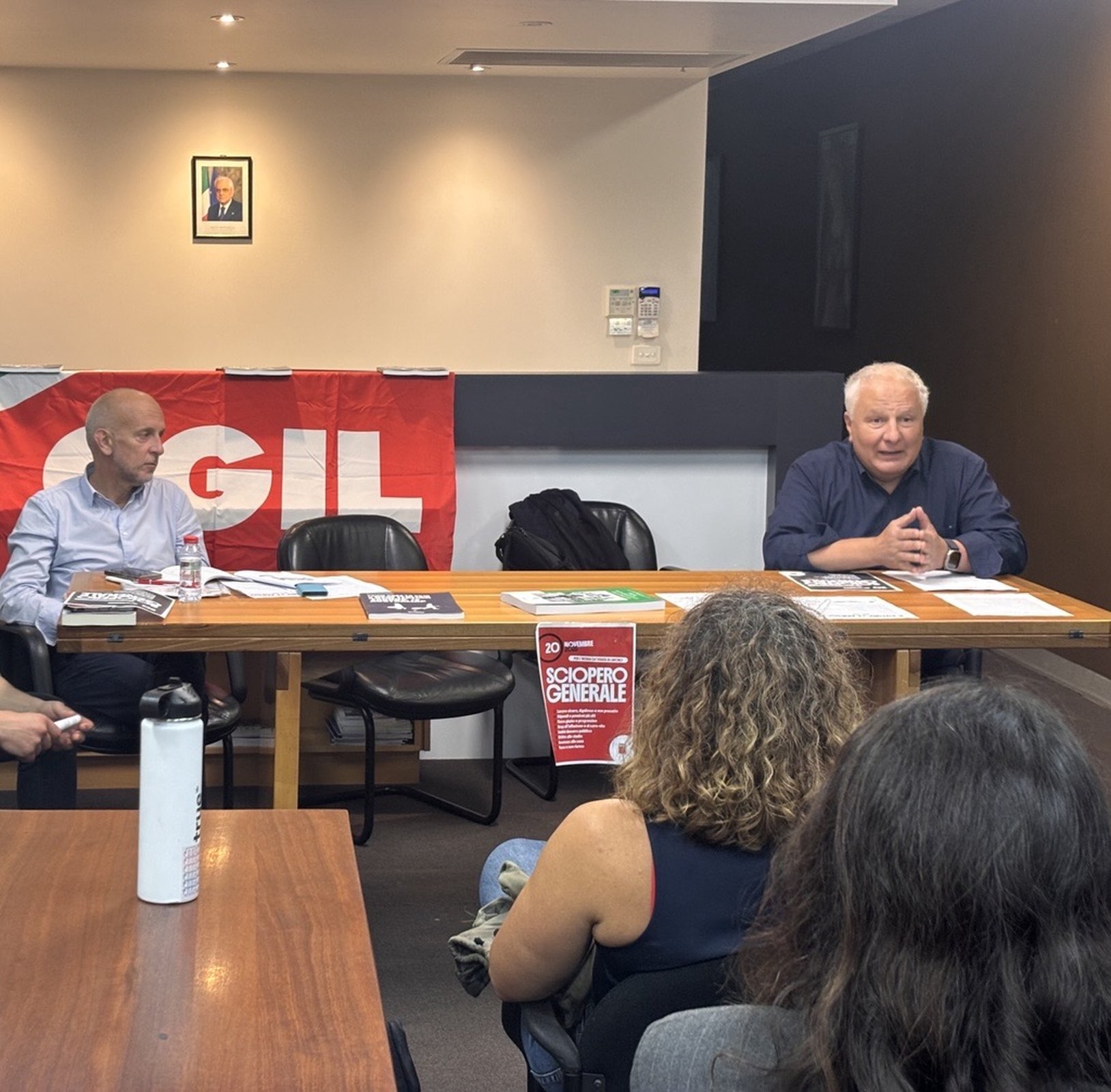
The number of Italians around the world is naturally always growing, but the voices called on to represent them are dwindling. This paradox was at the heart of a public meeting “Representation and participation”, held on Friday, November 20 at the Inca-Cgil offices in Coburg, during a visit to Melbourne by Filippo Ciavaglia, head of the Cgil’s European and international policy area and chair of the Cgie’s Third Thematic Commission, dedicated to civil and political rights and participation.
Marco Fedi, Luca Esposito, Simone Battiston and Francesca Martone took part in the discussion, which was organised with the December 4 Com.It.Es. elections firmly in mind.
Fedi did not mince words when addressing electoral reform. “If it were to pass, it would be a turning point,” he contended.
In his analysis he said the problem also lies in the interests of political parties, for which representation built on a few thousand preference votes would ensure candidates who are easier to control.
But representation cannot be confined to elections. “It must be understood as a relationship, not just an election,” Fedi said.
The ability to identify needs and changes is measured through the work done between elections. This is a particularly complex mission abroad, where there is no single Italian community, but a mosaic of experiences, from longstanding migration to new forms of mobility.
The reduction from 12 to eight lower house members and from six to four senators has already narrowed the scope for representation. Now, with the merger of electoral subdivisions envisaged by the reform, there are fears of a further weakening of local ties.
In this scenario, Com.It.Es could become the last local bastion of democracy. Audience members also raised concerns about recent Federal G
overnment decisions, from citizenship to incentives for young researchers, through to the annual €2,000 contribution for access to the National Health Service for certain residents abroad.
Also on the table were the role of the Cgie and the proposal to reduce government-appointed members from 20 to 10, giving elected representatives greater weight.
In short, the challenge is far from technical. “We need to listen and develop a strategy capable of engaging younger generations too, moving beyond the nostalgic rhetoric of the cardboard suitcase and the moka pot”, some attendees commented.