As Chief Executive at the Australian Academy of Science, Arabia was recently awarded the Medal of the Order of Australia (OAM) for her service to science, particularly through leadership roles in organisational management.
Arabia has helped to initiate significant political reforms, establishing new mechanisms to facilitate evidence-based decision-making in Parliament. Meanwhile, she has developed new approaches to science communication and implemented global initiatives that give visibility to the work of hundreds of scientists.
“It’s a great honour and, of course, an unexpected one,” she says, moved. “All my achievements are really due to the fact that I’ve had the opportunity to collaborate with fantastic people to reach certain goals.
“It’s always wonderful to be recognised for your work, but I share this honour with many other professionals and colleagues.”
Arabia often looks back, recalling those early steps that led her to the various leadership positions she’s held.
Her thoughts frequently turn to her parents, who instilled in her the importance of education and determination. Her father, Francesco Arabia, courageously left his homeland—Aprigliano, Calabria—to pursue opportunities in Australia in 1955.
Her mother, Maria, never hesitated to grant her every freedom and to foster in her the confidence upon which she built her brilliant career.
“My father’s school was bombed during the Second World War, and his education ended very abruptly. My mother, on the other hand, was one of those girls who was never given the opportunity to study at the level she wanted to,” Arabia shares.
“So, neither of them burdened me with household duties or other responsibilities that could have distracted me from learning. My mum would always say, ‘Don’t worry, go and study.’ She was very firm about that.”
“I wanted to go to university; to me, it was a gift that opened the world. I still vividly remember their enthusiasm and support,” she adds.
Science had fascinated Arabia since her early school days. Although she once considered studying medicine, she ultimately pursued her desire to “learn things still unknown”.
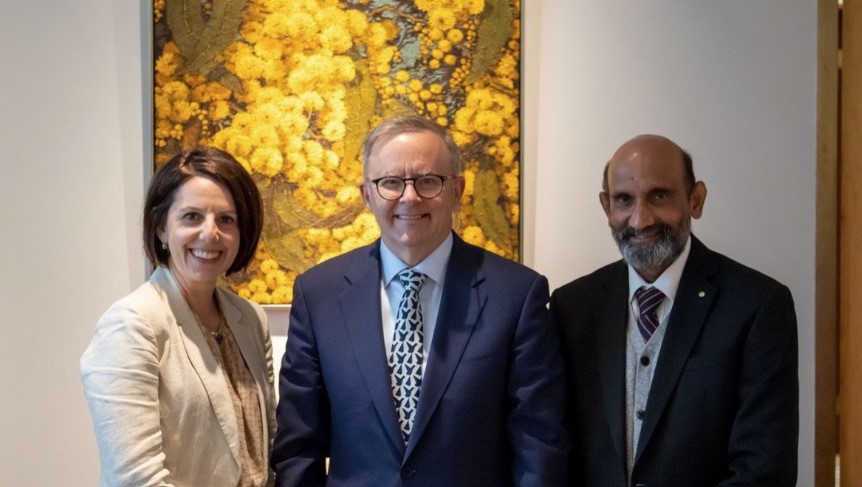
Anna-Maria Arabia with Australian Prime Minister Anthony Albanese and the president of the Australian Academy of Science, Chennupati Jagadish
“I researched neuroscience for a long time, but my interests have always been broad,” she explains. “My scientific experience later extended to policy development, advisory roles and leadership. But it all started with that little girl who was always proposing science experiments or participating in school competitions.”
Attracting more young people to the sciences and fostering a scientifically literate population capable of both questioning and understanding its concepts are two of the goals Arabia pursues.
“The truth is that everyone interacts with science every single day, every single minute,” she asserts. “Take talking on the phone, for example. An iPhone or a smartphone is the result of about sixteen different patents from sixteen different fields of research. Whether it’s driving, flying, going to the doctor or deciding which food is best for our children, we are applying scientific knowledge in all these situations.”
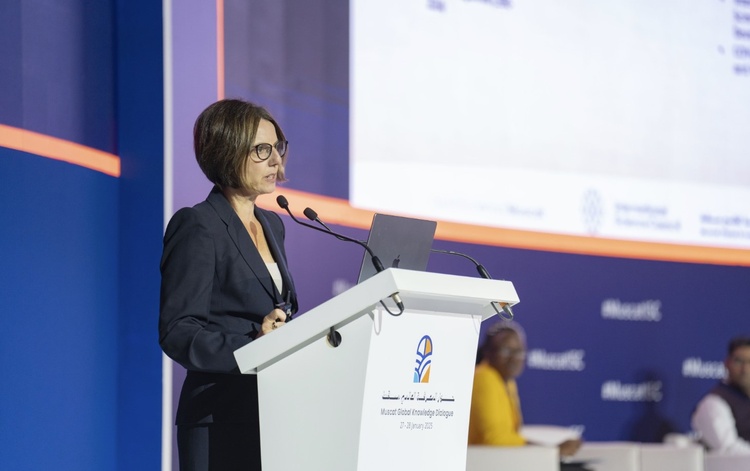
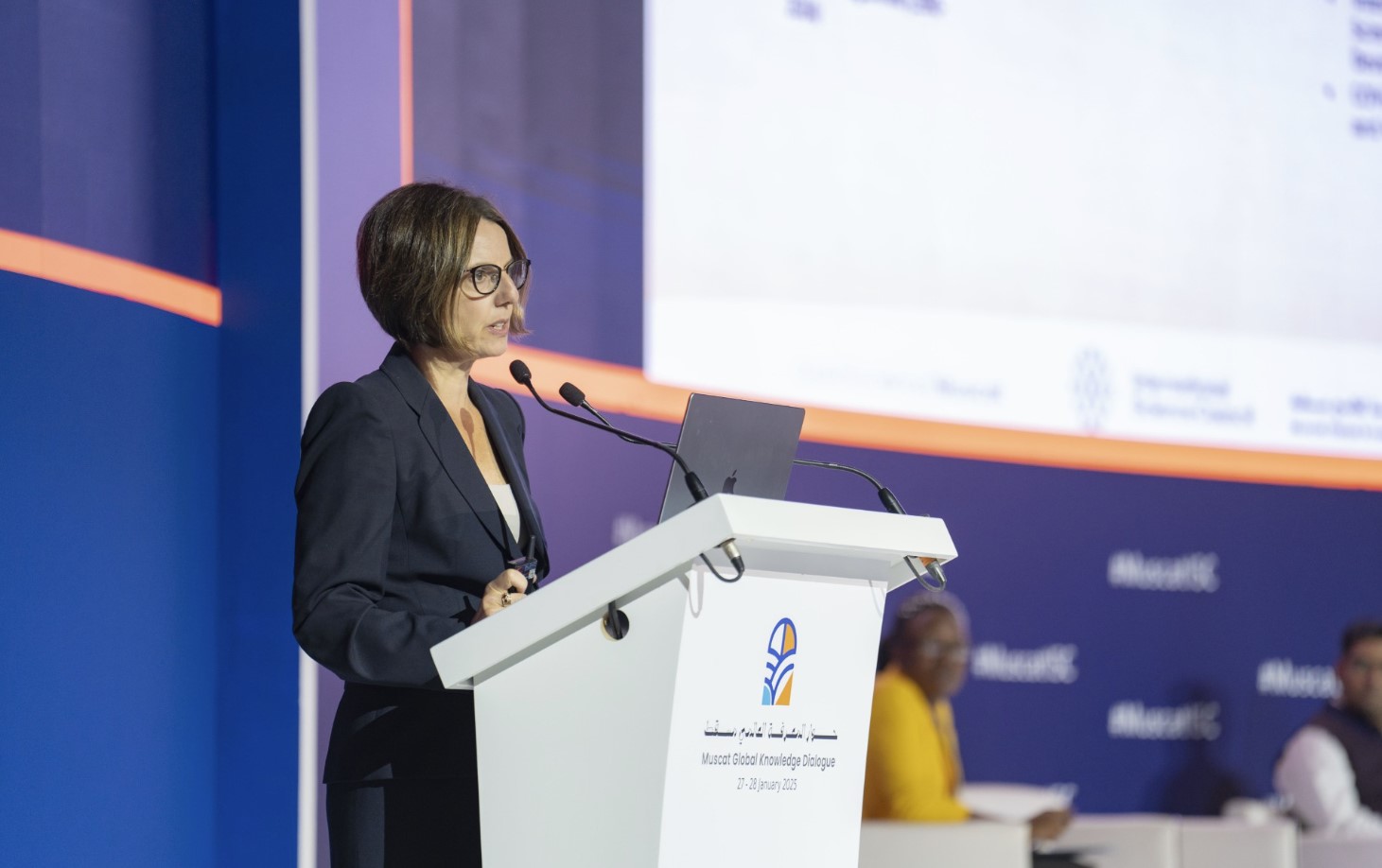
Recently in Oman for the International Science Council’s General Assembly, Arabia still feels the immense privilege of participating in an event where world leaders gather “to ensure that science and research become the primary tools for guiding the most significant political decisions”.
At a time when emerging technologies such as artificial intelligence and quantum computing continue to shape the present, Arabia wants to emphasise how, since the beginning of time, “Every kind of progress has always been seen as a threat.”
“New technologies can seem frightening because they evolve at a very rapid pace, and when we consider global conflicts and the military applications of technology, they become hard to accept,” she explains.
“But there is such a thing as good technological progress—artificial intelligence, for example, allows us to do many things much better. It gives us the ability to understand much more about the human body at a genetic level and to accelerate research.”
We also in an era where governments often undermine scientific institutions, while powerful private corporations control data that the world and its citizens desperately need.
“It’s disheartening,” she admits. “The scientific community is desperate and distressed by the pace at which we are tackling climate change, for example. We are seeing results, but they are not fast enough. The lack of urgency [to minimise global warming] is alarming.”
Keeping her grounded, however, is her son Alessandro, whom she reminds daily of the need to reduce our footprint on this planet and to whom she hopes to instil the values of education, respect, courage and fairness.
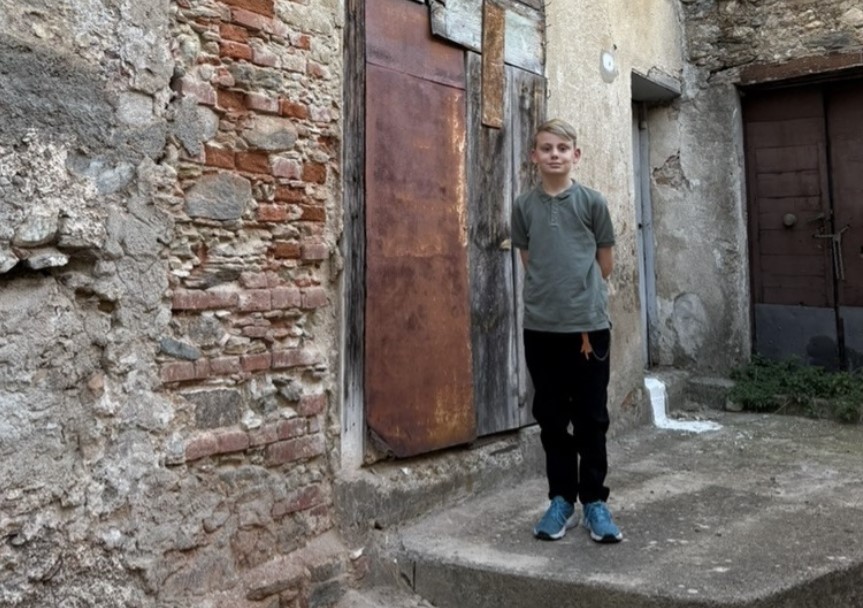
Alessandro in Aprigliano, in front of the house where his nonno lived
“Alessandro is ten years old, but he already shows a great interest in the environment and sustainability,” she shares. “I always challenge him with maths problems. For example, when we’re in the car, I tell him how many kilometres we have left and how many litres of petrol remain. He has to figure out if we’ll make it to our destination.
“Sometimes, I feel a bit sorry for him having me as a mum!” she jokes.
“This generation is already tech-savvy. They will change the world in ways we can’t even imagine,” she adds.
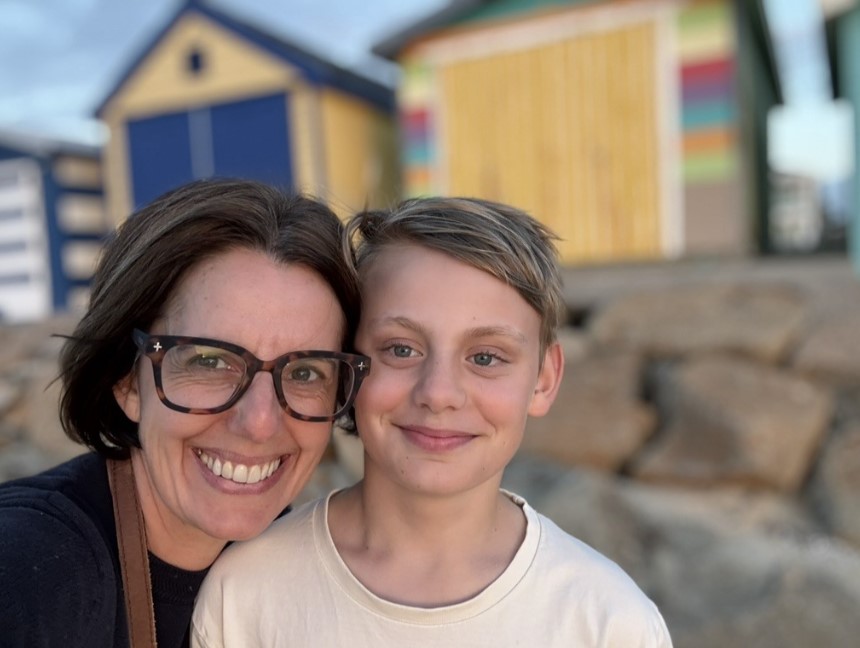
Anna-Maria and Alessandro at the beach
Looking to the future, Arabia knows she must not lose hope. She says if she could realise just one wish as soon as possible, it would be “to achieve the long-awaited global cooperation to rapidly reduce greenhouse gas emissions”.
“In Australia, we have all the ‘ingredients’ to do it: the sun, an incredible population of intelligent people, a stable government - and we live in a democracy,” she explains. “We have all the conditions to move forward quickly.”