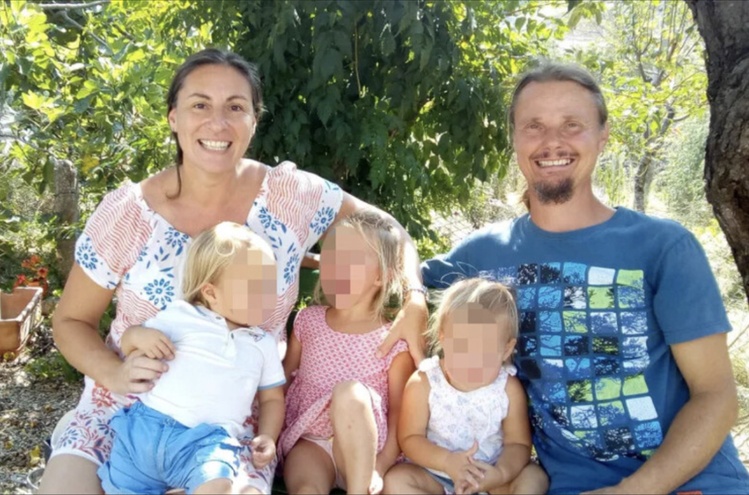
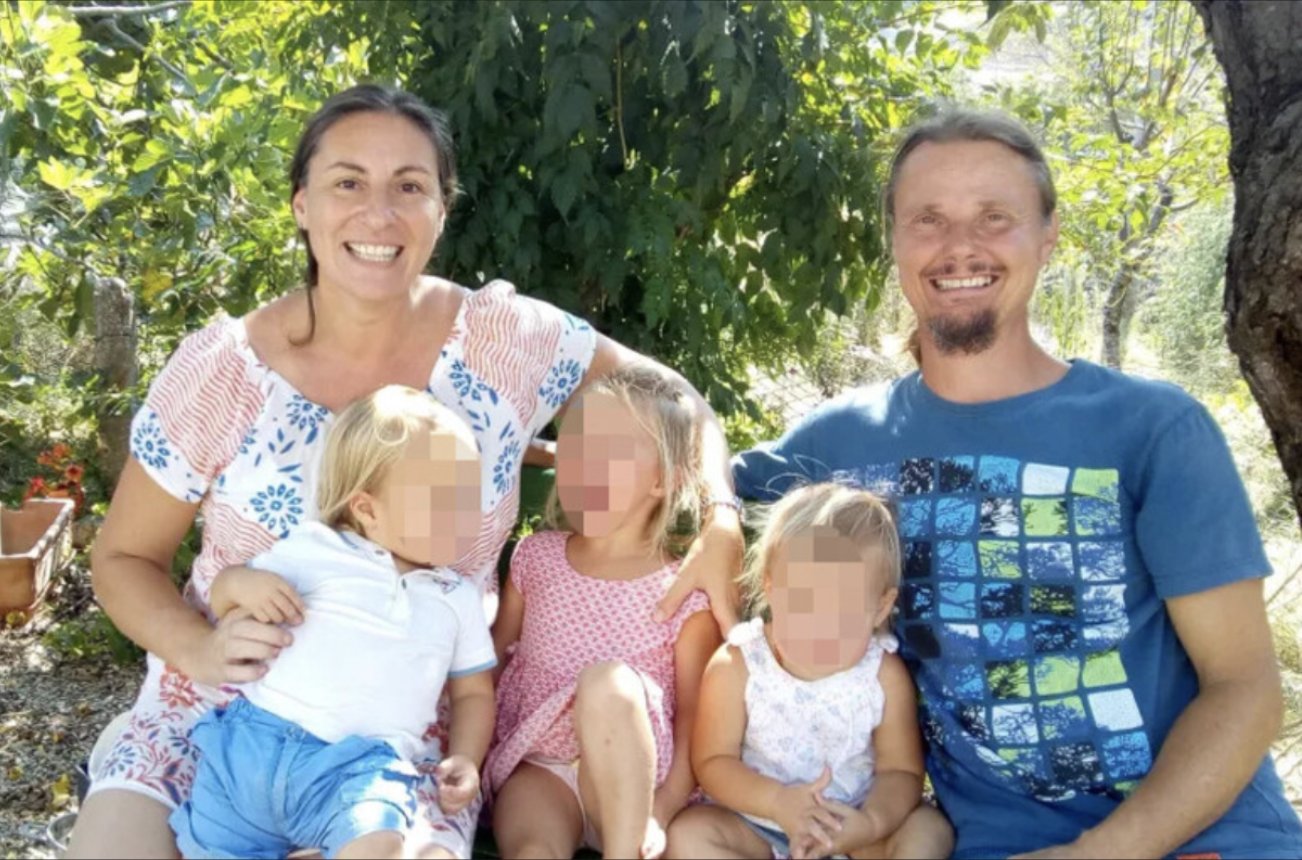
CHIETI – For months they were known in the media as the “family in the woods”, only for it later to emerge that their home is not in a forest at all, but in a rural area on the outskirts of Palmoli, a small town of around 800 residents in the province of Chieti.
The Trevallion-Birmingham family, who became unwillingly known around the world because of the complex legal case involving them, are now awaiting a decision from the L’Aquila court, due in the coming weeks, on the possible reunification with their children.
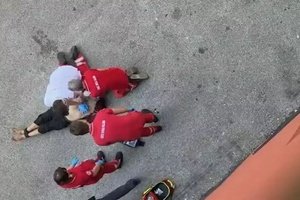
More than six months have passed since November 26, when their three children – an eight-year-old girl and six-year-old twins, a boy and a girl – were removed from the family home and placed in foster care. Since then, the parents have endured months of pain, interviews, waiting, anxiety and hopes repeatedly dashed by what they describe as a relentless bureaucratic system governing emotions, family bonds and parental choices.
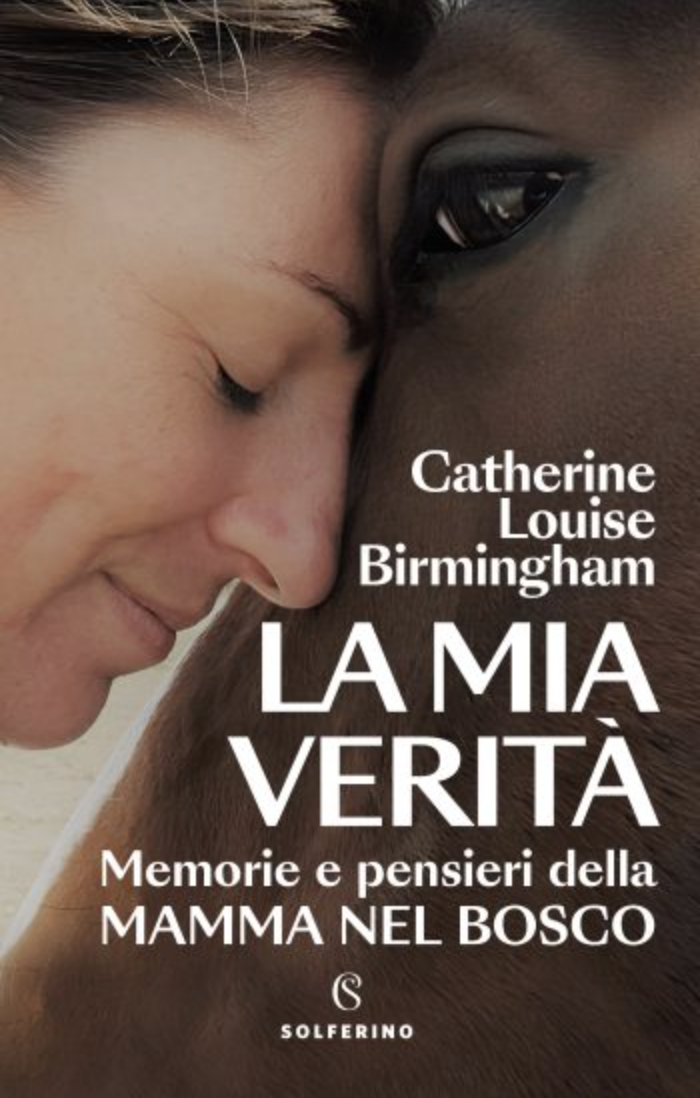
In the meantime, Catherine has published a book, My Truth (La mia verità, Solferino), in which she outlines her worldview, her relationship with nature, and her ideas about family, community, schooling and child-rearing. Some of these beliefs formed the basis of the decision to remove the children and have sparked a wider debate about the limits of state intervention when parents exercise their right and duty to educate their children through unconventional – though non-abusive and non-violent – choices.
In the book, Catherine also reflects on her childhood in Melbourne and her connection to the city’s Italian community, memories she agreed to share with Il Globo.
 “Italians have always been a wonderful example of expressiveness, authenticity, wholesome food and strong family values,” she says. “My sister’s and my closest friends were the children of first-generation Italian migrants. We loved visiting their homes because there was always such a warm and joyful atmosphere.”
She sees clear parallels with her own upbringing.
“My experience was very similar,” she explains. “I am the daughter of first-generation Maltese parents, and Italian culture felt very close to ours as a fellow Mediterranean culture. What struck me was how strongly the parents of our friends maintained their connection to their origins and language, bringing Italy into their homes and everyday lives.”
Her memories return fondly to Lygon Street, Melbourne’s Little Italy, to Italian cuisine, Italo-Australian comedy and the strength with which the community embraced and celebrated its identity.
In her book, Catherine mentions a dear Italian-Australian friend from Melbourne.
“Her name is Deanna Amato, and she was very happy to be mentioned in this interview,” Catherine says. “She deeply values her connection to Melbourne’s Italian community, and I see that same spirit reflected in our friendship. We both grew up in families with Southern European roots, where family ties, food and emotions were at the centre of daily life.”
Despite living on opposite sides of the world, Catherine and Deanna have remained close over the years, following each other’s life journeys from afar.
“I hope that continues for the rest of our lives,” Catherine says. “Our friendship is built on shared values, beliefs and dreams: raising our children and families according to a model centred on nature, wholesome food, love, health and the desire to build a better society for future generations.”
Catherine and Nathan’s decision to move to Italy and raise their children there was inevitably influenced by their experiences with the Italian community in Australia. But there was more to it than that.
“I visited Italy three times while living in Europe as a young woman, and every visit confirmed how much I loved the people and the importance placed on family,” she says. “I especially love Abruzzo, which remains a gem largely untouched by the destruction and mindset of the modern world.”
Palmoli and Melbourne may seem worlds apart, separated not only by geography but also by culture. Yet Catherine says that among the hills of Abruzzo she found a small cosmopolitan community that feels surprisingly close to Australia’s multicultural spirit.
“In Palmoli and the surrounding villages there are many people from other countries who, like us, were looking for a place to raise their children away from the toxins and frantic pace of modern life,” she says. “Multiculturalism is important, and I will always be grateful to Melbourne for fostering and celebrating it.”
One of the criticisms reportedly made by social services and cited in media coverage concerned the family’s alleged social isolation and lack of community ties – a claim the couple has consistently denied.
“In Palmoli we have a very close relationship with our two neighbours and their families,” Catherine says, “as well as with our dear friend Ferdinando, who is 93 years old and an extraordinary source of knowledge and wisdom about living close to the land.”
“Italy once had one of the highest life expectancies in the world, and that was due to the lifestyle people lived, including their strong connection with animals and nature. It produced a generation of remarkable physical and mental resilience that is sadly disappearing too quickly.”
After six months of separation from their children and a legal process they say they still struggle to understand, the question inevitably arises: do Catherine and Nathan regret moving to Palmoli?
“I believe regret only brings suffering,” she replies firmly, in keeping with her philosophy of life. “My travels and experiences have taught me to learn, grow, broaden my awareness and make different choices in order to create a different future.”
“I have discovered that no country is free from problems. Everywhere has both strengths and weaknesses. Unfortunately, the challenges we are facing today affect many other families around the world.”
Her final thoughts return once again to gratitude.
“Italy has given Nathan and me something that still moves us to tears every day,” she says. “We have received an extraordinary outpouring of love and support from across the country and from Italian communities around the world.”
“We have received countless letters, prayers, gifts, telegrams, postcards, emails, phone calls and even visits from people of every faith, age and background.”
“The heart of the Italian people has spoken, and I believe that from Italy – the country we chose as our home – a movement founded on love for family and unity can emerge and spread throughout the world.”