MELBOURNE – One of the most eagerly anticipated and significant events for secondary school students of Italian in Victoria is the poetry recitation competition organised by the Dante Alighieri Society of Melbourne.
For 65 years, the competition has brought schools together and given students the opportunity not only to test their language skills, but also to push beyond their limits by expressing emotions and performing in a language that, in most cases, is not their mother tongue.
Gloria Caruso, the driving force and heart behind the enormous organisational effort required for this year’s event, oversaw the selection process involving 1,600 participants. Over several intense days, 10 judges faced the difficult task of assessing each student’s interpretation of their chosen poem before narrowing the field down to 200 finalists.
Students were able to choose from a wide range of authors. Alongside Dante Alighieri and the Divine Comedy, this year’s selection included poets such as Giacomo Leopardi, Giosuè Carducci, Alda Merini, Giorgio Caproni and Ada Negri, as well as Italian-Australian writers John Lando and Mariano Coreno.
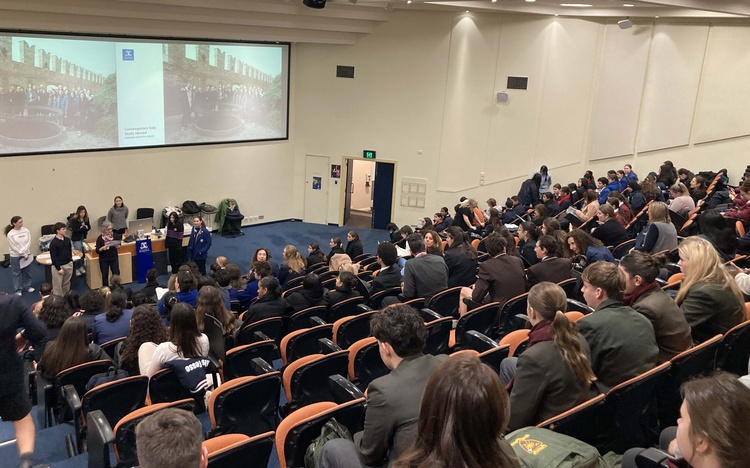
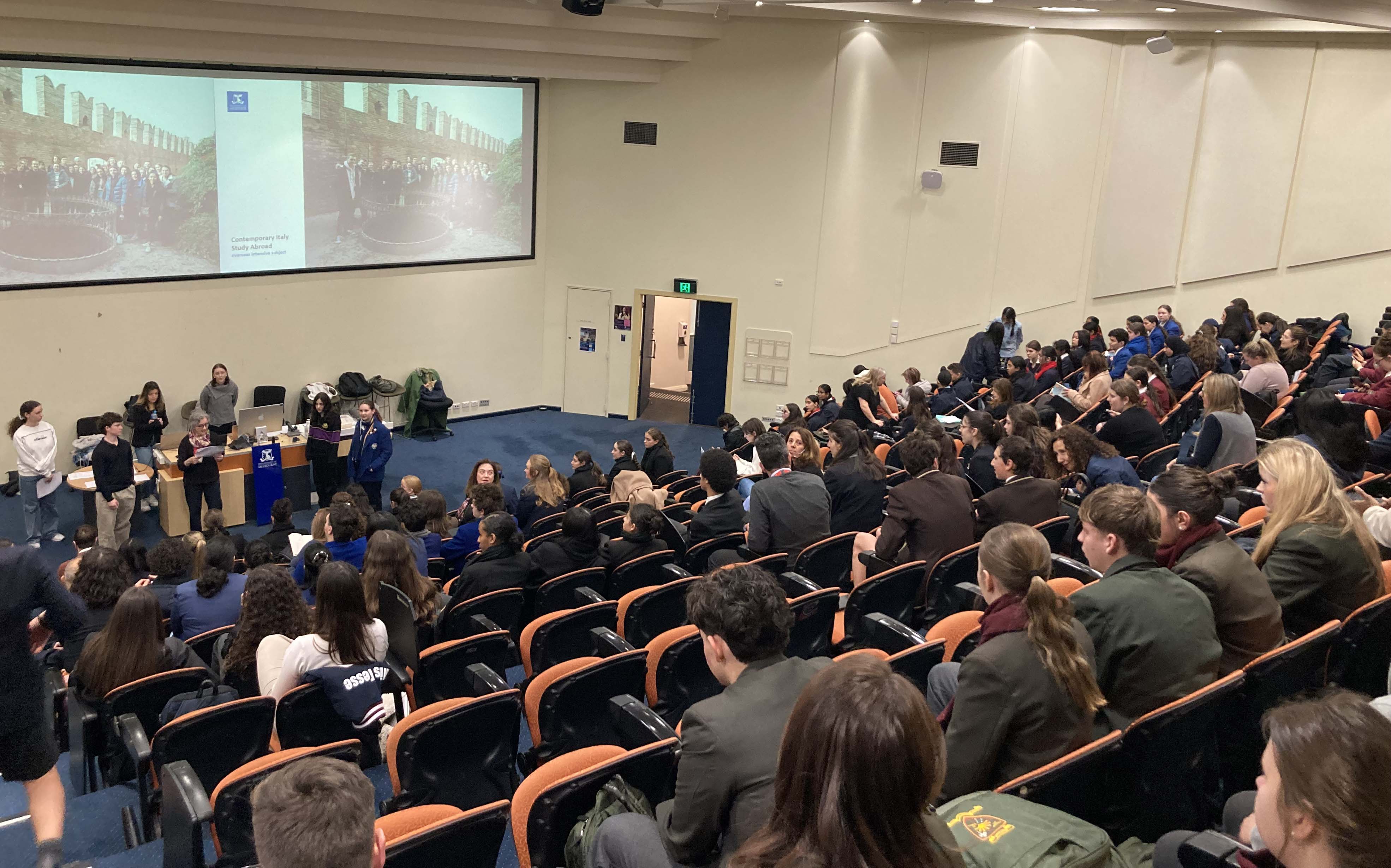
On the day of the final, Tuesday 14 July, the emotion inside the theatre at the University of Melbourne’s Old Arts Building was palpable.
Supported by their teachers, students waited anxiously to be called before the judging panel and to find out whether they would progress to the next stage.
Whether they won or not, however, all the students stressed the importance of the competition and the way it deepened their understanding of the Italian language and culture.
Since its first edition in 1961, the Dante Alighieri Society of Melbourne’s competition has enabled teachers to introduce students to the beauty of the Italian language through poetry, an opportunity they might otherwise rarely have.
Joseph Romeo, an Italian teacher at Caroline Chisholm Catholic College in Braybrook, says participation in the competition has become a well-established school tradition.
“This is the second year in a row that we have had students reach the final,” he explains.
For Romeo, the connection is also personal.
“I took part as a student and won for three consecutive years, from 2004 to 2006,” he recalls, admitting that he still has the photographs published in Il Globo.
It appears to run in the family, as both his sister and his mother also won first prize.
Today, Romeo tries to pass the same passion on to his students.
“I encourage them not simply to recite the lines, but to interpret them. They have to become the poets themselves. The greatest challenge for a teacher is helping students understand that learning a language means entering a culture and discovering a different way of thinking and living.”
Lucia Barbera, a teacher of Italian and French at Kilbreda College in Mentone, introduced the school to the Dante Alighieri Society competition in her first year there, offering her students an exciting new experience.
“The 13 girls who took part in the first round were thrilled and, at the end of the day, they told me it had been a wonderful experience,” she says.
Three of them reached the final, with two performing a canto from the Divine Comedy and one reciting Giacomo Leopardi’s L’Infinito.
“We began preparing at the end of the first term and allowed them to choose the poem they wanted to perform. They embraced the opportunity with great enthusiasm.”
Barbera also highlights the support received from families.
“Some of the parents had taken part in the competition when they were students,” she says, adding that they enthusiastically supported their daughters throughout the preparation.
“It was a real success for the girls.”
Alongside John Lando, Andrea Rizzi, Cassamarca Professor in the University of Melbourne’s Italian Studies program, served as a judge for the students who performed a canto from Dante Alighieri’s Divine Comedy.
It is a choice that may seem almost countercultural and at odds with the way younger generations are often portrayed.
Yet continuing to read the Divine Comedy, a work that remains extraordinarily relevant, is important because it opens “a window onto Italian culture, history and traditions”.
“It is poetry,” Rizzi explains, “and poetry has incredible power, even when it is difficult and written in a language that is different from the Italian spoken today.”
Dante’s ability to create an “extremely evocative” poetic text is also evident in the personal connections students form with the stories in his work.
“They connect with figures such as Paolo and Francesca or Count Ugolino in a way that is deeply engaging,” the academic continues.
In a world dominated by the search for simple and fast information and content, many young people still appreciate the challenge presented by such a complex work. That is why they put themselves to the test, interpreting it, making it their own and finding ways to connect it with their personal experiences.