Artificial intelligence is accelerating the transformation of businesses’ production processes and organisational models, opening up new prospects for growth while also requiring a review of professional skills, industrial strategies and data management systems.
This technological revolution no longer concerns only large multinationals but is increasingly involving small and medium-sized businesses, which must grapple with tools capable of profoundly changing the relationship between investment, work and productivity.
It is against this backdrop that Vection Technologies operates. The technology company is listed on the Australian Securities Exchange (ASX: VR1) and specialises in developing artificial intelligence and extended reality (XR) solutions, with more than 200 employees and operations across Australia, Europe, the United States and the United Arab Emirates.
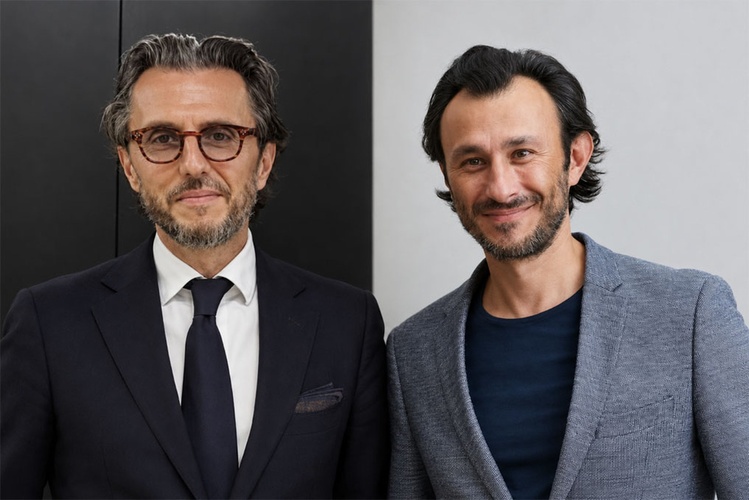
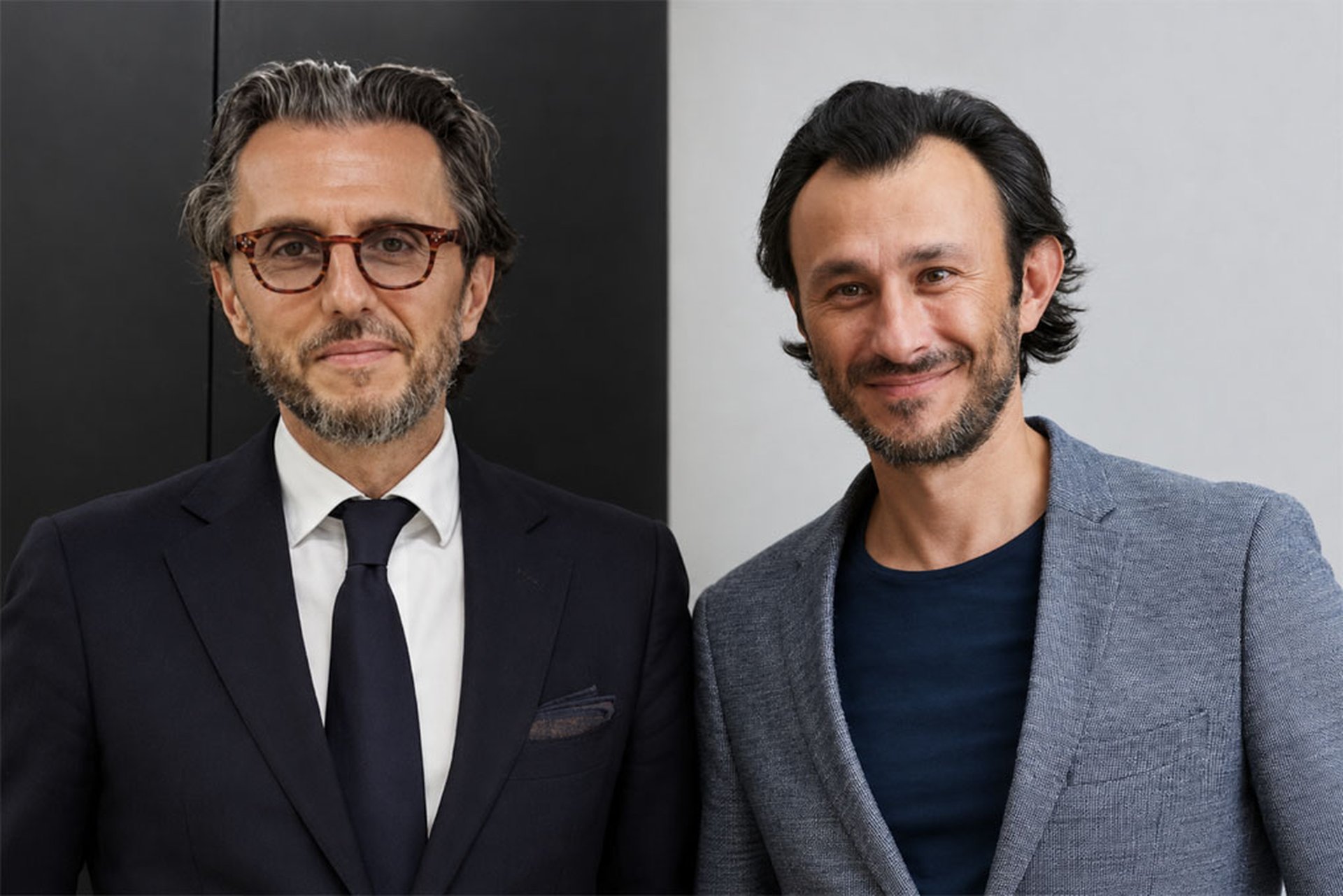
Gianmarco and Lorenzo Biagi, the two brothers at the helm of Vection Technologies are happy to talk about its journey and prospects for development. The company was founded in Bologna by Lorenzo, who launched Vection after a 20-year career in the manufacturing and automotive sectors and is now group chief investor relations officer and CEO of Vection Italy: “We were literally two people in an empty office. Ours wasn’t a garage, as in Silicon Valley stories, but a 16th-century mill in central Bologna,” Lorenzo recalls.
The company’s early activities focused on developing customised technology applications for major industrial clients, with particular attention to solving operational problems and optimising production processes. Its listing on the Australian stock exchange came in 2019, a step in the group’s internationalisation and the subsequent expansion of its activities.
Today, Vection Technologies operates across several markets, with an established presence in Australia, four sites dedicated to technology development in Italy and a gradually expanding commercial presence in the United States and the United Arab Emirates.
The evolution of its technology portfolio has accompanied the group’s growth. From its first virtual and augmented reality applications, Vection has gradually broadened its offering to include artificial intelligence systems for business use, including through acquisitions that have strengthened its in-house expertise.
“We began by developing virtual reality and augmented reality, but in recent years we have become a company strongly focused on artificial intelligence,” explains Gianmarco, who heads the group and is chairman of the holding company 7p9. Vection Technologies’ industrial strategy is based on integrating proprietary platforms, artificial intelligence and immersive environments with applications developed in businesses and organisations spanning manufacturing, logistics, healthcare, public administration, education and defence.
Its business model also focuses on partnerships with major international companies. Among the most recent agreements are those with Xerox, for the distribution and integration of their respective technology solutions, and with Retelit, an operator in the telecommunications and digital services sector.
But the central focus of Vection’s strategy is, above all, the way artificial intelligence is introduced into organisations. For Gianmarco, adopting these technologies must begin with an analysis of business processes and the identification of activities where automation can deliver measurable benefits: “We guide businesses through digitalisation step by step, addressing each individual process together with the client.”
It's a transformation that also directly affects the organisation of work. According to Gianmarco, the increase in productivity resulting from the introduction of AI can translate into new career opportunities, provided businesses invest in updating skills and retraining staff. “Our aim is to increase productivity, not lose jobs. It is a myth that artificial intelligence takes away jobs. On the contrary, companies that adopt it and review their processes, thanks to artificial intelligence, enable people who change the way they work to train artificial intelligence, upgrading their own skills. We cannot remain ignorant or obstruct an inevitable change,” the chairman explains. “We aim to increase productivity with an artificial intelligence system that each company owns.”
In Vection’s view, the spread of artificial intelligence in businesses must be accompanied by the development of technological infrastructure that allows them to maintain control of their own information, limiting the risks associated with sharing confidential data through external platforms. “Having AI in a company does not simply mean using the major international platforms. A business that wants to structure its processes must have its own artificial intelligence, because data confidentiality is fundamental,” Gianmarco observes.
This dynamic takes on particular significance in the context of international technological competition, dominated by major US and Chinese groups, which account for a significant share of investment, computing infrastructure and the development of the most advanced models. For European companies, the ability to develop specialised applications, integrated into industrial processes and tailored to individual clients’ needs, represents an important competitive opportunity alongside general-purpose platforms.
The issue of technological governance therefore inevitably extends to control over systems and the responsibilities associated with their use. Lorenzo also identifies human supervision as an essential principle for ensuring the reliability and safety of applications: “Artificial intelligence, even when implemented and ‘trained’ very well, can still cause some problems with the reliability of results. Human control and supervision are therefore always necessary.” Maintaining human involvement in decision-making processes thus becomes a structural element in the design of technological solutions, especially in sectors where errors can have significant consequences. “I would like human beings to retain their central role in the things we do with a technology that can certainly help, both in our private lives and at work,” he says.
This issue is closely linked to regulation, on which Gianmarco offers a positive assessment, particularly of the approach adopted by the EU: “Europe knows what it is doing,” he says, referring to the European AI Act and stressing the need for a regulatory framework capable of establishing obligations and responsibilities without compromising industrial development. A comparison with the United States and China nevertheless reveals different approaches, in a sector where industrial interests are increasingly intertwined with geopolitical ones. Gianmarco invokes the so-called “Sputnik effect”, comparing the current competition over artificial intelligence to the technological rivalry between the great powers during the Cold War.
The race to develop the most advanced systems has in fact become an element of international strategic competition, with investment spanning digital infrastructure, computing capacity, scientific research and national security. The risk, according to the chairman of holding company 7p9, is that this confrontation helps fuel an excessively alarmist portrayal of artificial intelligence, diverting attention from practical applications and benefits already available: “I always say, with a smile, that there was a very strong marketing element. If they had called it an artificial tool rather than artificial intelligence, it would have been much better and would have caused far less of a stir and much less fear.”
Speaking about risks, Gianmarco also extends his reflections to the role of social media platforms: “I believe TikTok is far more powerful and dangerous than AI applications because it is in the hands of young people, completely unregulated. I want to point out that most social media platforms are in the hands of private companies, and it is not even clear who is responsible.”
Alongside industrial development, Vection is also investing in applications aimed at accessibility and social inclusion. “We are very proud to have technological initiatives underway that help others. We have been working on inclusion for several years,” Gianmarco says. Projects underway, “in Italy, but we are also looking abroad”, include interactive stations and kiosks with artificial intelligence systems designed to assist people with vision impairment or mobility difficulties. “We have installations in some railway stations and airports. We are focused on helping people get around more easily on their own. In short, these are clear examples that represent the good and real side of artificial intelligence.”
For both entrepreneurs, the long-term outlook remains one of artificial intelligence integrated into production activities and everyday life, but subject to people’s decisions and needs. Amid risks and fears, Gianmarco and Lorenzo’s message is clear. “This whole sector needs to be regulated, as happened with the internet. We are in the midst of a revolution on the same scale as the internet. And if today no one is afraid of the internet and none of us can do without it, the same will happen with AI.”
Gianmarco concludes: “Let’s remember one thing: today AI does not ask questions, it gives answers. Humans ask the questions.”