Something has shifted in how Australians look for Italian food, and the clearest place to see it is in the gap between two search terms.
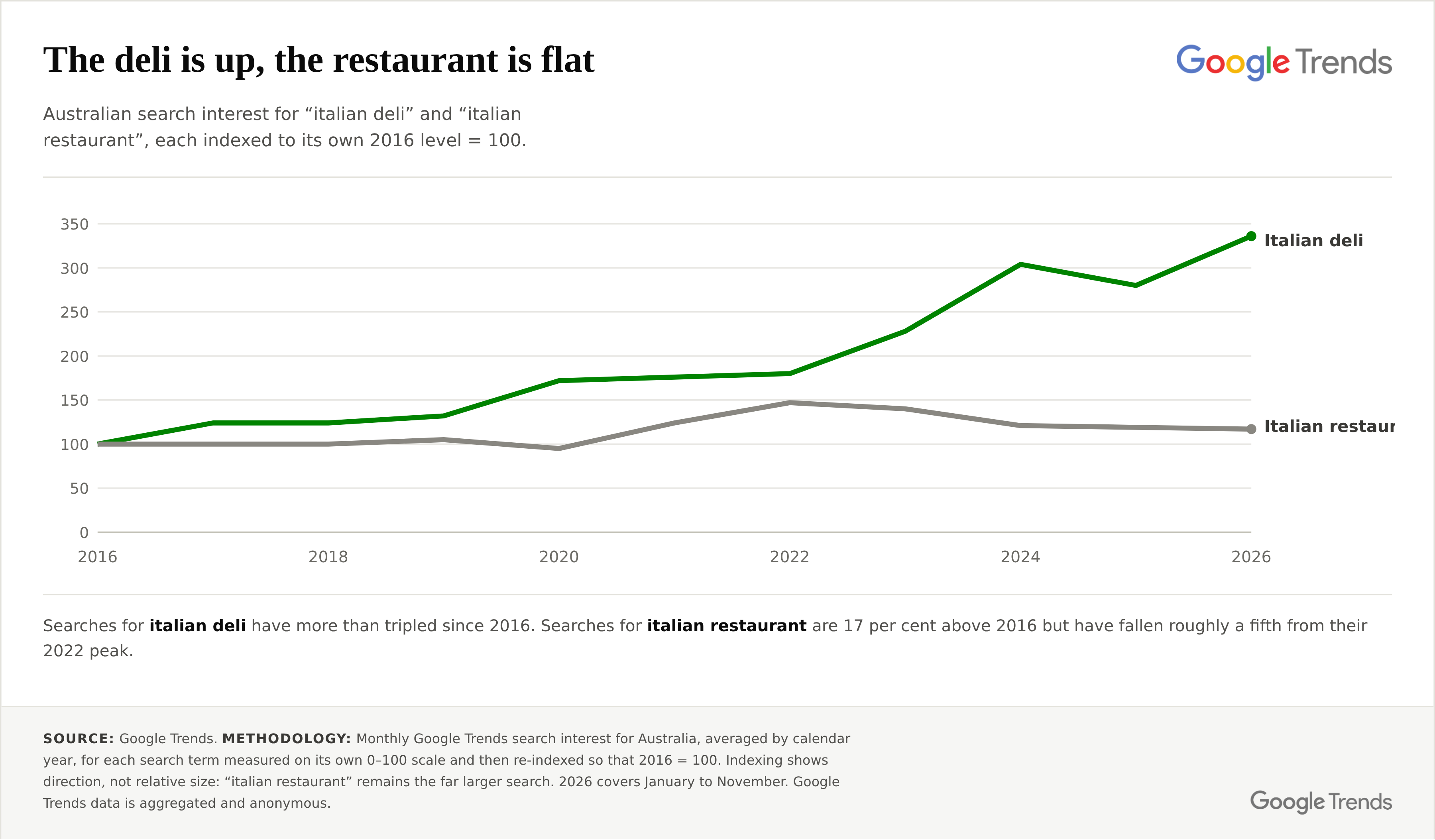
Over the past decade, Australian searches for “italian deli” have more than tripled. Over the same decade, searches for “italian restaurant” rose, peaked in 2022, and have since given back about a fifth of their gains. The restaurant term is still vastly the larger of the two — roughly twenty times the volume — but the direction of travel is not the same.
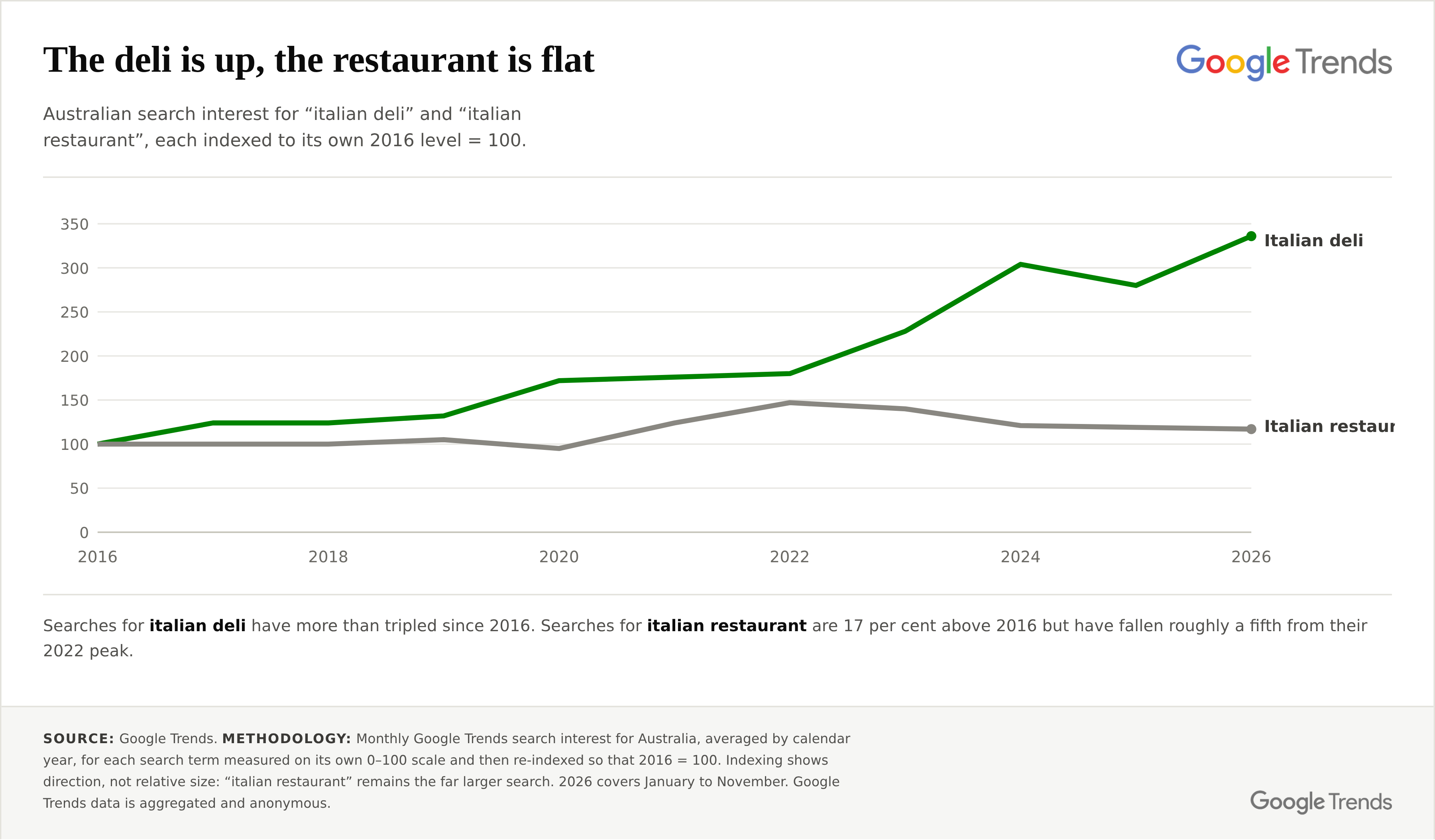
Figure 1: Australian search interest for “italian deli” and “italian restaurant”, each indexed to its own 2016 level. Source: Google Trends.
This is not an Italian problem
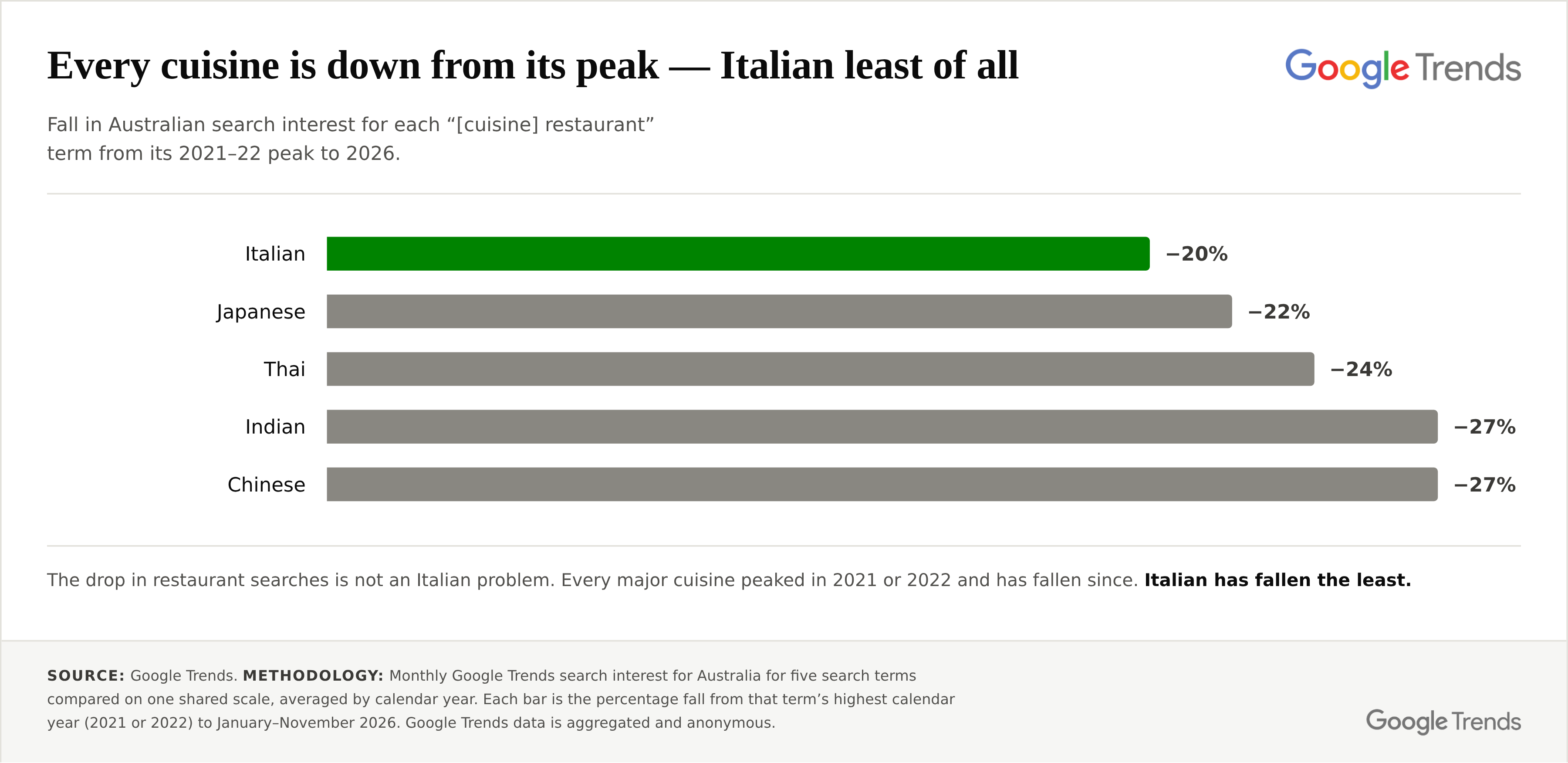
It would be easy to read the restaurant line as bad news for Italian hospitality. The data says otherwise. Every major cuisine term in Australia peaked in 2021 or 2022 and has fallen since — and Italian has fallen the least.
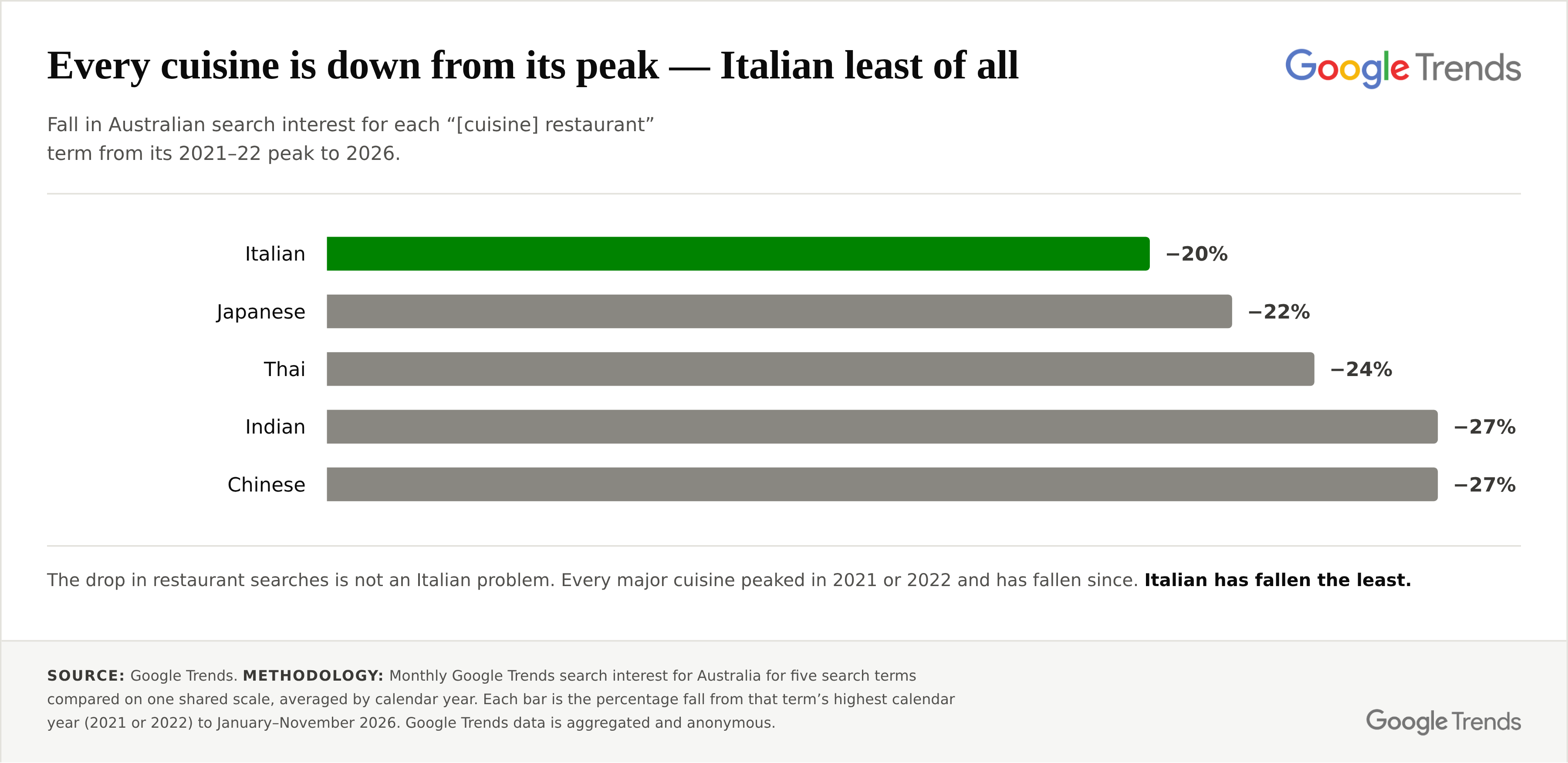
Figure 2: Fall in Australian search interest for each “[cuisine] restaurant” term from its 2021–22 peak to 2026. Source: Google Trends.
Chinese and Indian restaurant searches are both down about 27 per cent from their peaks. Thai is down 24 per cent, Japanese 22. Italian is down 20. The 2021 and 2022 highs were themselves inflated by the reopening years, when a great many Australians were searching for somewhere, anywhere, to sit down and eat. What has followed looks less like decline than like the end of a bubble.
What people want from a deli
The deli searches are revealing in their own right. After “italian deli near me”, the most common related searches are not for groceries at all. They are for lunch: “italian deli sandwich”, “italian sandwich”, “pasta deli”. Among the fastest-rising searches of the past year, “italian sandwich” was up fourfold.
The other fast risers were business names — Giovanni’s, Fratelli — which is what you would expect of a category where people are learning the names of specific shops rather than browsing a type.
Taken together: the deli is being searched as a place to eat, not only as a place to shop. That is a meaningful distinction for anyone running one.
Adelaide, not Melbourne
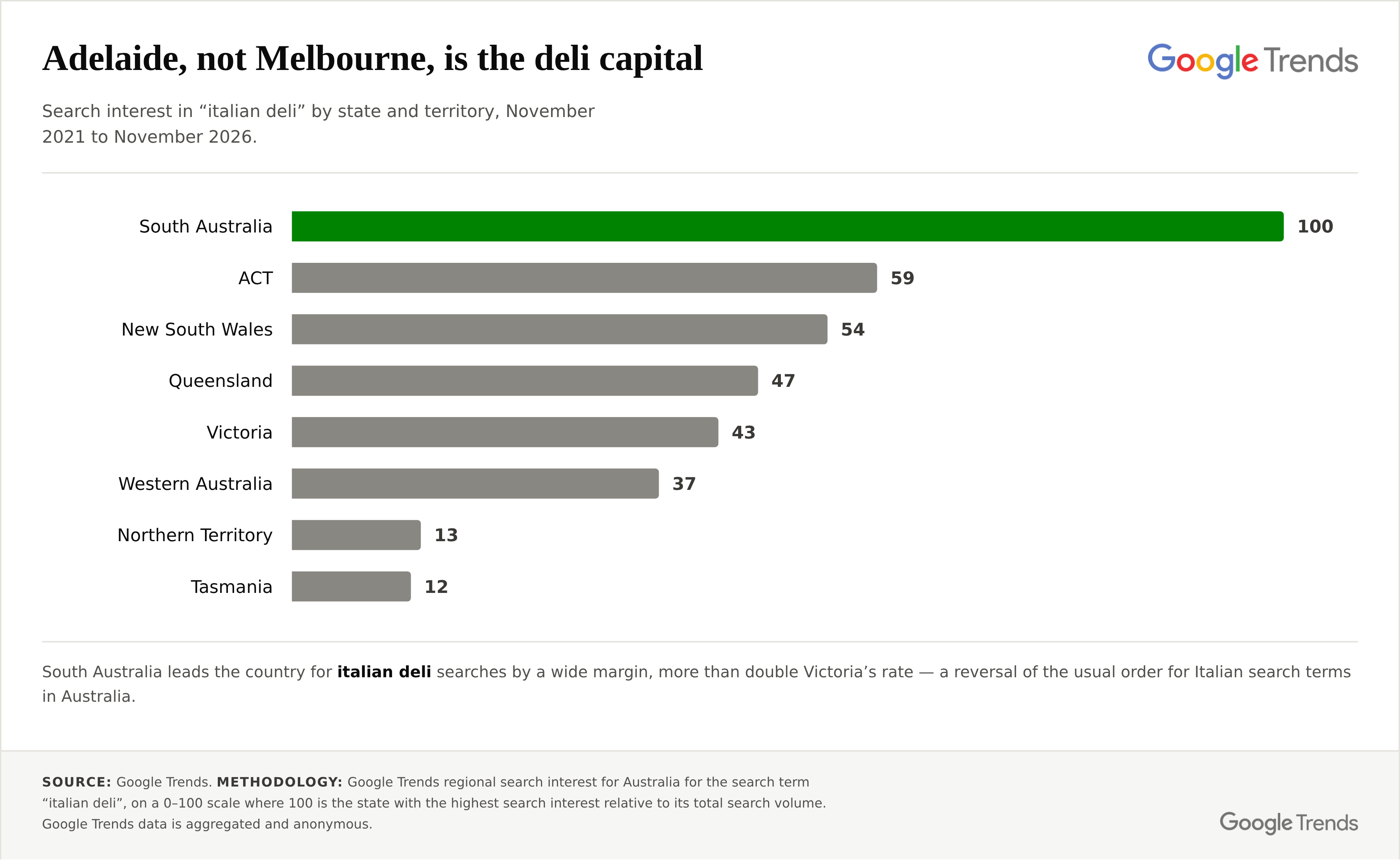
The regional pattern defies the usual order. South Australia leads the country for “italian deli” searches by a wide margin — more than double Victoria’s rate, and ahead of New South Wales and Queensland.
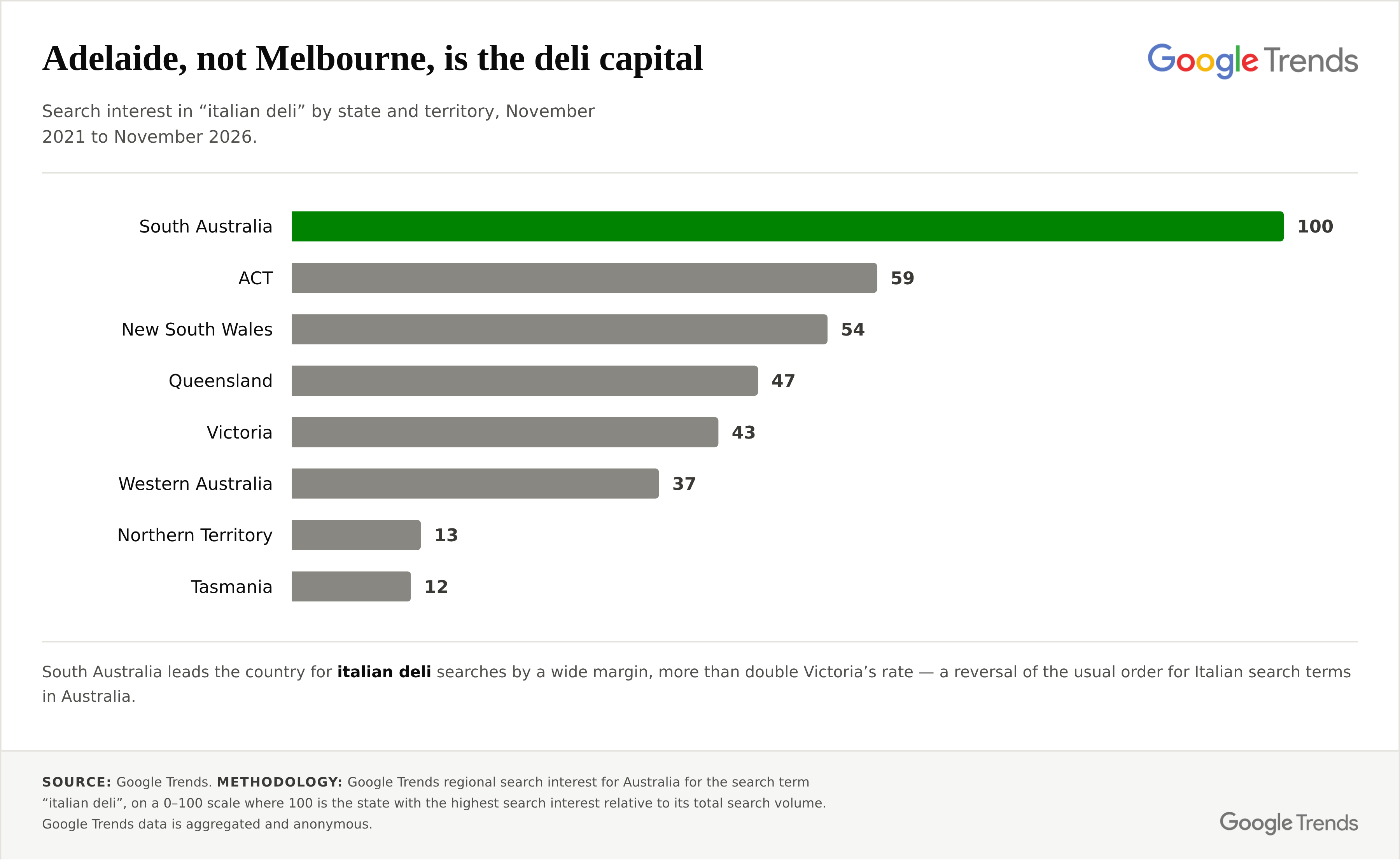
Figure 3: Search interest in “italian deli” by state and territory, November 2021 to November 2026. Source: Google Trends.
Victoria usually tops Italian search terms in Australia. On this one it is fifth. The data does not say why, and it is worth being careful here: a category search like “italian deli” tells you how often people look for the type of shop, not how many such shops there are or how well they trade. One plausible reading is that where a city’s Italian retailers are household names, people search the name rather than the category. That would make Victoria’s lower ranking a sign of familiarity rather than absence. It remains a reading, not a finding.
What it means for the businesses
The two lines point the same way for anyone selling Italian food in Australia. The restaurant trade is not collapsing, but it is normalising after an artificial high, and it is doing so in company — every cuisine is in the same position. The retail side is growing, and growing as a lunch business as much as a grocery one.
If there is a single sentence in the data, it is that Australians are increasingly looking for Italian food to take away with them rather than Italian food to sit down with. The shops best placed are the ones that can do both.
About the data
Figures are from Google Trends for Australia and were collected on 6 November 2026. Google Trends measures relative search interest on a 0–100 scale rather than absolute search volumes, so numbers can only be compared within the same chart. Figure 1 measures “italian deli” and “italian restaurant” on separate scales and re-indexes each to its own 2016 level, which shows direction but not relative size; measured together, “italian restaurant” draws about twenty times the search interest of “italian deli”. Figure 2 compares five “[cuisine] restaurant” terms on one shared scale. Figures for 2026 cover January to November. Google Trends data is aggregated and anonymous.