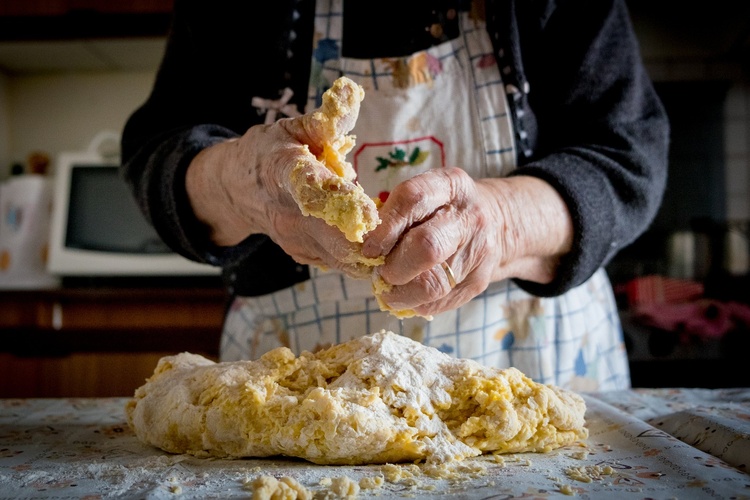
There is no English word that does what nonna does. Grandmother is a relationship. Nonna, in Australian usage, has become something closer to a claim about food: that it was made properly, by someone who learned it at home, and that you will be given too much of it.
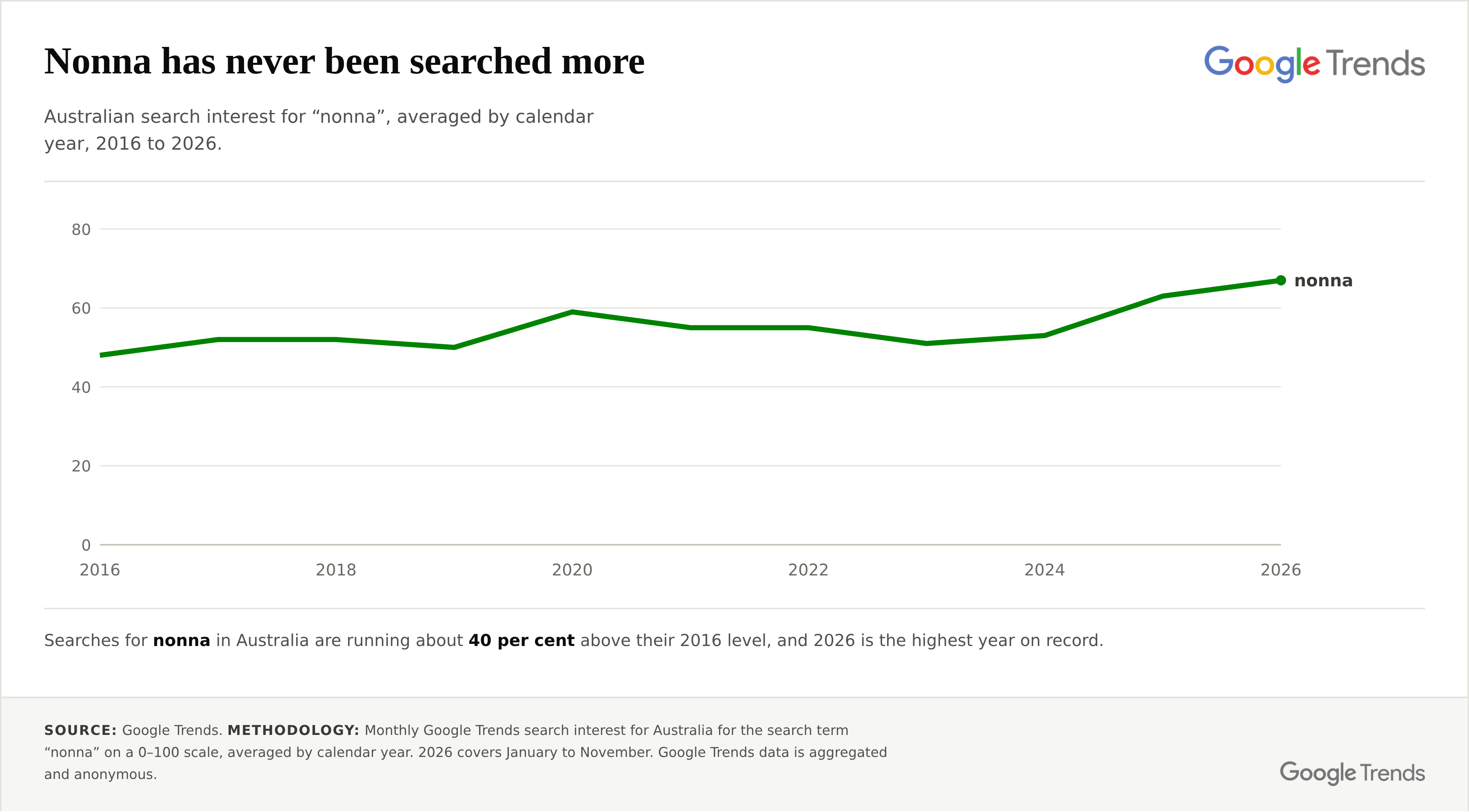
Australians are searching the word more than they ever have. Google Trends puts 2026 at the highest level on record, roughly 40 per cent above 2016.
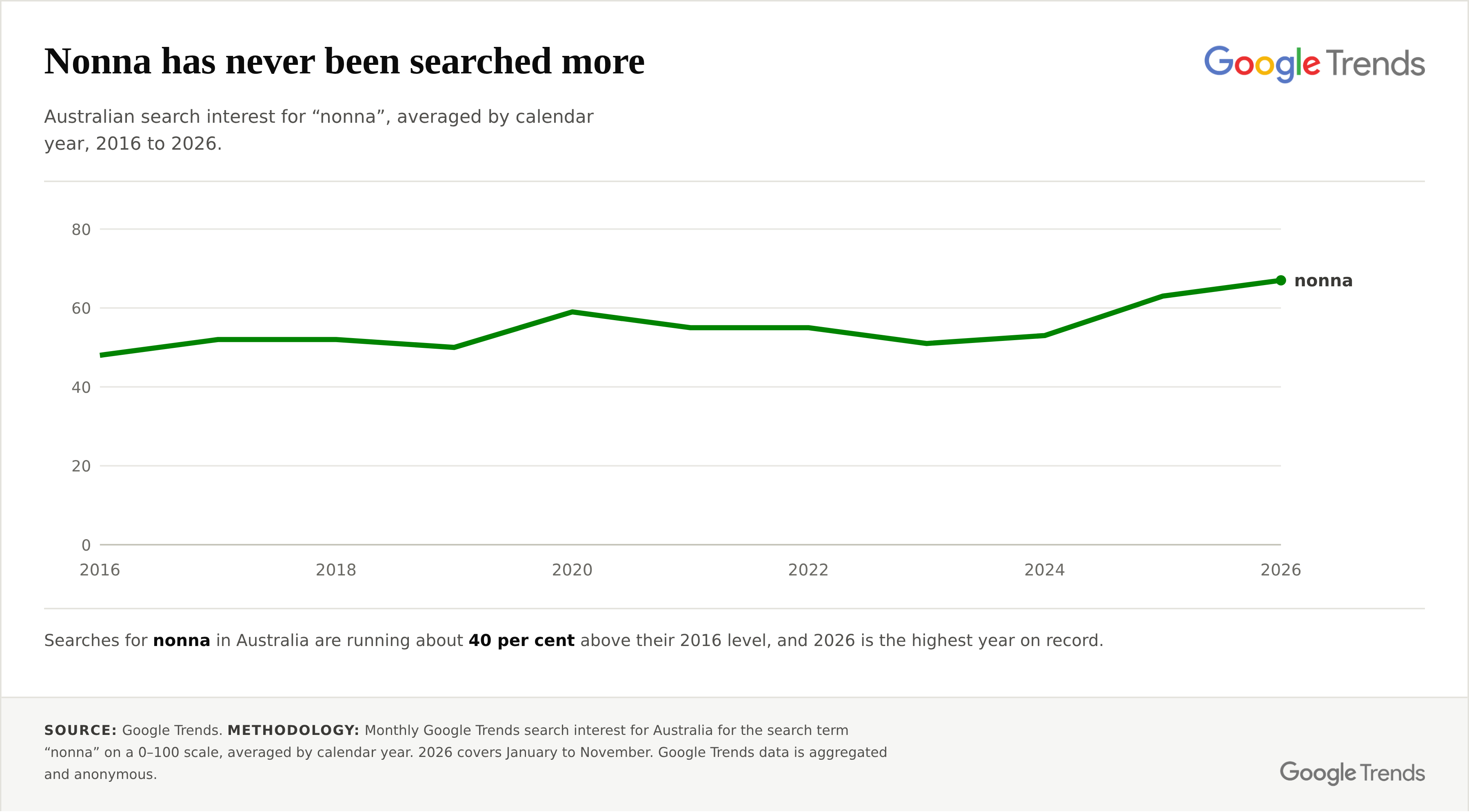
Figure 1: Australian search interest for “nonna”, by year, 2016 to 2026. Source: Google Trends.
A film moved it, and it stayed moved
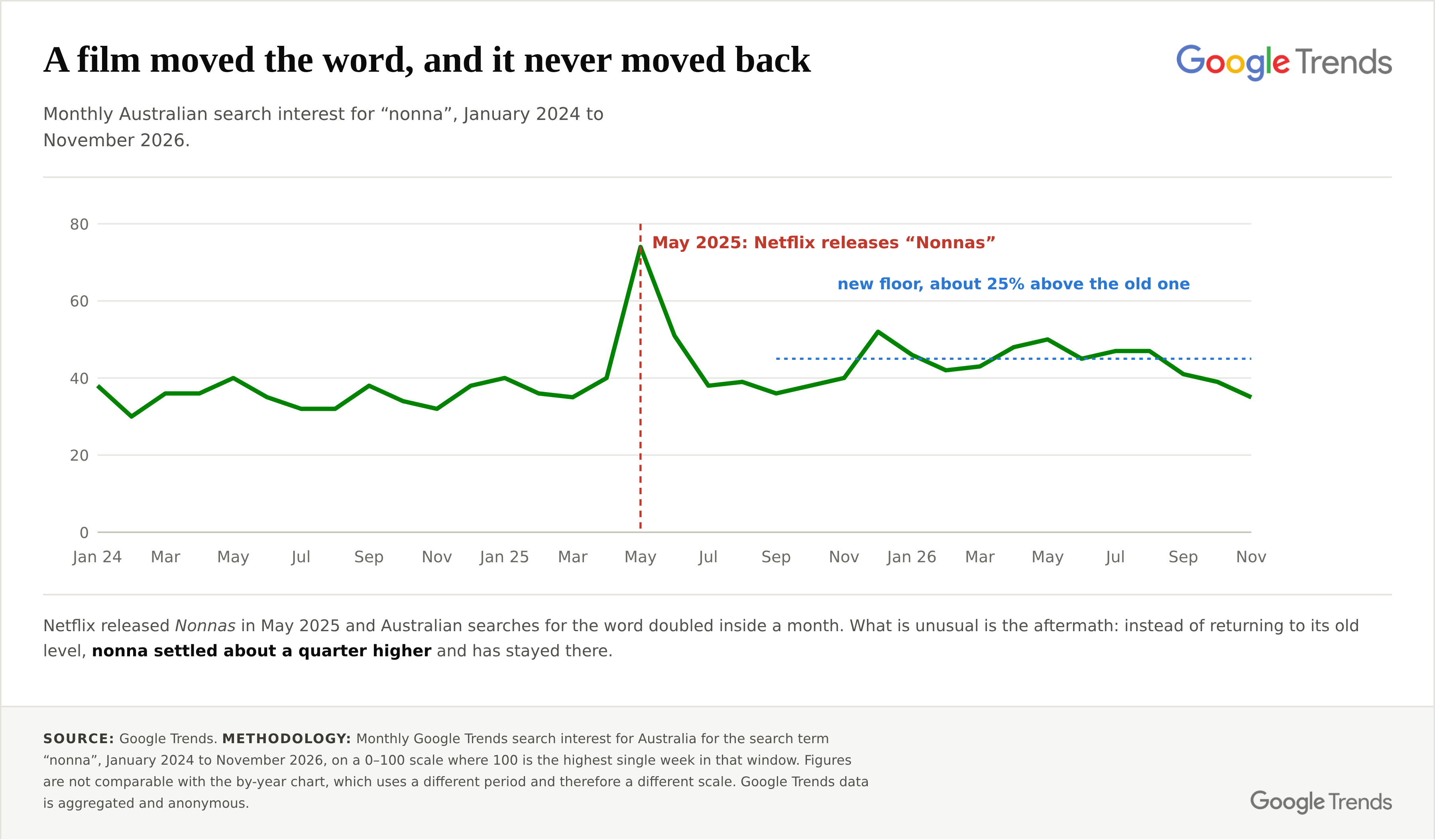
The line is not a smooth climb. In May 2025 Netflix released Nonnas, the Vince Vaughn comedy based on Enoteca Maria, the Staten Island restaurant that staffs its kitchen with Italian grandmothers. Australian searches for the word doubled inside a month.
That part is unremarkable — films move search terms all the time. What is unusual is what happened afterwards.
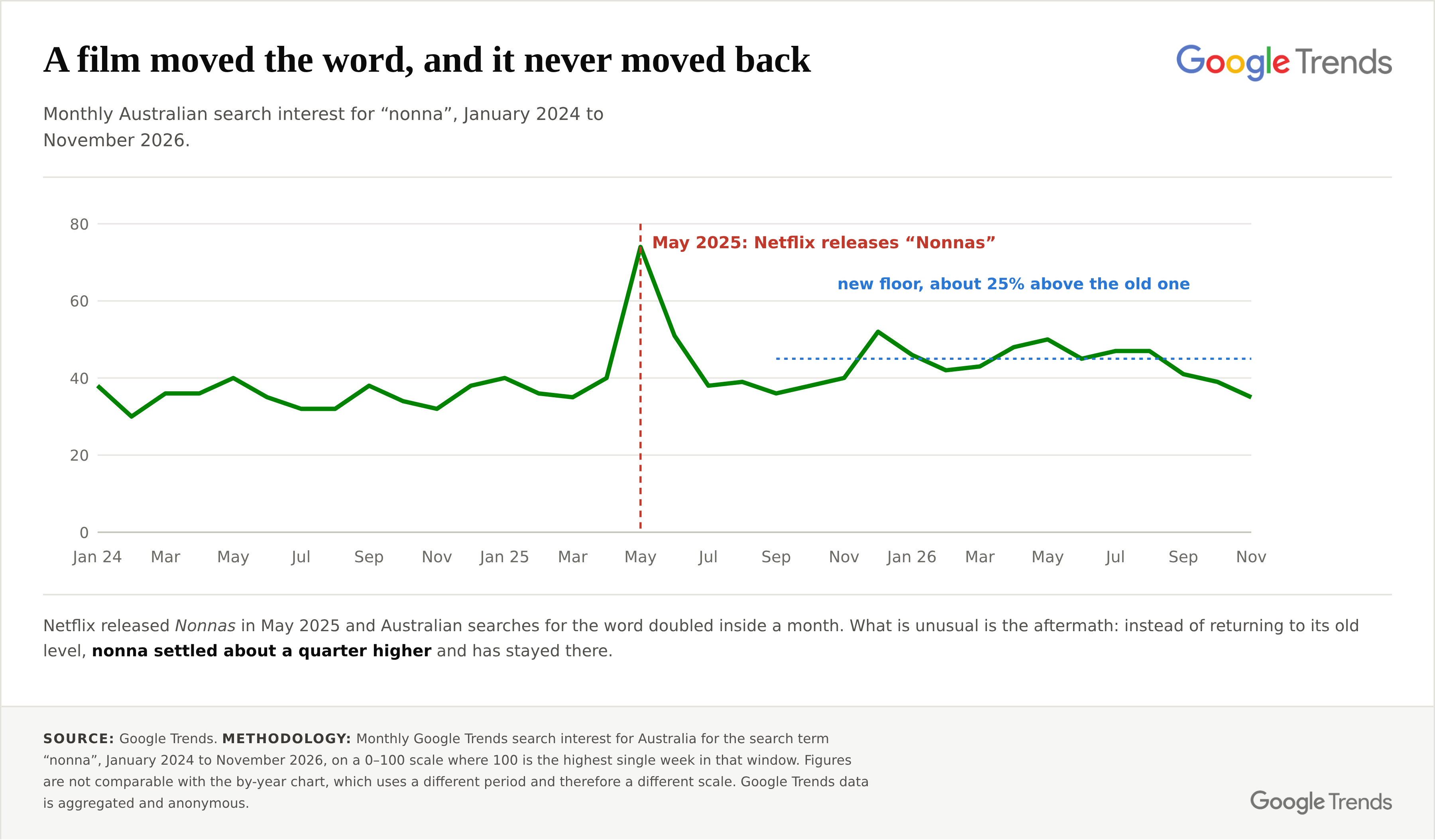
Figure 2: Monthly Australian search interest for “nonna”, January 2024 to November 2026. Source: Google Trends.
Search spikes almost always decay back to where they started. This one did not. After the spike passed, “nonna” settled at a level about a quarter above its pre-film baseline and has held there for eighteen months. The film did not borrow the word’s attention. It permanently raised it.
What Australians are actually searching
Here is the part that matters commercially. Strip out the film and look at which “nonna” searches are growing fastest in Australia, and they are almost all businesses.
Crazy Nonna at Clemton Park and Campsie. Nonna Rosa at Glenroy. Nonna Leotta’s in Cairns. Nonna Fina. Nonna Bizzarro. Nonna Maria’s Place. Nonna and I, whose menu was among the fastest-rising searches of the year. Alongside them, “The Modern Nonna” — a recipe brand, not a person — and “Jamie Oliver nonna recipes”.
The most-searched phrase of all is simply “nonna italian”, and sitting not far below it, “nonna meaning” and “nonna in italian”. A good share of the Australians typing the word do not yet know what it means. They have seen it above a door.
The word as a trust signal
Put those two facts together and you have the shape of what is happening. The word is being used as a brand, by restaurants that are not run by anybody’s nonna, because it carries a promise no English word carries as efficiently. And it is working on people who could not translate it.
That is the usual career of a borrowed word. It arrives attached to a specific thing, it gets used as shorthand for a quality, and eventually it detaches from its origin altogether. Barista did it. Al fresco did it, in a way that would puzzle an Italian. Nonna is somewhere in the middle of the journey — still clearly Italian, already doing work that has nothing to do with grandmothers.
Where it is said most
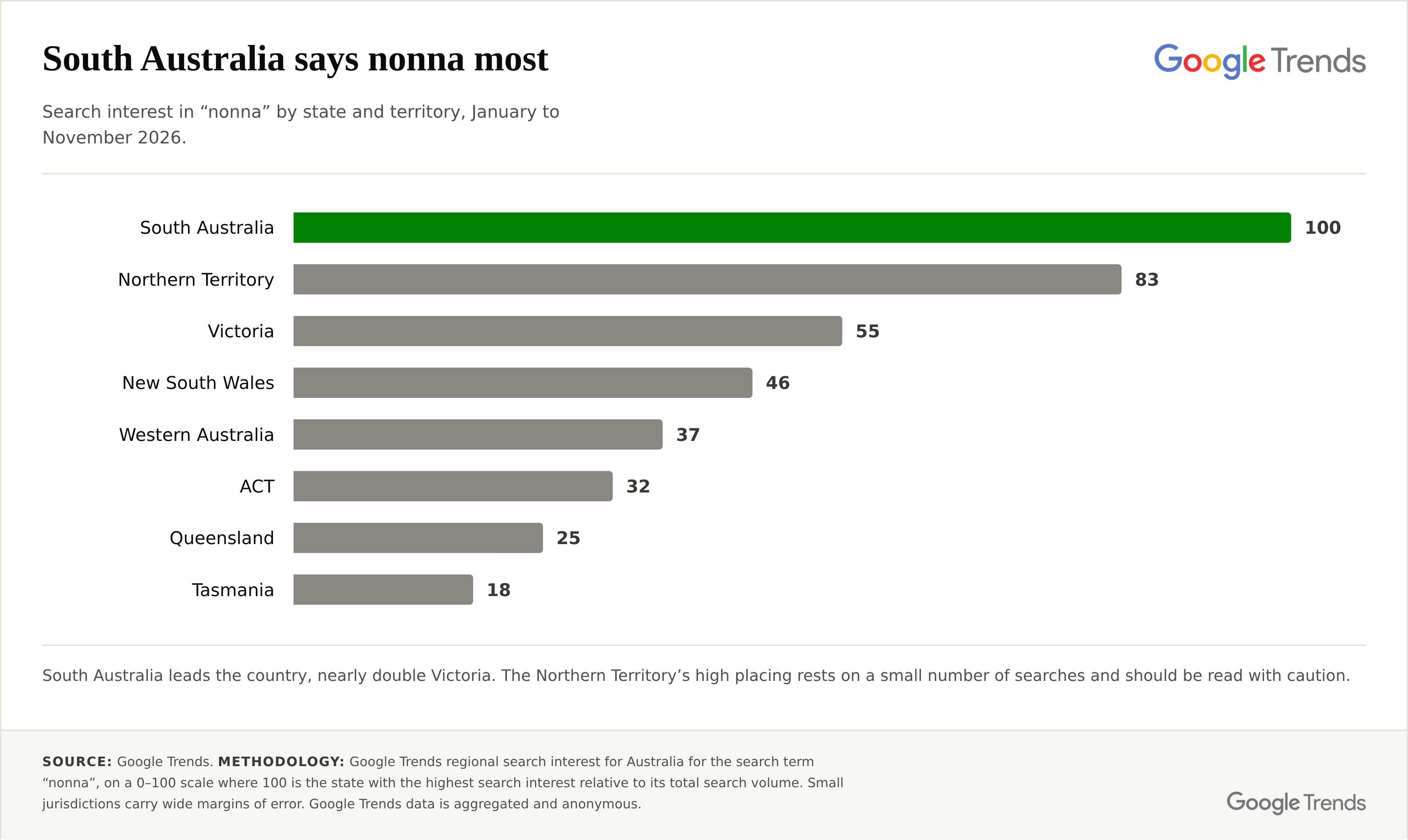
South Australia leads the country for “nonna” searches, ahead of Victoria by a wide margin.
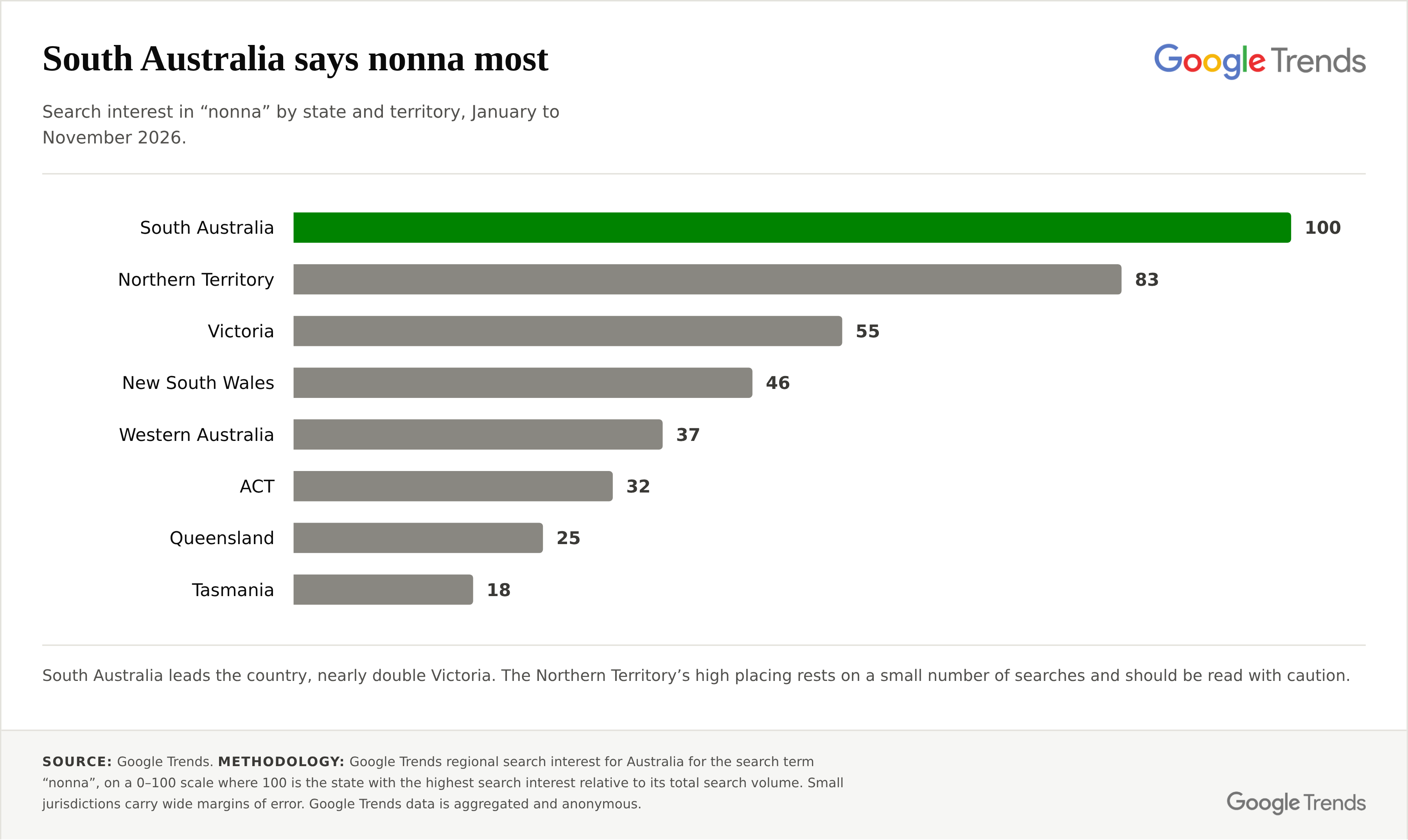
Figure 3: Search interest in “nonna” by state and territory, January to November 2026. Source: Google Trends.
The same pattern turns up in other Italian retail searches in Australia, where South Australia also outranks the bigger states. The Northern Territory’s second place should be read cautiously: it rests on a small number of searches, and a single well-known business is enough to move a jurisdiction that size.
About the data
Figures are from Google Trends for Australia and were collected on 6 November 2026. Google Trends measures relative search interest on a 0–100 scale rather than absolute search volumes, so numbers can only be compared within the same chart. Figure 1 uses monthly data from January 2016 to November 2026 averaged by calendar year; Figure 2 uses a separate pull covering January 2024 to November 2026 and is therefore on a different scale and not directly comparable with Figure 1. Related and rising search terms are from Google Trends for the same period. Nonnas was released by Netflix in May 2025. Google Trends data is aggregated and anonymous.