
Two minutes and 39 seconds. That's the time it took to take a life. An entire existence. Two minutes and 39 seconds that continue to echo in a mother’s memory, becoming the fragile dividing line between before and after. A very short time, but one that today, six years on, continues to raise questions about a justice system tasked with protecting victims before it is too late.
On November 16, 2020, Celeste Manno, 23, was brutally killed in her home in Mernda, in Melbourne’s north. Her killer, Luay Nader Sako, was a former colleague who had developed an obsession with stalking her over several months. Celeste worked as a team leader at a call centre in Mill Park and had simply shown the man kindness after he was dismissed from the company about a year earlier.
A gesture of courtesy that, in Sako’s mind, became an increasingly dangerous fixation, involving persistent messages, harassment and intimidation. The family sought help from Victoria Police, and Celeste obtained a restraining order against her stalker.
But it was not enough.
In the early hours of that horrific Monday, Sako went to her home, smashed through her bedroom window and stabbed her 23 times before fleeing.
The case exposed a serious flaw in Victoria’s justice system: Celeste was neither the man’s partner nor his former partner, but a colleague who had simply crossed his path. Yet the protections for stalking victims outside a family or intimate relationship did not provide the same safeguards available in other contexts of violence.
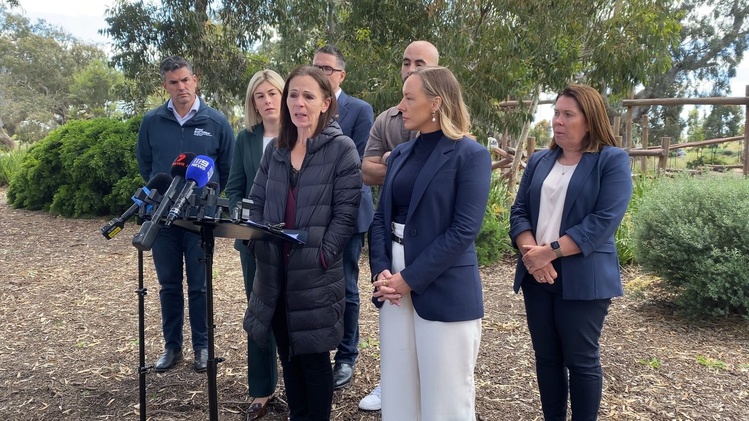
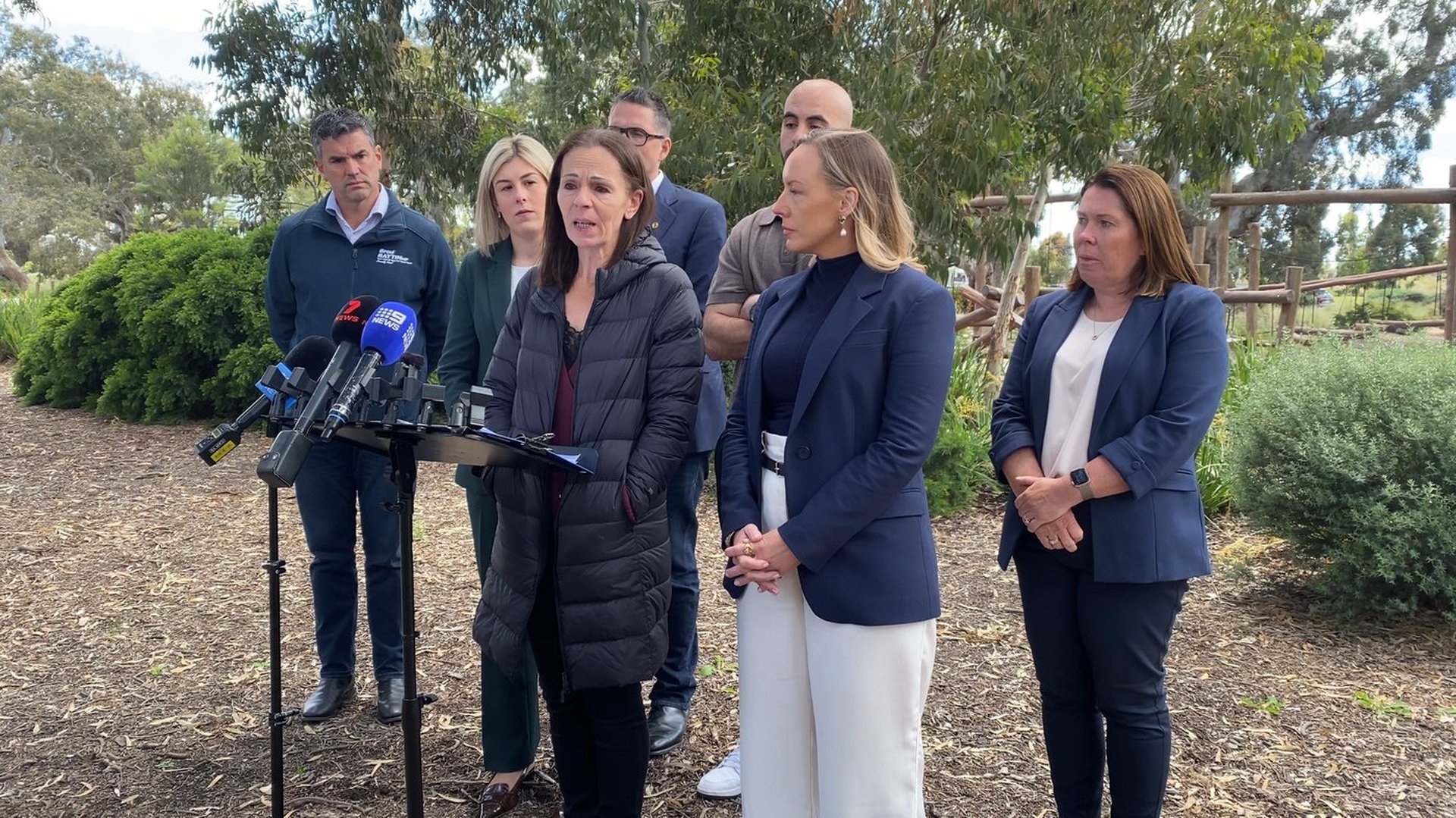
To seek justice for her daughter, her dreams and her life so brutally ended, Aggie Di Mauro turned her grief into a public call for change. A fight taken to Parliament, to rallies, to meetings with political representatives and through a public petition that gathered around 35,000 signatures.
“I will fight for my daughter, for a new law, Celeste’s Law, so that thousands of victims can be saved in her name and in honour of her memory,” she had said, calling above all for the introduction of tracking devices to monitor stalkers considered high-risk, with systems to alert victims and authorities if they came near.
It's a fight that, over the years, has never stopped. Celeste’s killer, Luay Nader Sako, was sentenced by the Supreme Court of Victoria on February 29, 2024 to 36 years in prison, with a minimum of 30 years before he could apply for parole. A severe sentence that recognised the gravity of the crime, but did not bring closure for the Manno family. No sentence could have brought Celeste back and, above all, no punishment could have filled the gaps in a system that still does not ensure full protection.
Six years after Celeste's murder, the issue has returned to the centre of political debate ahead of next Saturday's Victorian state election (November 28).
Liberal Party leader Jess Wilson unveiled a proposal named in Celeste’s honour, promising to implement all the recommendations of the Victorian Law Reform Commission and strengthen protections for stalking victims.
The central element of the plan is a trial of round-the-clock GPS monitoring for stalkers considered high-risk and subject to protection orders, with exclusion zones around victims’ homes and workplaces. In the event of a breach, the system should allow the perpetrator’s movements to be promptly identified and authorities alerted.
The plan also includes mandatory specialist training for police officers, more tools to tackle digital stalking, stronger restraining orders, behaviour change programs for perpetrators and better support for victims. A Department of Justice task force would oversee the implementation of the reforms, with clear deadlines and public reporting. The announcement echoes many of the demands Aggie Di Mauro has made since the first months after her daughter’s murder.
“Women will finally be able to feel that their fears are being taken seriously and that their lives truly matter. They will no longer ask themselves, ‘What is the point of reporting it to police?’” Di Mauro said in our interview. “They will know that the officer they approach will have received appropriate training to recognise the level of risk they face and will know what action to take.”
“Above all, I believe that GPS monitoring of a stalker – 24 hours a day, seven days a week – especially while victims of harassment are sleeping in their beds, will give them the peace of mind they need. Not a false sense of security, which is what the Labor Government has chosen to offer them,” Di Mauro added.
Asked about the proposal during a press conference with multicultural media, Premier Ben Carroll said he was willing to consider Celeste's Law, “provided it is backed by concrete evidence”, adding that he needed to “seek the views of the Chief Commissioner and law enforcement on continuous electronic monitoring”. He also reiterated his “zero tolerance” approach.
Carroll's response, however, has not convinced Di Mauro, particularly in light of promises she's heard in the past.
In 2021, then-premier Daniel Andrews also gave assurances that he was willing to introduce changes: “If we can do her justice by making changes, that is exactly what we will do,” he said. Yet, years later, many of the experts’ recommendations remain unimplemented.
“I have heard so much nonsense from the current government: from ‘it does not work in real time’ to ‘the technology is not yet sufficiently developed’,” DiMauro said. “It is all rubbish. If it really were that unreliable, why is it used as a parole condition for people convicted of murder?”
After six years of waiting, a willingness to consider a proposal can no longer be regarded as enough: families are demanding firm timelines, clear responsibilities and verifiable action. The Liberal plan will also have to prove it can be implemented in practice, particularly regarding the sustainability of round-the-clock GPS monitoring and authorities’ ability to respond promptly to a breach. But these questions cannot become yet another reason to delay a reform that has been demanded for far too long.
Aggie Di Mauro’s campaign has its roots in a legislative process that began back in 2021, when then-attorney-general Jill Hennessy announced that she had asked the Victorian Law Reform Commission to urgently review Victoria’s response to stalking and harassment, including the operation of restraining orders.
In September 2022, the Commission presented a report containing 45 recommendations to improve protection for victims and the authorities’ response. The proposals included a review of the legal definition of stalking, more effective risk assessment procedures, greater collaboration between police and courts, tools to tackle cyberstalking and intervention programs for perpetrators. Despite the experts’ work, many of the measures remained unimplemented for a long time.
In February 2026, the Justice Legislation Amendment (Family Violence, Stalking and Other Matters) Act 2026 was passed, coming into force on April 26. The new law changed the definition of the offence of stalking, allowing a pattern of stalking behaviours to be assessed as a whole, rather than through an overly restrictive interpretation of individual incidents. Some procedural protections for victims were also introduced, and stalking was recognised as a form of family violence in certain circumstances.
However, this is only a partial response. According to the Victorian Law Reform Commission, just three of its 45 recommendations have been incorporated into the law, while many other measures have yet to be implemented.
Celeste Manno’s story has sadly become a symbol of a battle that has spanned governments, parliamentary terms and election campaigns. Her mother has continued to demand that stalking be recognised for what it is: harassment that can infiltrate everyday life, rob victims of their peace of mind and turn even their own home into a place of fear.
Today, Victoria has a new opportunity. The Liberals’ proposal and the experts’ recommendations bring the issue back to the centre of public debate. But the value of this attention will not be measured by announcements made during an election campaign, but by laws passed, resources allocated and, above all, the ability of institutions to intervene in time.
“It is not simply about announcing Celeste’s Law, but about actually implementing the protective measures needed to ensure women’s safety,” Di Mauro said.
Celeste cannot become merely the name of a political proposal during an election campaign, and her grieving mother cannot spend another six years asking for promises to become action. And two minutes and 39 seconds should never again be enough to erase a life that the system had a duty to protect.
“I know how badly I failed my daughter that night,” a deeply distressed Di Mauro said. “The fact that I slept through those two minutes and 39 seconds will haunt me for the rest of my days. But a GPS tracking device would have given Celeste and I the chance to leave the house that night. Celeste’s death could have been prevented, and she would still be here today.”