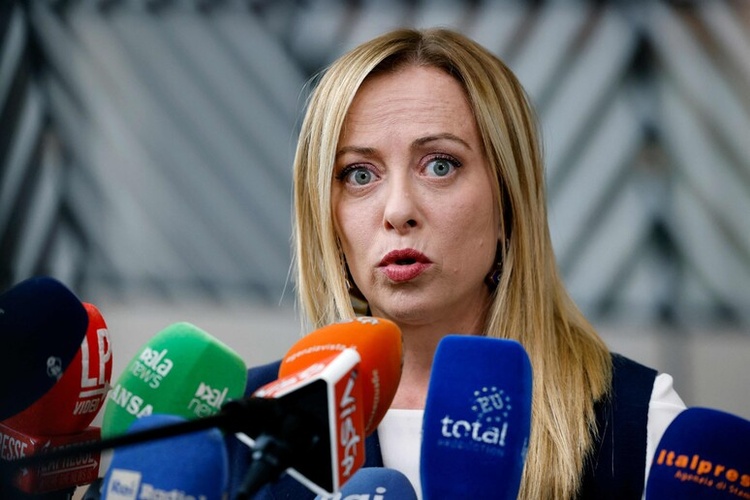
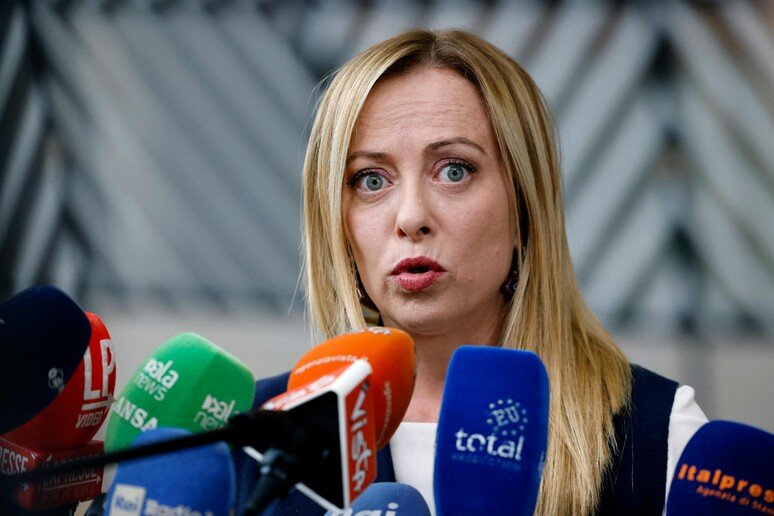
The 2027 budget package is worth a total of approximately 26 billion euros, Prime Minister Giorgia Meloni stated during a press conference following the cabinet meeting at which the bill was approved.
She said that the abolition of road tax for most Italians gas been made structural; saying that those who dismissed it as an election-time handout are proven wrong.
She said it applies to approximately 70% of vehicles currently on the road.
In the budget, “we are making the vehicle tax relief structural, just as we had approved during one of our final cabinet meetings.
“This means no road tax for small-to-medium-powered cars—up to 80 kilowatts—or for motorcycles.
We are talking about roughly 70% of the vehicles currently on the road.
“Many tried to downplay this measure, claiming it was merely an election-time handout—partly because it was initially set to apply only in 2027—but they will now be proven wrong; they will see in black and white exactly what we had stated all along: the measure is structural and permanent.
“At least for as long as the center-right is in government—because, as it turns out, the center-left actually likes road tax.” In the budget, she added, “we are raising the threshold for the second personal income tax (IRPEF) bracket to 55,000 euros per year.” “If we could have, we would have done much more,” she added.
Meloni said the IRPEF cuts would provide a benefit of 500 euros per year.
With previous measures regarding the personal income tax (IRPEF), the State has foregone “approximately 21 billion euros.
Now, we are taking another step forward: we are raising the threshold for the second tax bracket—taxed at 33%—up to 55,000 euros.
“The maximum benefit is 500 euros per year. Some might say that is still not enough—we would have liked to do more—but this must be considered alongside the steps taken previously.” Meloni also said that the government would provide air conditioning for all schools, using a portion of energy-related flexibility funds.
“We have decided to use a portion of the energy-related flexibility resources to equip all schools with air conditioning units and heat pumps, making our classrooms more comfortable. It would have been better if, in the past, resources had been invested in this—rather than in desks with wheels.” She also said that the 'agreed-rent' tax rate would drop to 5%, or 1% if renting to those under 35.
“The problem of rental housing affects all of Europe, and Italy is no exception—which is why we have launched a housing plan.
“As part of the budget, we have included a measure whereby the flat-rate tax on ‘agreed-rent’ [regulated-rate] leases will drop to 5%, and to 1% for those who rent to young people up to the age of 35.” Meloni also said that the budget earmarks 3.4 billion to boost the National Health Fund.
“This budget law, like all those before it, allocates significant resources to increase the National Health Fund.
“We are boosting it by 3.4 billion, bringing the total to 146.3 billion by 2027—another record.
“A portion of this increase is specifically earmarked for raising the salaries of emergency room doctors, who serve on the front lines—the very place where citizens experience the public healthcare system's response on a daily basis.” Meloni said five billion of the budget funds would come from banks and the Tobin tax was to increase.
Regarding the funding measures, “about 5 billion or more will come from the financial sector”—specifically from banks and insurance companies—with a “90,000-euro exemption threshold” for cooperative banks ('popolariì) and smaller institutions, alongside an increase in the Tobin tax.
She said the budget is not directed against anyone and she thought banks and insurance companies would understand this, even though there had been no prior deal with them.
“There was no room to reach a prior agreement” with the financial sector—a sector I would like to thank. “I believe that banks and insurance companies also understand the situation and share” the need to “lend a hand.” She emphasized that “this budget is not directed against anyone; rather, in a complex time, we have asked those with fewer difficulties to lend a hand. The State is setting a good example by implementing cuts to ministries, amounting to approximately 1 billion.”
Meloni also said “we have also requested an additional contribution from energy companies—amounting to about 700 million—which comes on top of the contributions we had already sought in recent months, for instance to fund the 'energy bills' decree”; meanwhile, “another 700 million” will come from the gambling sector.
She also announced a €300 voucher for those over 75 to cover medical costs not included in the National Health Service.
“With this budget bill, we are introducing a €300 social voucher for Italians over the age of 75 who have an annual pension of up to €28,000. This applies to 5.5 million people, with the total cost of the measure amounting to €1.6 billion,” she said.
“The funds,” she explained, “can be used for healthcare expenses not covered by the National Health Service, such as pharmaceutical costs and specialist medical consultations.
“It is a tangible form of support—a way to tell millions of elderly people that they are not alone.”
Meloni added, “Between the €3.4 billion allocated to the National Health Fund and the €1.6 billion for the voucher” for those over 75, “we are talking about a total of €5 billion for the healthcare sector.”
The government is also adding a month more of parental leave, the premier said.
“This year, we are adding an extra month” of parental leave for everyone, “but we are going even further: for a second child, the number of months paid at 80% of salary will increase by two—bringing the total to five—while for a third child and beyond, it will reach six.
“Consequently, for those with three or more children, this budget law brings the number of months of parental leave paid at 80% of salary to six,” she highlighted.