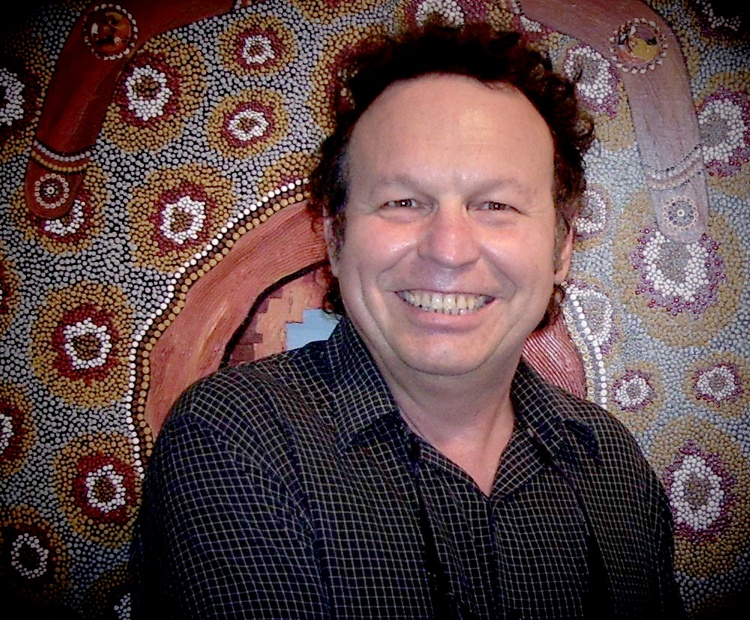
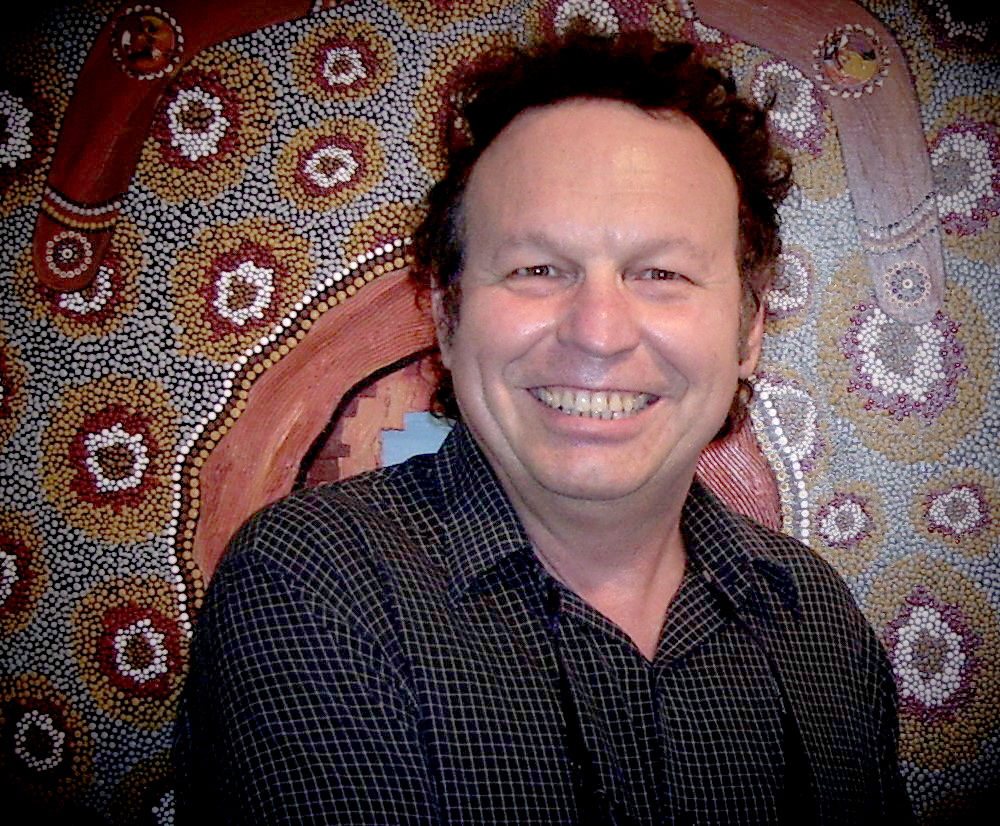
“Reconciliation is an understanding, and recognition,” Crismani said.
“It’s a perceiving, a recognising, in whatever form it comes in.
“There’s an event [in Adelaide] on Friday with two of my short films playing, in a program called Black Screen.
“It’ll be an hour long of different Aboriginal filmmakers, which is presented to the public.
“And the program will tour regional centres in South Australia.”
Crismani said that all of the running events for Reconciliation Week are about raising awareness about our past, about who Aboriginal people are today, their different nations across the country and where they belong and why.
But it’s also about recognising Australia’s colonial history of dispossession and violence, which began with Terra Nullius and which, arguably, continues today.
Crismani said that storytelling, whether visually, or with words, is a way of opening a lens into a world which may not have been seen before.
He said that although he believes in the benefits of activism, for him, it is art which creates empathy in an audience, and has a great capacity for big change.
Crismani was just this month awarded an Australia Council of the Arts grant in the literature category.
“I’m planning on using that for the development of my novel manuscript,” he said.
The novel, which is called Finding Billy Brown, is a fictional reimagining of a past set in Depression era Australia, when Aboriginal people weren’t even considered citizens.
The novel is inspired by the story of Crismani’s Grandpop, who was previously featured in his documentary, The Panther Within (2016).
In the film, details of the life of Crismani’s Grandpop – who was a champion boxer, known in the ring as “The Black Panther” – reveal a life lived in continual navigation of the effects of racism.
Crismani’s novel-in-progress is a fictional imagining of a character who travels back to that historical period.
It’s a story about reconnecting with culture, language and heritage, with a unique time travelling element.
“A little bit like the Wizard of Oz,” Crismani laughed.
The funds will be used to pay for a mentor, to guide and finish him through the writing process, as well as for his research, which will involve travelling to Canberra to uncover archives of photographs, records and songs from 1920s and 1930s Australia.
He also plans to visit Wiradjuri elders around the country, including Auntie June in Shepparton, and Auntie Kerrie in Canberra, and speak to an Aboriginal academic in Melbourne, Dr Lou Bennet, who has extensively researched this area and was awarded her Doctor of Philosophy on the evolution and power of Aboriginal language.
Crismani said that after seeing his film The Panther Within, different people spoke to him about how strongly they had been moved.
“People came up to me and said, ‘Oh I love your mum, she’s just a star. I love her’,” Crismani recalled.
“Nobody would have seen that before.
“And then I see mum walk a little taller, a bit stronger because of that.”
It’s an acute example of poetry in motion: the power of storytelling to inform, and strengthen both parties.
“[Art] makes a difference in a way that people love, and can relate to,” Crismani confirmed.
Crismani’s mother is Aboriginal, Scottish and English, while his father was Italian.
He came from Istria, an area of northern Italy which was annexed to Yugoslavia after World War II, resulting in a wave of Italian refugees fleeing to Australia.
Crismani said that growing up in Coober Pedy with Aboriginal, Italian, Scottish and English blood felt normal and that “no one really noticed”.
But when he moved to the city, he felt the racism and taunts, coming from all sides.
Crismani’s work in film, poetry and story is an extraordinary affirmation of his strong sense of self as a culturally-mixed Aboriginal Australian.
He recalls that while studying film and writing at the University of South Australia in 2012, an Aboriginal Elder told him to “embrace all of your heritage”.
At that time, Crismani had been going by the name Ed, or Eddie.
But from then on, he took on his full name, Edoardo.
“I thought, I’m embracing all different aspects of my culture and it’s kind of honouring my mum, and honouring my dad,” he mused.
Crismani will spend the next year to a year and a half working on his manuscript and from there hopes to secure a publisher for his novel Finding Billy Brown, but it’s dependant on the creative process.
In the meantime, you can watch his documentary The Panther Within on SBS On Demand.
National Reconciliation Week (May 27 to June 3) is about fostering the relationship between the broader Australian community and Aboriginal and Torres Strait Islander peoples.
For more information head to Reconciliation Australia’s website.