SANTIAGO, CHILE – “We immediately offered our rapid Hantavirus testing kits to the World Health Organization. They cost about five euros per test, but we were prepared to provide them free of charge. Unfortunately, by the time we managed to establish contact, the MV Hondius had already been evacuated and its passengers dispersed.”
Speaking is Dr Juan Bertoglio, an immunologist and internal medicine specialist at the Austral University of Chile, who has spent more than 30 years studying and treating Hantavirus infections.
“Now we are working closely with the WHO to ensure these diagnostic devices are available wherever they may be needed,” he told Il Globo.
Of Italian descent—his family originated in Piedmont, though he is quick to point out that his grandmother was Tuscan—Bertoglio is one of Chile’s leading experts on the disease. His work spans clinical care, diagnostic research and the development of early treatment strategies.
While international attention has recently shifted from the Hondius outbreak to the growing concerns surrounding Ebola, South America remains familiar with a virus that many elsewhere had barely heard of until a few weeks ago.
Hantavirus is endemic in Patagonia, where around 150 cases are reported each year across Chile and Argentina. Outbreaks are generally limited in scale, but mortality remains high—around 36 per cent—unless the infection is identified and treated early.
That is why Chilean researchers have spent years developing rapid diagnostic kits and clinical protocols designed to detect the disease in its earliest stages, when intervention can make the difference between life and death.
Bertoglio’s first encounter with Hantavirus dates back to 1993, when he was head of Internal Medicine at the John F. Kennedy Regional Hospital in Valdivia, southern Chile.
A 54-year-old woman was admitted to intensive care with a mysterious and severe illness. She later died. Soon after, her husband and another family member developed similar symptoms but survived.
“All three presented with a previously unknown and extremely severe clinical picture,” Bertoglio recalls. “We later identified it as Andes Hantavirus cardiopulmonary syndrome.”
Within months, other serious cases emerged in neighbouring regions.
At the time, little was known about the disease. The long-tailed pygmy rice rat (Oligoryzomys longicaudatus) had not yet been identified as the natural reservoir of the virus, nor was it understood that the Andes strain could be transmitted to humans through exposure to infected rodents.
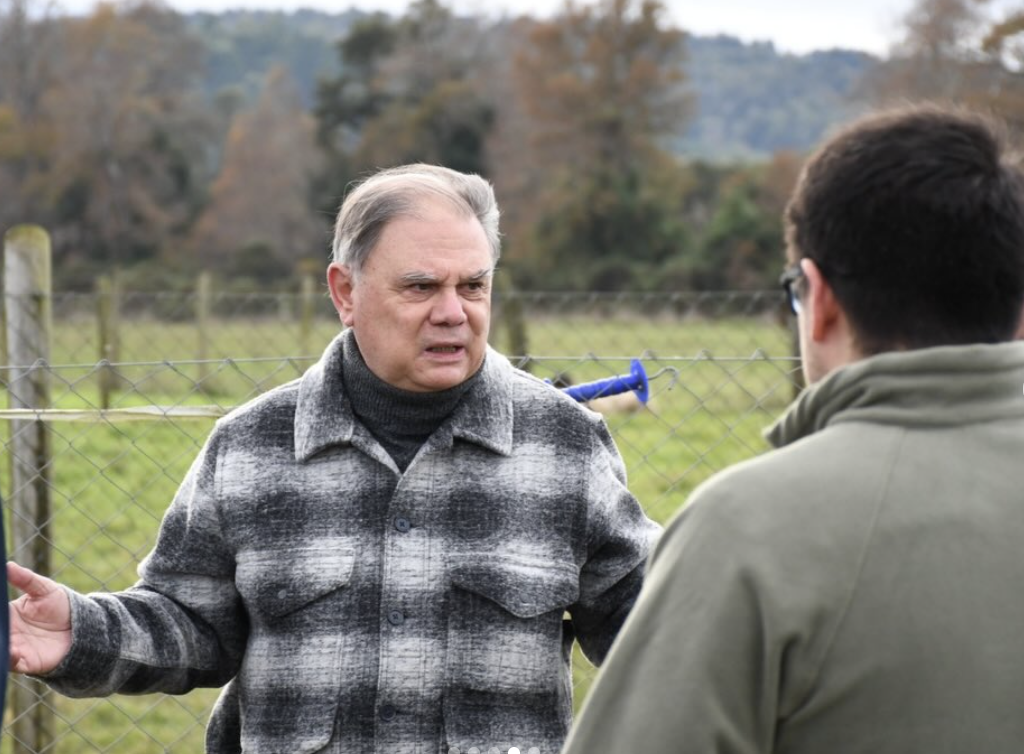
Juan Bertoglio discusses fieldwork findings with colleagues. (Photo courtesy of the Austral University of Chile)
“We immediately suspected we were dealing with a new viral infection that required careful observation, classification and the development of treatment protocols across the health system,” Bertoglio says.
Further cases appeared in 1995, 1996 and 1997 in communities straddling the Chilean-Argentine border. In Argentina, researchers identified the viral genome in 1996 as a previously unknown strain of Hantavirus—distinct from those found in the Northern Hemisphere but genetically identical to the strain circulating in Chile.
A uniquely South American strain
Hantaviruses are not confined to South America. The viral family includes around 50 known species worldwide, at least 30 of which are capable of causing disease in humans.
“But only in South America do we find the Andes strain—the one involved in the Hondius outbreak,” Bertoglio explains.
The virus was first identified in the 1950s in South Korea, along the Hantaan River, during the Korean War. More than 3,000 American soldiers became infected with what is now known as the Seoul strain, which causes a severe renal syndrome and has a mortality rate of around 11 per cent.
“To this day,” Bertoglio says, “we still do not know exactly when, how or from where the virus arrived in Patagonia.”
As cases accumulated during the 1990s, Chile established a network of specialised clinical and research centres devoted to understanding the new pathogen.
“It was our professional and ethical duty,” he says. “Cases were few, but the fatality rate was high. At the same time, it presented a fascinating scientific, clinical and epidemiological challenge unlike anything we had previously encountered.”
Today Chile operates a nationwide network of diagnostic and treatment centres, supported by seven public-private research institutions. Their work ranges from studying rodent populations to developing diagnostic tools, therapeutic protocols and new treatment technologies.
The network collaborates closely with universities and research centres around the world, including institutions in Australia, Canada, Germany, South Korea, the Netherlands and the United States.
The importance of early diagnosis
Bertoglio is currently involved in developing rapid antibody and antigen tests, as well as innovative neutralising nanobodies.
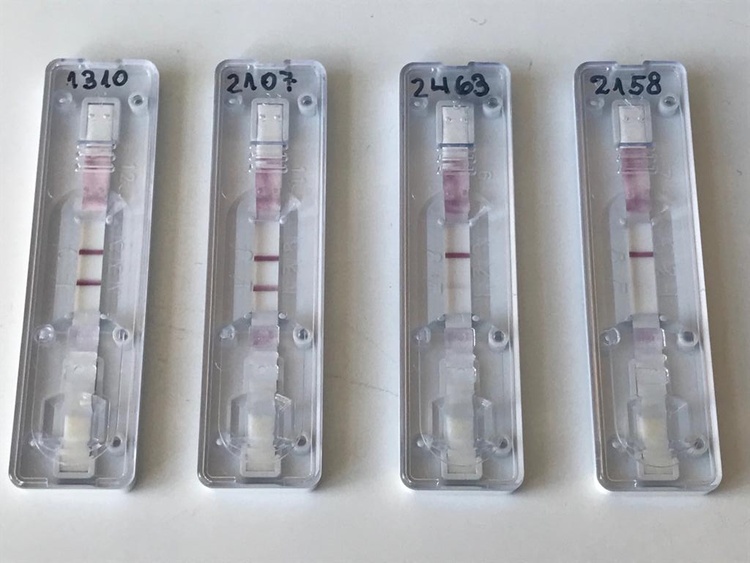
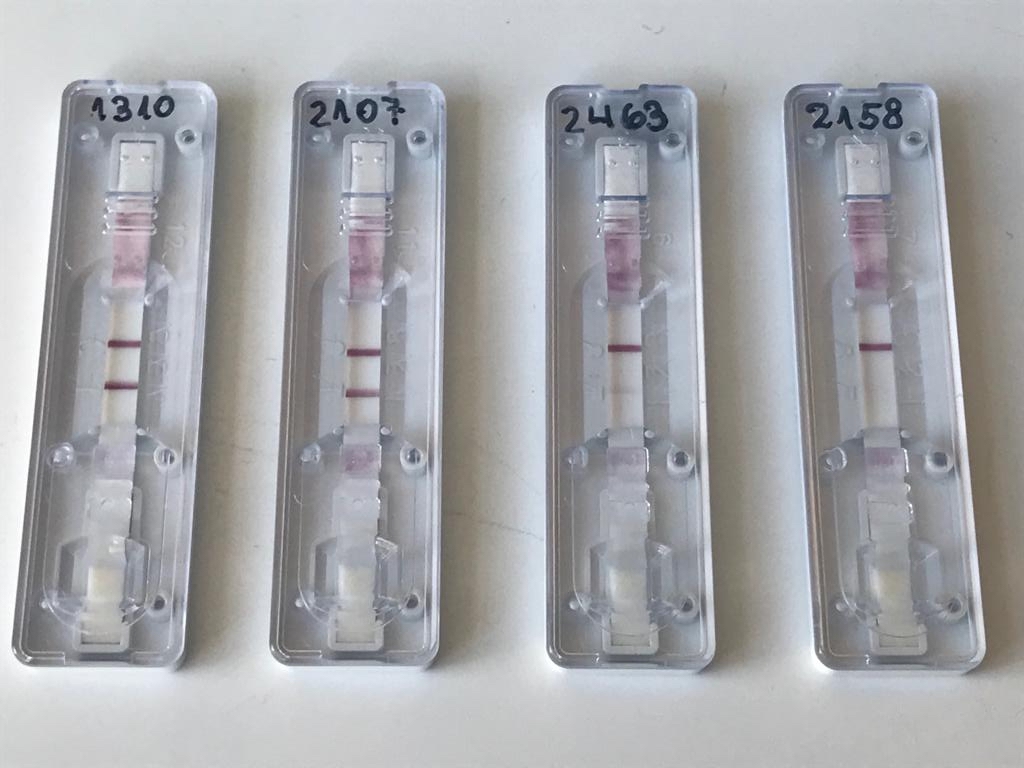
“A single drop of blood or saliva is placed onto a reagent strip,” he explains. “If the result is positive, a red line appears within minutes, much like a pregnancy test.”
The newest generation of kits—expected to be approved for distribution within weeks—can identify infection just three to four days after exposure.
Existing antibody-based tests, already available commercially, typically detect infection after five or six days.
Early diagnosis dramatically improves survival rates.
In Argentina, with a population of around 50 million, 102 cases and 28 deaths were reported in 2025. Chile, with roughly 20 million people, recorded 44 cases and eight deaths.
“When diagnosis and treatment occur early, mortality falls from around 40 per cent to approximately 16 per cent,” Bertoglio says.
He notes with some pride that infections in Chile increasingly occur among visitors rather than local residents.
“Most Chileans living in affected regions have been educated about risk factors and know how to avoid exposure,” he says.
Transmission usually occurs when people inhale particles contaminated by rodent urine or droppings, particularly in rubbish dumps or rural environments where the rodents search for food after habitat destruction.
Yet even waste management workers rarely become infected.
“They know the risks and use appropriate protective equipment,” Bertoglio explains.
Importantly, the common rats found in large cities such as Buenos Aires are not carriers of the Andes strain.
Alpacas and the future of treatment
One of the most promising areas of research involves a novel vaccine strategy being developed by Chilean molecular virologist Nicole Tischler.
Rather than using genetic material from the virus, the experimental vaccine relies on proteins from the virus’s outer envelope to stimulate immunity without causing infection.
Researchers then immunise alpacas with the vaccine.
“With excellent results,” says Bertoglio. “The animals develop a remarkably powerful immune response and produce nanobodies.”
Nanobodies are extremely small antibodies capable of targeting the virus at multiple sites simultaneously, making them potentially effective even if the virus mutates.
“The alpacas suffer no harm whatsoever,” he says. “They spend their days grazing peacefully while schoolchildren visit and watch them. In return for food and shelter, we simply collect small blood samples that may one day save many lives.”
Researchers believe the same technology could eventually be applied to numerous other diseases, including as a vehicle for delivering medications to tissues that are difficult to reach through conventional treatments.
The unanswered question
Despite decades of research, one issue remains unresolved: can the Andes strain spread directly from person to person?
Many scientists believe it can. Bertoglio remains cautious.
“In every outbreak we must determine whether patients became infected through contact with one another,” he says, “or whether they were exposed simultaneously to the same contaminated environment, objects or rodent source.”
In the case of the Hondius outbreak, detailed epidemiological data have yet to be released.
“We still need information about where each patient travelled, when symptoms appeared, how they interacted and the sequence of events,” he says.
“Once those data become available through the WHO, we will be much closer to understanding what actually happened.”
Bertoglio also expresses reservations about proposals for lengthy quarantines for asymptomatic contacts.
“If infection has occurred, modern laboratory tests can detect it with great accuracy,” he says. “Testing every second day for up to ten days is usually sufficient. Keeping people isolated for 45 or 50 days is difficult to justify.”
His comments reflect a broader philosophy shaped by decades of public health experience.
“No sovereign, democratic country should surrender its health autonomy to a supranational body,” he says.
While he emphasises the importance of international cooperation, he believes organisations such as the WHO should provide guidance rather than impose directives.
For now, however, his focus remains firmly on the science.
“Every outbreak is an opportunity to learn,” he says. “The more we understand about transmission, diagnosis and treatment, the better equipped we will be to save lives.”