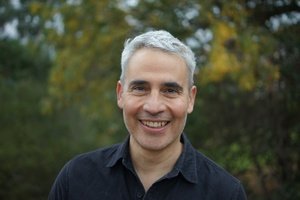
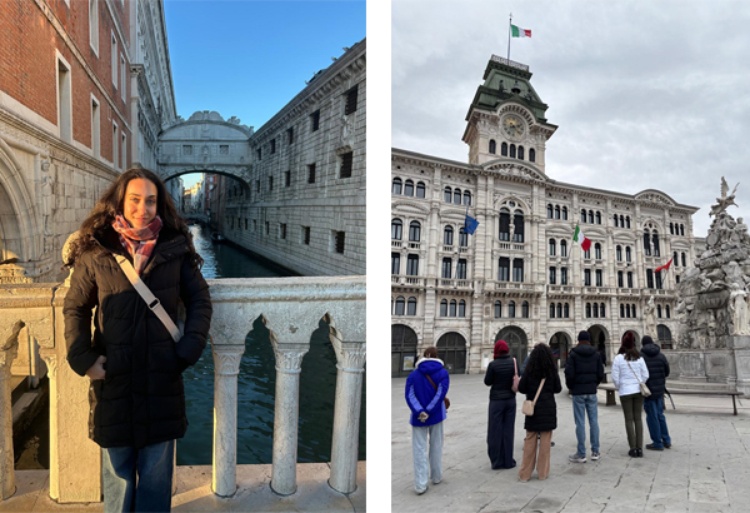
BRISBANE – Neave David Stern returned home recharged and even more in love with Italy after spending four weeks in Cividale del Friuli, in Italy’s Friuli-Venezia Giulia region, thanks to a scholarship awarded through the StuditaliA Prize.
Promoted by the Italian Consulate in Brisbane and Queensland’s Department of Education, the award has recognised the state’s top Year 12 Italian students since 1994.
Neave embraced the experience with remarkable awareness and enthusiasm. Looking back, she admits her decision to study Italian in Year 7 was almost accidental.
“I chose Italian because it sounded interesting and I liked the teacher,” she said.
Over time, though, she realised the language came naturally to her — and that she had a good accent.
“By Year 11, I’d stopped listening to English music and was only watching Italian films or movies dubbed in Italian,” she explained, describing how quickly her passion for the language grew during high school.
A student at Cairns State High School, Neave also found herself increasingly surrounded by people of Italian background, from exchange students to co-workers at the gelateria where she worked. It became a natural connection — one that eventually brought her to Italy twice in 2025 alone.
Before arriving in Cividale del Friuli, Neave had already been selected to attend the Next Gen AI Summit in Naples, the first international conference organised by Italy’s Ministry of Education and Merit focused on the integration of artificial intelligence in education.
The event brought together more than 6,000 students, teachers and experts from over 40 countries for immersive workshops and discussions.
Despite being in the demanding final year of high school, Neave never considered turning down the opportunity.
“Going to Italy was a priority for me,” she said, explaining that her motivation actually helped her become more organised with her studies.
“It was a once-in-a-lifetime opportunity and when you have something like that in front of you, you find a way to manage everything. I’m really proud of how I handled it.”
That sense of determination is already shaping her future plans. Although still very young, Neave is clear about the path ahead: she has recently begun studying medicine in Brisbane and hopes to later specialise in gynaecology in Milan before completing a Master’s degree back in Australia.
Her goal, she said, is to continue the profession of her grandparents while contributing “to the advancement of medicine and healthcare for women.”
For now, though, her thoughts drift back to the weeks she spent in Cividale — an immersive experience that allowed her to fully live the language and culture.
She attended classes at the Convitto Nazionale Paolo Diacono, the boarding school that also hosted her alongside local students and other Australians participating in the exchange.
Neave enjoyed the food served at the school, although she laughed remembering how many of her Italian classmates still complained about it.
And then there were the afternoons after school: long conversations over hot chocolate at local cafés, shopping trips with classmates and all the little moments that made her feel part of everyday Italian life.
Not everything was easy, especially during the first week.
“Socially, it was a bit difficult at the beginning,” she admitted, explaining that she had been placed in a final-year class where “everyone had already known each other since middle school.”
There was little time to build friendships, but things soon improved.
“By the second week it got much better and we started hanging out after school too.”
In the classroom, the biggest challenge was following lessons entirely in Italian, especially subjects she had never studied before. But even English classes occasionally became unexpectedly difficult.
“When we did literature, my classmates would look at me expecting answers,” she said laughing. “But when it came to classic and complicated texts like Shakespeare, I honestly had no idea either.”
Still, one aspect of Italian school life shocked her more than anything else.
“The oral exams,” she said without hesitation. “For me it was unbelievable watching my classmates being questioned in front of the teachers and the entire class. I felt so bad for the students who struggled.”
Now back in Australia — but already planning to return and visit the friends she made during her travels — Neave says the experience gave her far more than improved language skills.
“Definitely more confidence speaking Italian and a richer vocabulary,” she reflected, “but also so many small cultural habits.”
Then, laughing, she added: “One of the first things I want to buy for winter now is a really good pair of slippers.”