It is time to settle comfortably into our cinema seats, enjoy the seventh art and the most distinctive corners of Italy, inevitably accompanied by the ritual of popcorn, colourful posters, upcoming releases, sighs and laughter.
The new edition of the ST. ALi Italian Film Festival, presented by Palace Cinemas, has opened across Australia, with its selection of the latest Italian films and timeless classics that have cemented love stories and significantly transformed the imagination of generations.
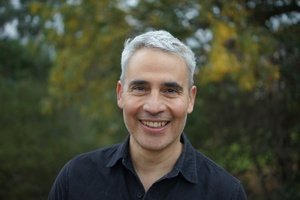
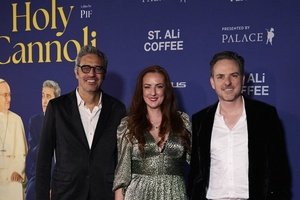
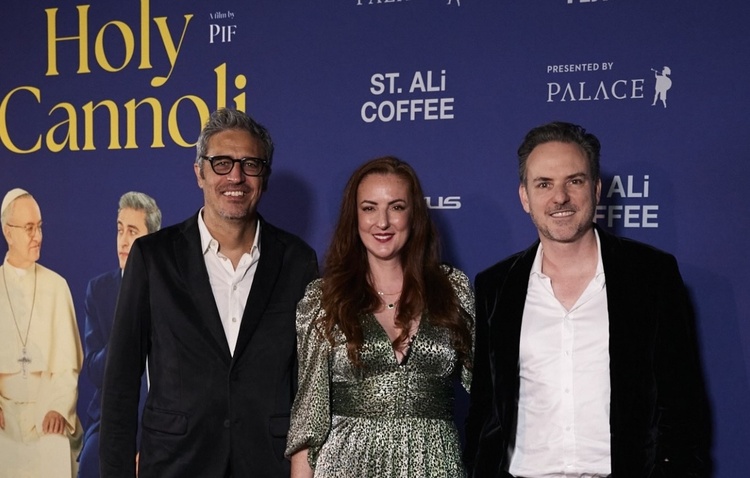
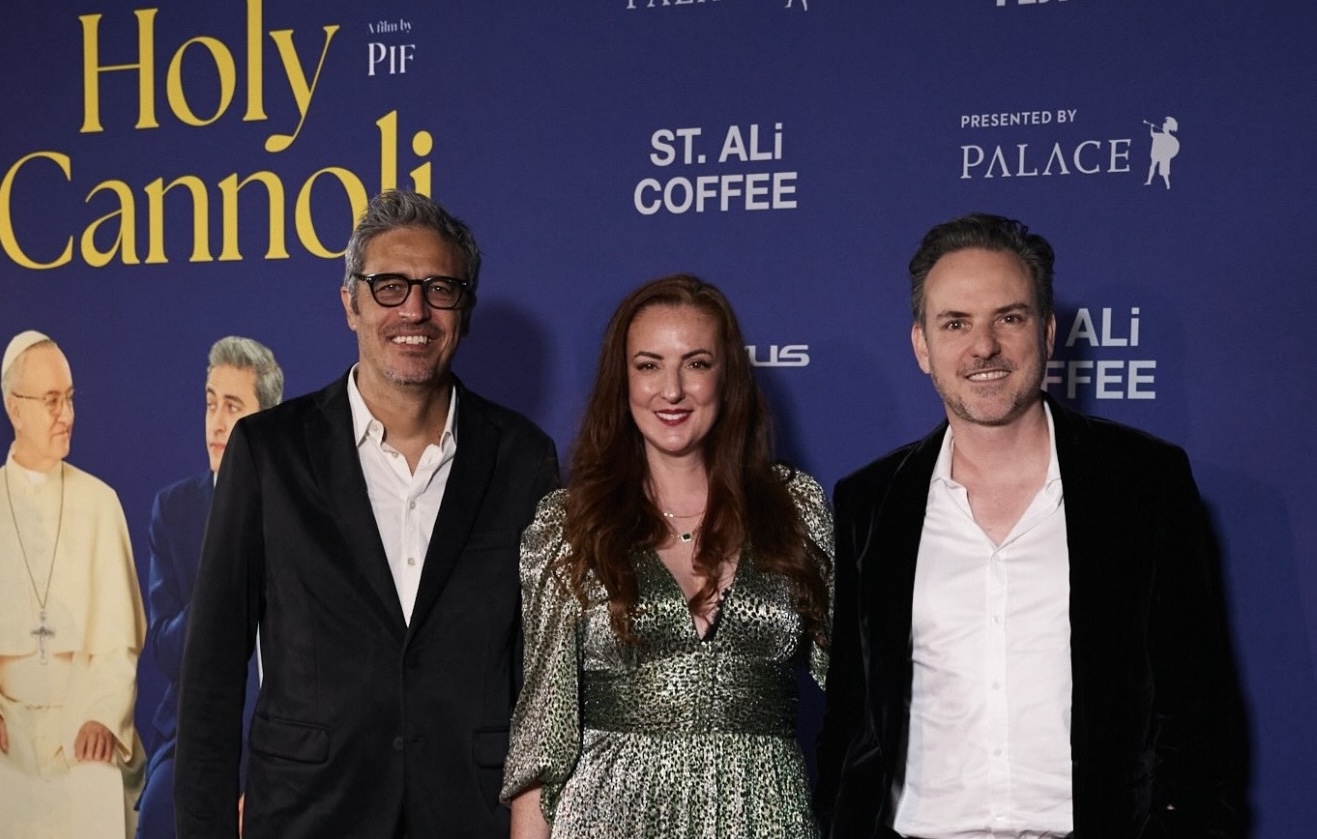
At the two spectacular opening nights in Melbourne and Sydney, alongside Festival Director Elysia Zeccola and Palace Cinemas CEO Benjamin Zeccola, was the now-famous actor, screenwriter and director Pierfrancesco Diliberto, known as Pif.
He travelled Down Under for the official presentation of his latest film, …che Dio perdona a tutti, translated for Australian audiences as Holy Cannoli, and based on his latest novel of the same name.
“I came to Australia two years ago, but I don’t know why I left thinking I would never come back. And yet here I am, at the ST. ALi Italian Film Festival, a festival I had wanted to attend.
“Now I tease them because when I made The Mafia Only Kills in Summer, I hoped they would invite me, but nothing happened. I finally made it with my fourth film!” he says with a smile during our interview.
“As for titles being translated or completely changed, I always take it like a sportsman. If people think changing it might bring more people to the cinema, I’m fine with it; I’m not a radical.
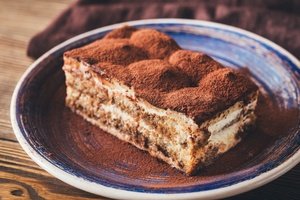
“In the film, though, the actual pastry is a choux pastry, but I understand that a cannolo is much more ‘marketable’. I also discovered how popular cannoli are in Australia.”
Pif’s irony is well known for almost always carrying a moral wound with it, as though the joke’s purpose were to expose a crack, to lay bare an area of collective embarrassment.
The comedy …che Dio perdona a tutti follows this same path with a light touch, weaving together Sicilian expressions, domestic devotion, pastry and catechism, while also exploring something more subtle: the relationship between faith and performance, between cultural belonging and absolute truth.
Pif returns to his Palermo, constructing a parable that favours a gentle tone before gradually arriving at a delicate point: the moment when faith, having ceased to be merely a language, begins to demand consequences.
The protagonist Arturo’s childhood, set in the summer of 1982, provides the film with a funny yet decisive starting point.
The boy entrusts the outcome of the Italy-Brazil football match to prayer, but the trauma comes when his appeal to God appears to work – and precisely because of that, opens the door to doubt:
Why should his request matter more than that of another child — a Brazilian child, in this case?
Arturo therefore emerges with a shaken faith and a new form of the absolute: Sicilian pastries.
Cassata, cannoli, iris and sciù become an alternative vocabulary for a tangible transcendence, a system of consolation capable of replacing heaven with ricotta, promise with chocolate, and abstraction with pistachio.
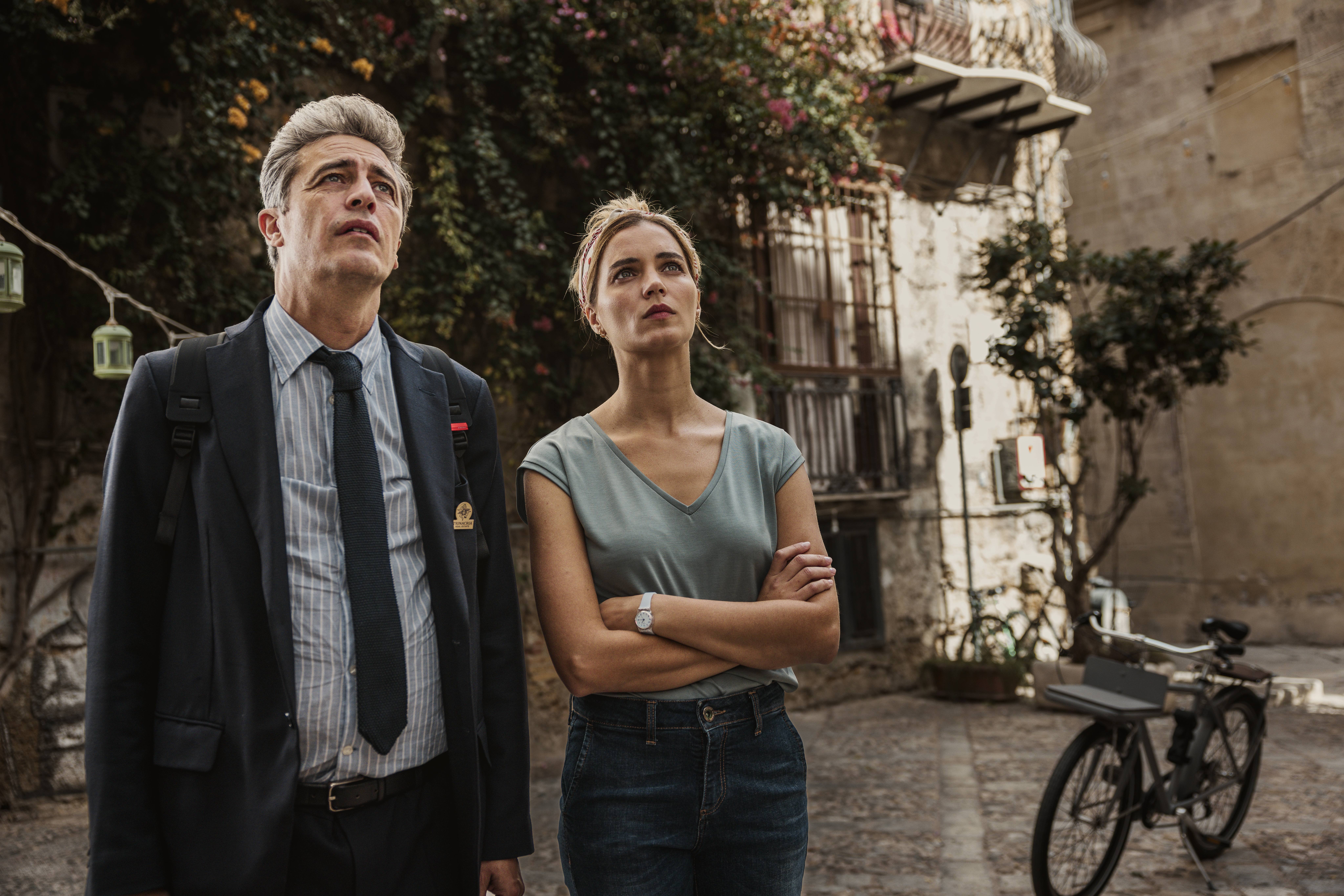
An image from the film Holy Cannoli (... che Dio perdona a tutti), featuring the two protagonists played by Pif and Giusy Buscemi
Even during the opening night of the ST. ALi Italian Film Festival, Pif, a “great lover of Sicilian ricotta”, did not give up his trademark irony.
“I tried the cannolo made for this evening [by Cannoleria di Giorgio Linguanti] and it’s acceptable, but we have a problem: you make them with cow’s milk ricotta!” he declared, causing the entire room to erupt in laughter.
He then turned to Ambassador Nicola Lener, who was present at the opening night, to officially ask him to “import Italian sheep” so that “real ricotta” could also be enjoyed in Australia.
In the film, almost guided by his unusual devotion to sweets, protagonist Arturo falls in love with Flora, the daughter of a famous pastry chef who is determined to strike out on her own, giving the comedy a romantic dimension as well.
But the girl is Catholic, a practising believer, and she pushes Arturo — who had always kept his distance from religion — towards the more human and, at the same time, more dangerous path: pretending.
The story soon begins to raise a more demanding question:
What happens when the performance of belief begins to have consequences for one’s conscience?
“I have some doubts about religion and about the way Italians experience Catholicism,” he tells me.
“I grew up with a Catholic education and, at a certain point, I began to feel that I was in crisis.
“For children of my generation, it was practically impossible not to be baptised. Today, on the other hand, it is increasingly common to choose not to be. My daughter, for example, is not baptised.
“When I was casting the child for the film, many of them didn’t even know the Our Father. For my generation, it was unthinkable not to know it by heart.”
“Personally, around the age of 25, I asked myself, ‘Am I Catholic because I truly believe, or simply because of family tradition?’
“And I realised that I was Catholic mainly because of the education I had received, not because I had ever really asked myself the right questions.
“Also, when the priest spoke, nobody could challenge him. Instead, I believe faith should also be based on doubt: asking questions is the healthiest thing.”
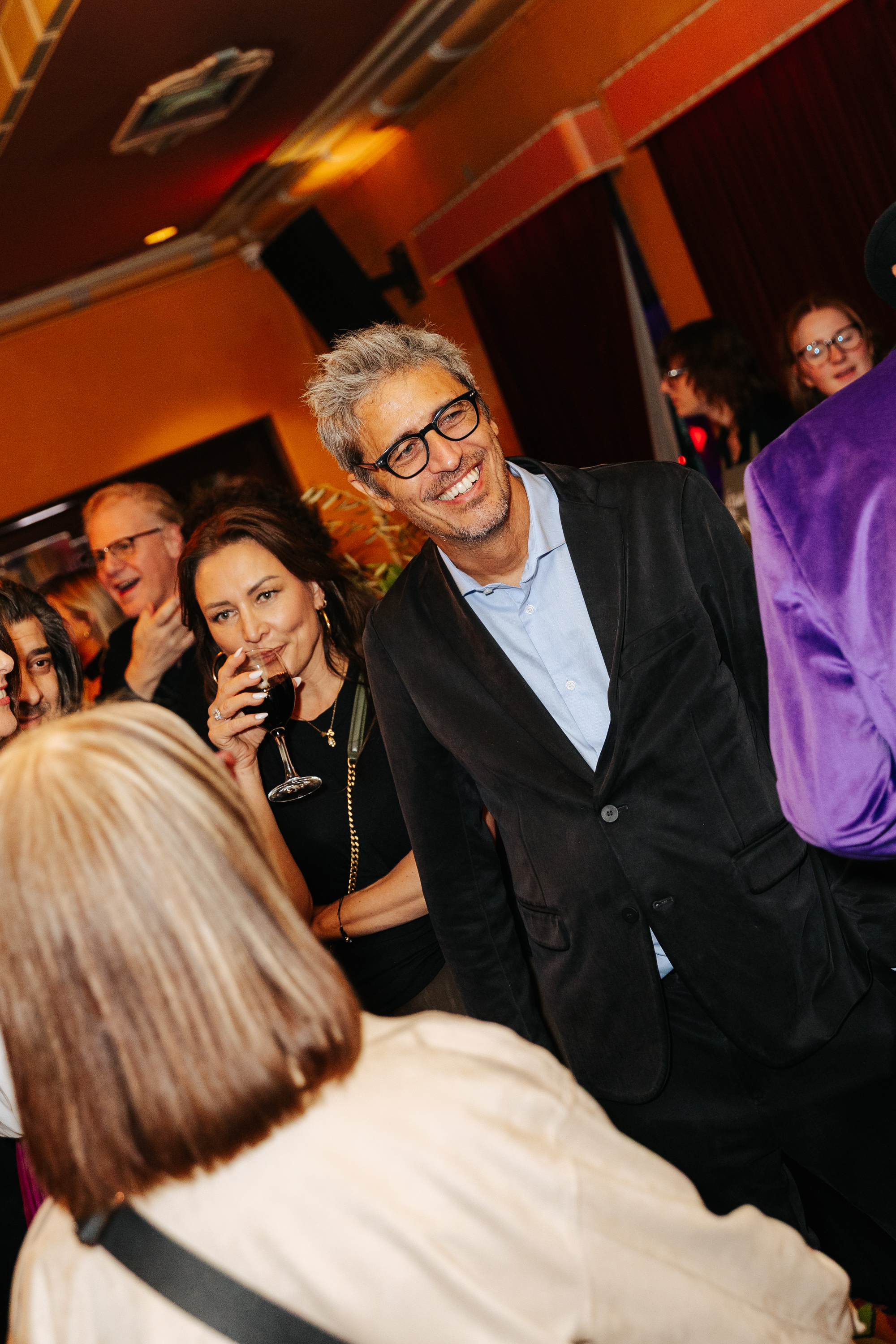
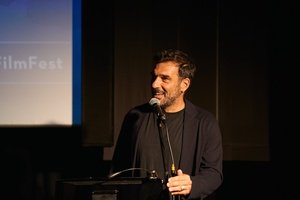
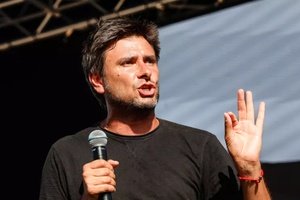
Pif during the Festival’s opening night in Melbourne. (Photo: Dijana from Theresa Harrison Photography)
In this latest film, the writer and director moves away from the now-familiar narrative of “Mafia Sicily” to take us into a popular comedy steeped in everyday faith, dialect, traditional sweets and religious rituals.
“We did a great deal of work to try to tell a different story and, over the past ten years, we have moved away from the more stereotypical narrative of Sicily and organised crime.
“You can see it in the historic centres of Palermo and Naples: once synonymous with danger, they are now full of tourists.”
And while on screen faith, when reduced to inherited formulas and family customs, can even provide a form of reassurance, in real life Pierfrancesco Diliberto describes himself as “agnostic”.
And, having no God to turn to, he continues to believe “in people”.
“Despite everything, and despite these very difficult times,” he adds.
“I always use the example of the motorway in Italy, where there is an emergency lane. When there is traffic, unfortunately it is sometimes used improperly, but most people continue to respect the rules and remain in their own lane.
“So, as long as that emergency lane is not full, I will continue to believe in people.”