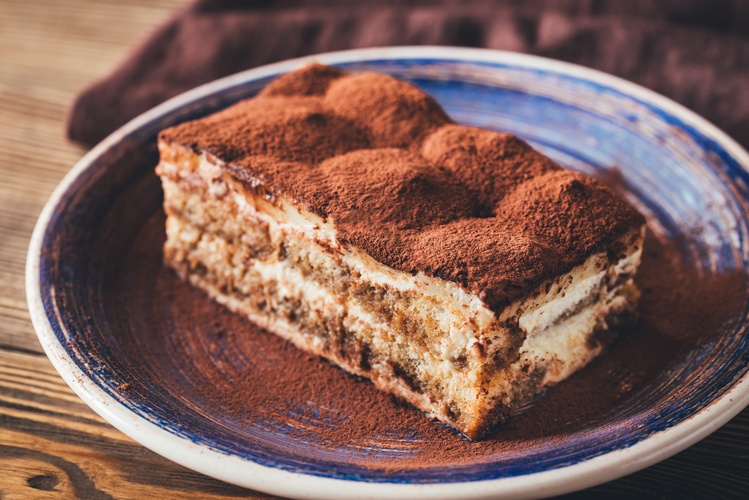
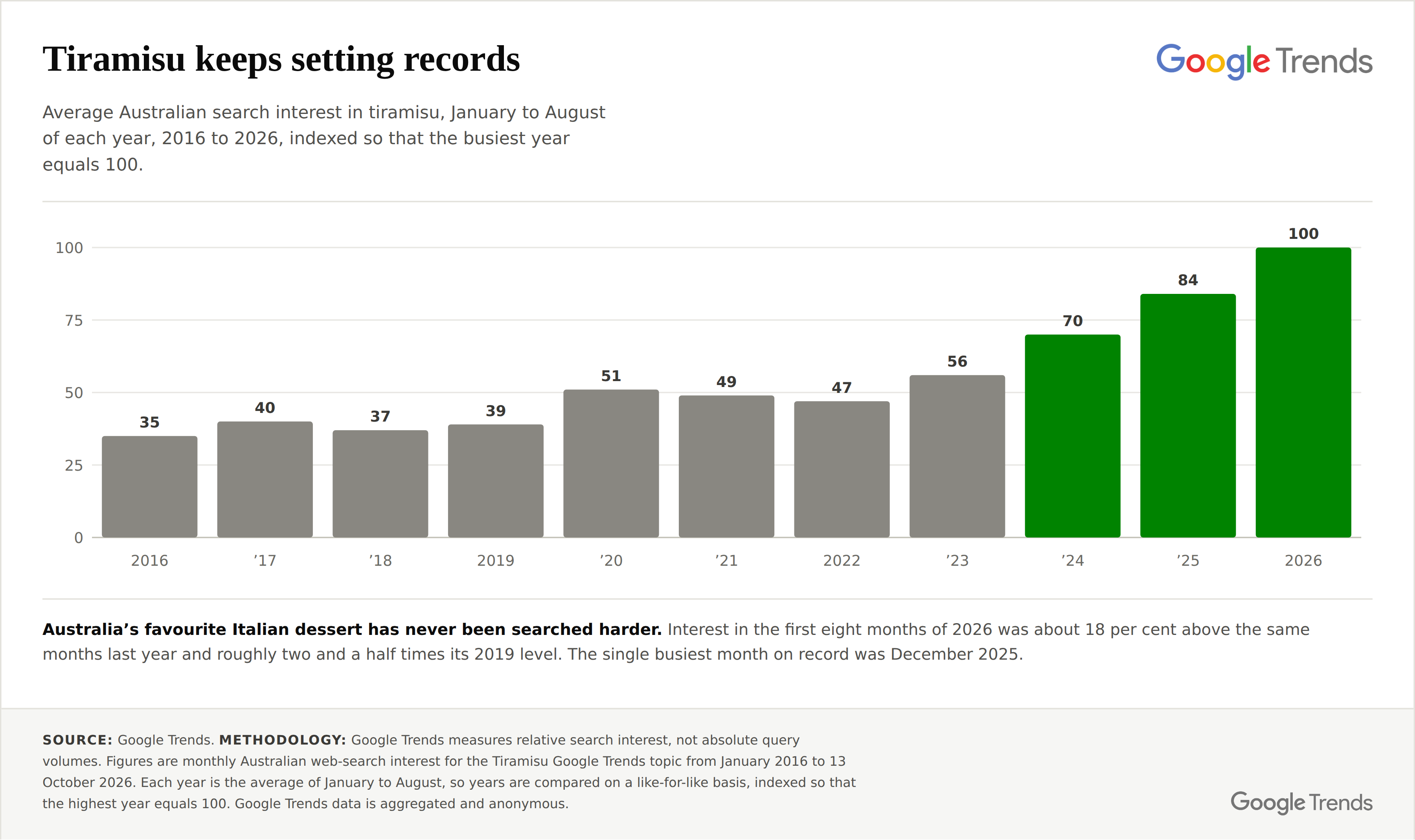
Australians have never searched for tiramisu as often as they do now. Google Trends data shows interest in the first eight months of 2026 running about 18 per cent above the same months last year and roughly two and a half times its 2019 level, with the single busiest month on record falling in December 2025.
Behind that headline, the data shows something more interesting than one dessert doing well. What Australians look up has shifted from finished dishes towards the ingredients that go into them.
The dessert that keeps climbing
Tiramisu holds steady for most of the year and then jumps every December, when Australians go looking for a Christmas dessert. Victoria records the strongest interest of any state, followed by Western Australia and New South Wales.
The related searches suggest buying as much as baking. Alongside “tiramisu recipe”, the fastest-rising searches of the past year are “tiramisu near me” and “tiramisu tray” — people looking for somewhere to buy one, and in a size that feeds a table.
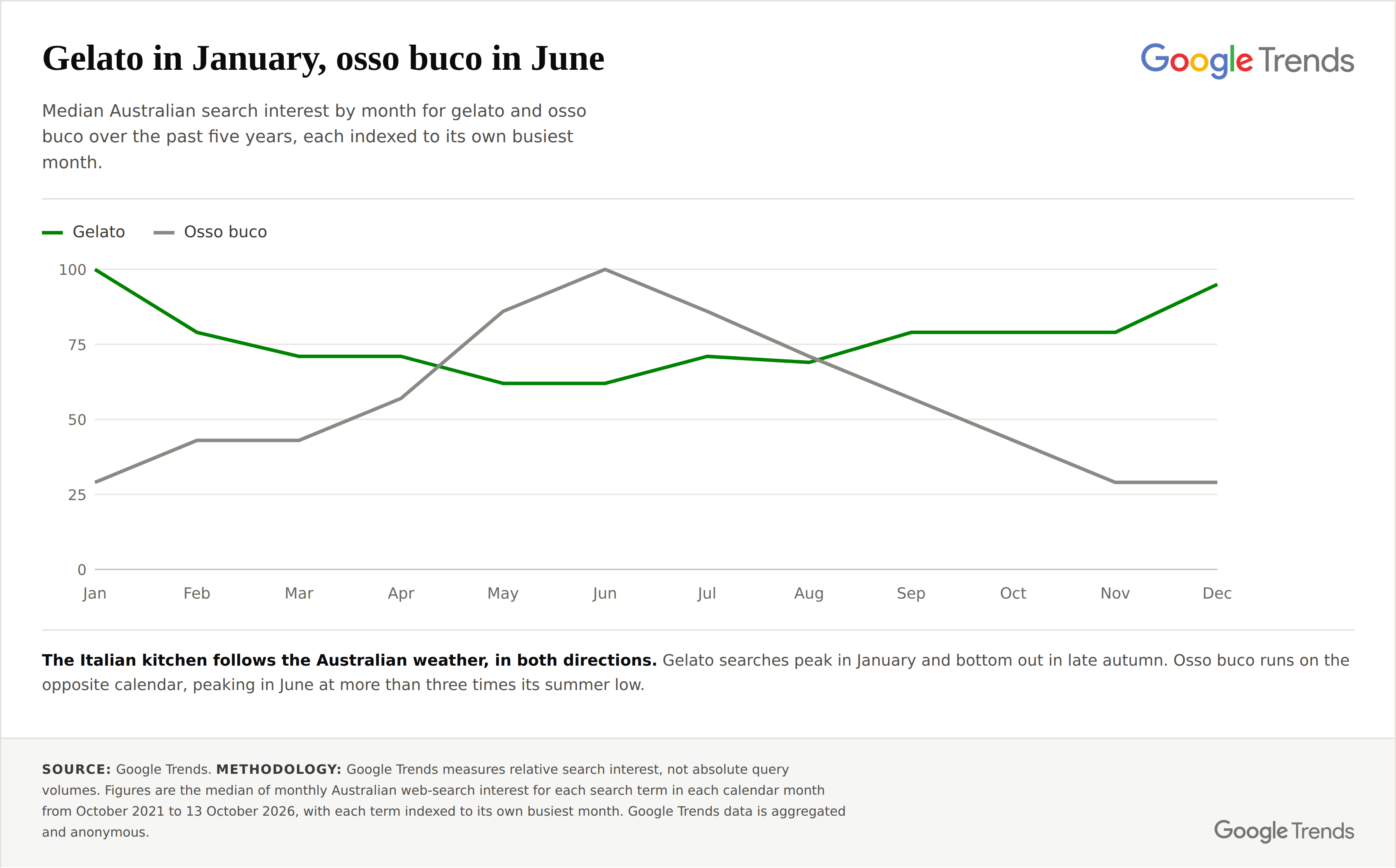
Gelato in January, osso buco in June
Italian food in Australia follows the weather, in both directions. Gelato searches peak in January and fall away to a late-autumn low. Osso buco runs on the opposite calendar, peaking in June at more than three times its summer level.
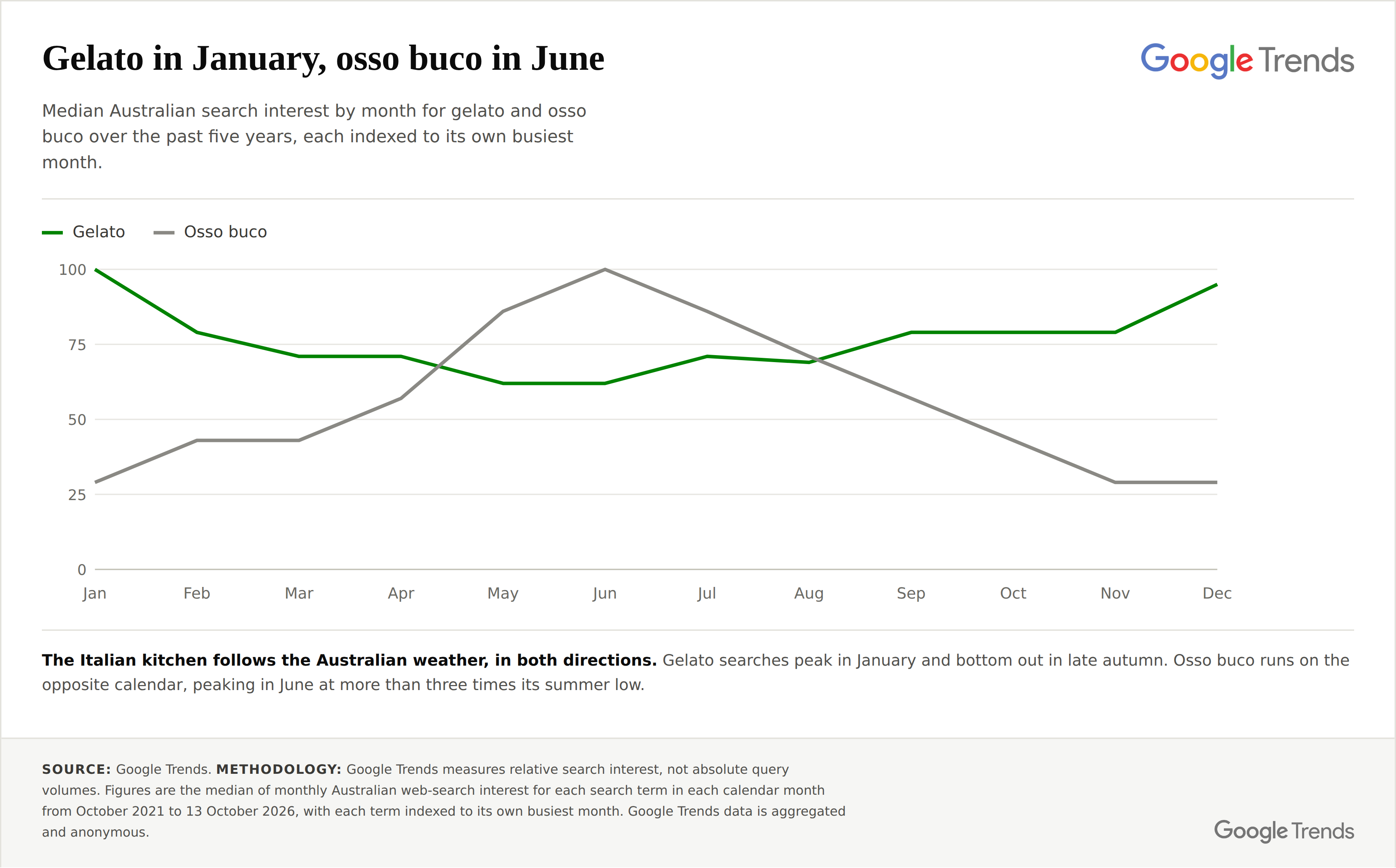
It is a useful reminder that the Italian calendar does not travel unchanged. In Italy, osso buco and gelato peak in the same months as they do here, but half a year apart on the Australian clock.
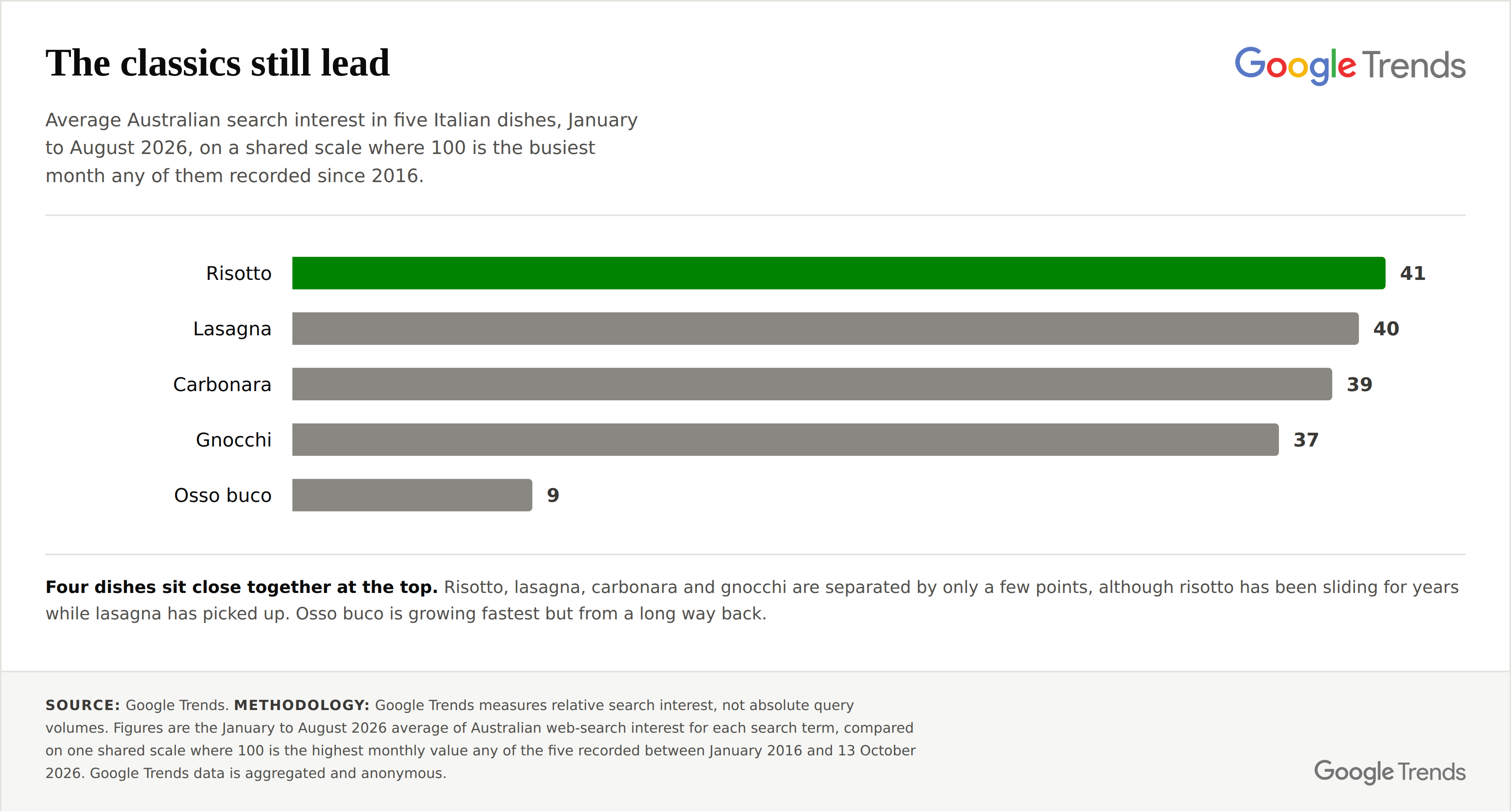
The classics still lead
Among the dishes tracked, risotto, lasagna, carbonara and gnocchi sit within a few points of one another. But they are heading in different directions. Risotto searches in the first eight months of 2026 were about a quarter below the same period of 2019, while lasagna has picked up about 19 per cent on last year.
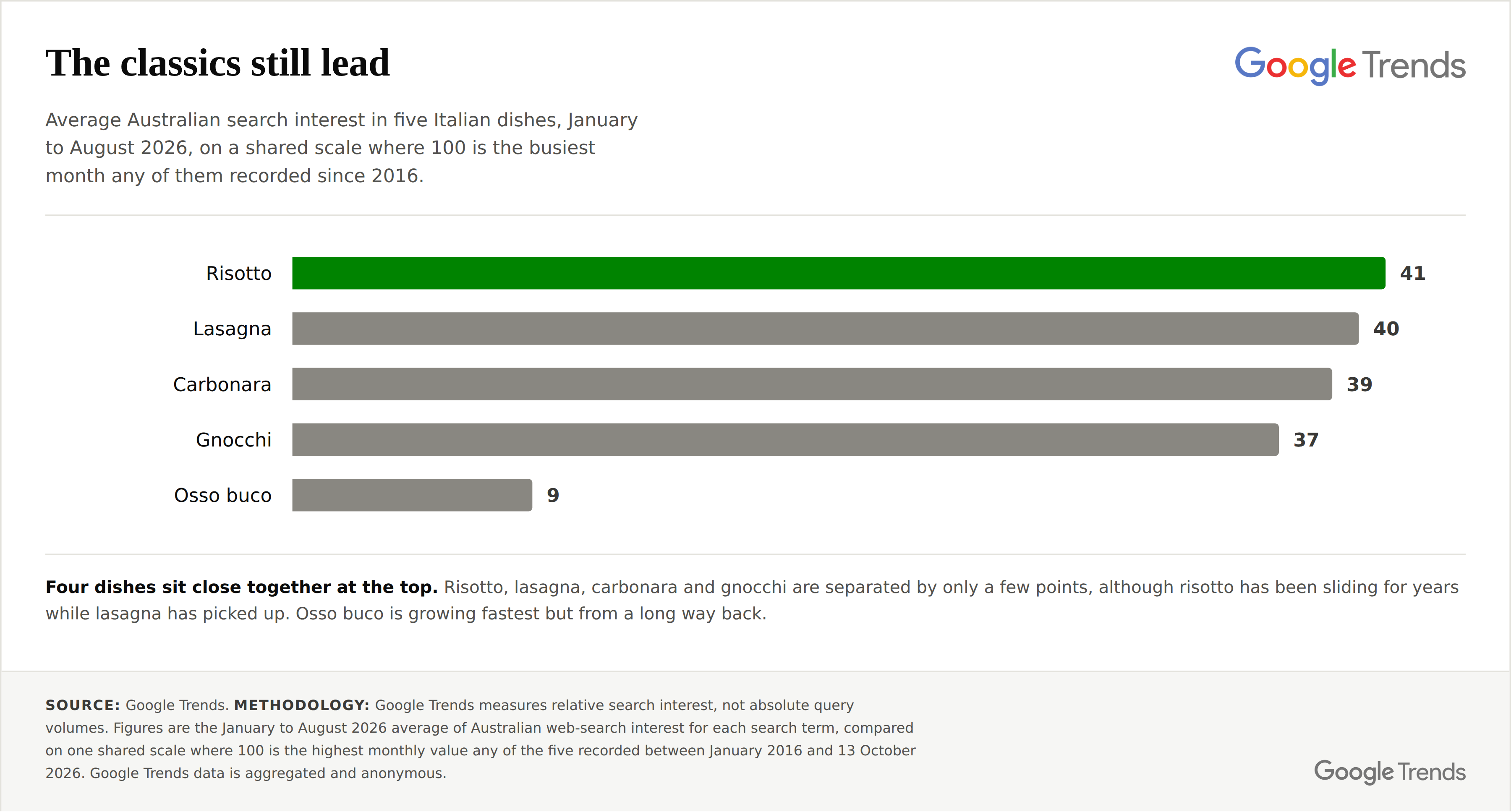
Osso buco is the fastest-growing dish on the list, with searches nearly four times their 2019 level, but it starts from a long way back and remains a fraction of the size of the big four.
The ingredients are where the growth is
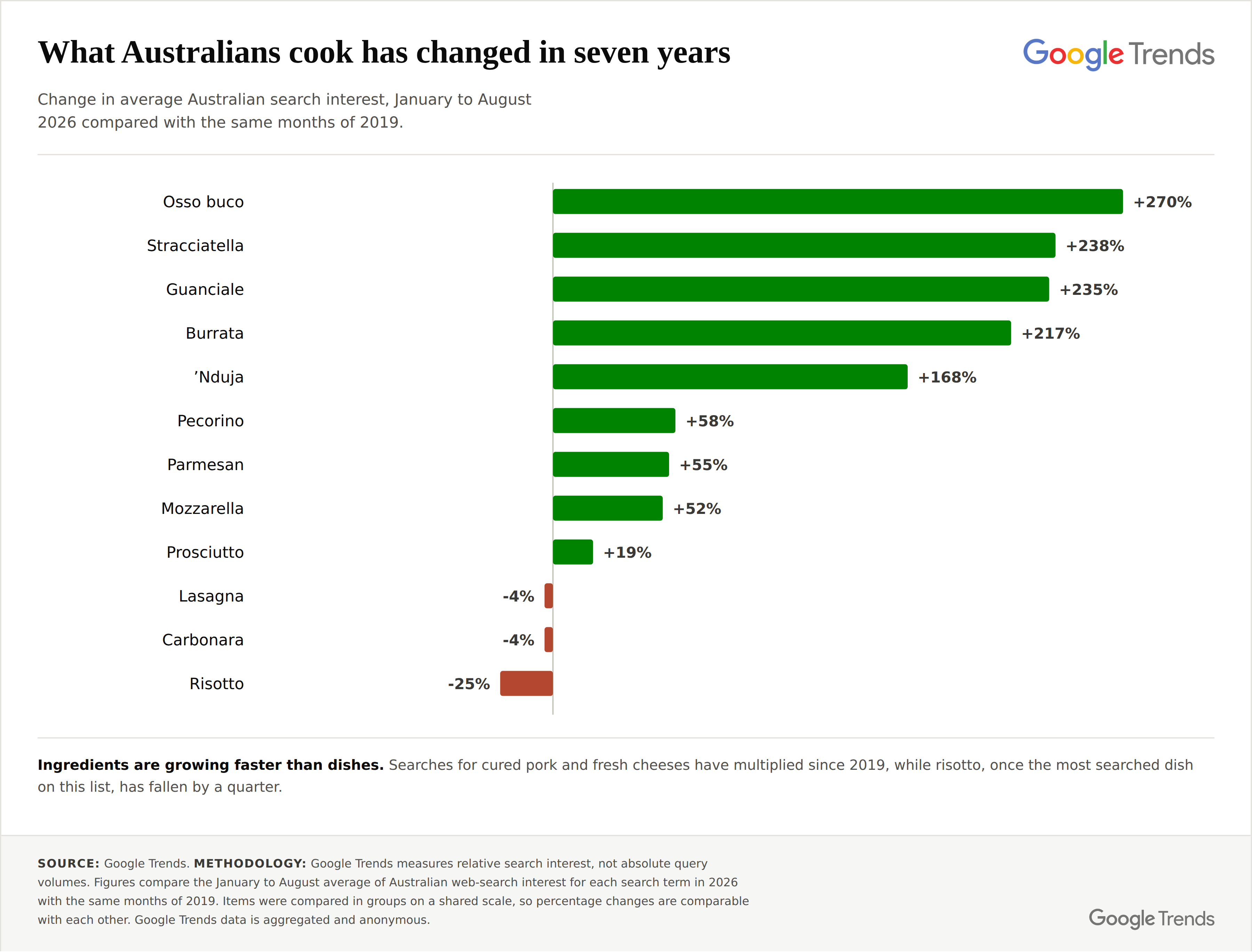
The clearest change is in what goes into the dish rather than the dish itself. Searches for stracciatella, guanciale and burrata have all more than tripled since 2019, and ’nduja, the spicy spreadable salami from Calabria, is about two and a half times its 2019 level.
Parmesan and mozzarella, already the biggest of the Italian cheeses in Australian searches, are both at record levels, up more than half on 2019. Pecorino is smaller but growing at a similar rate.
Burrata’s related searches show how quickly it has moved from specialty to staple, and then to a night out. “Woolworths burrata” and “burrata Coles” are among the most common, while the fastest-rising include burrata bars in South Melbourne and Moonee Ponds, and dishes such as grilled peach and burrata salad.
What it adds up to
Taken together, the data describes a country cooking Italian food with more confidence. The dishes everyone already knows have plateaued or slipped. The things that would once have required a trip to a specialty deli — a cured pork cheek, a ball of burrata, a spoonful of ’nduja — are the ones being looked up, and increasingly found in the supermarket.
About the data
Figures are from Google Trends for Australia and were collected on 13 October 2026. Google Trends measures relative search interest on a 0–100 scale rather than absolute search volumes, so numbers can only be compared within the same chart. Comparisons between years use the January to August average of each year, so 2026 is compared with earlier years on a like-for-like basis. Tiramisu is measured as a Google Trends topic, which groups related searches together; other items are measured as search terms. Seasonal patterns use the median of each calendar month over the past five years. Google Trends data is aggregated and anonymous.