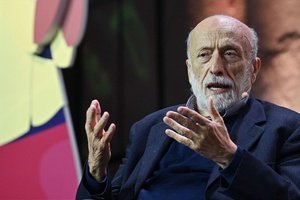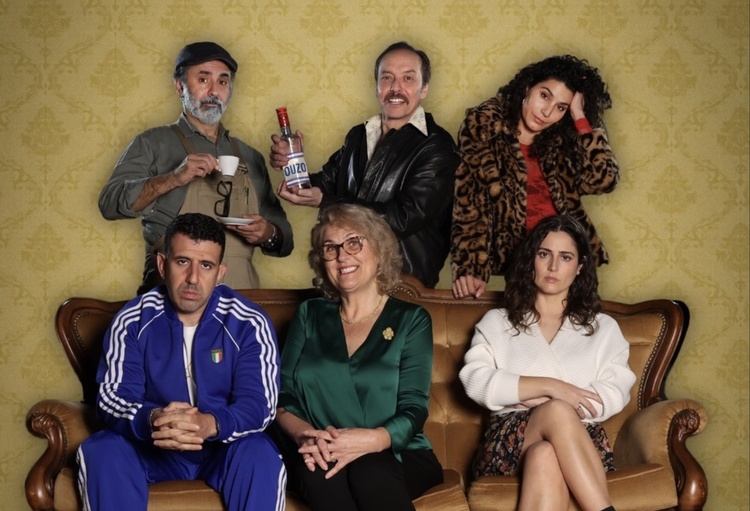
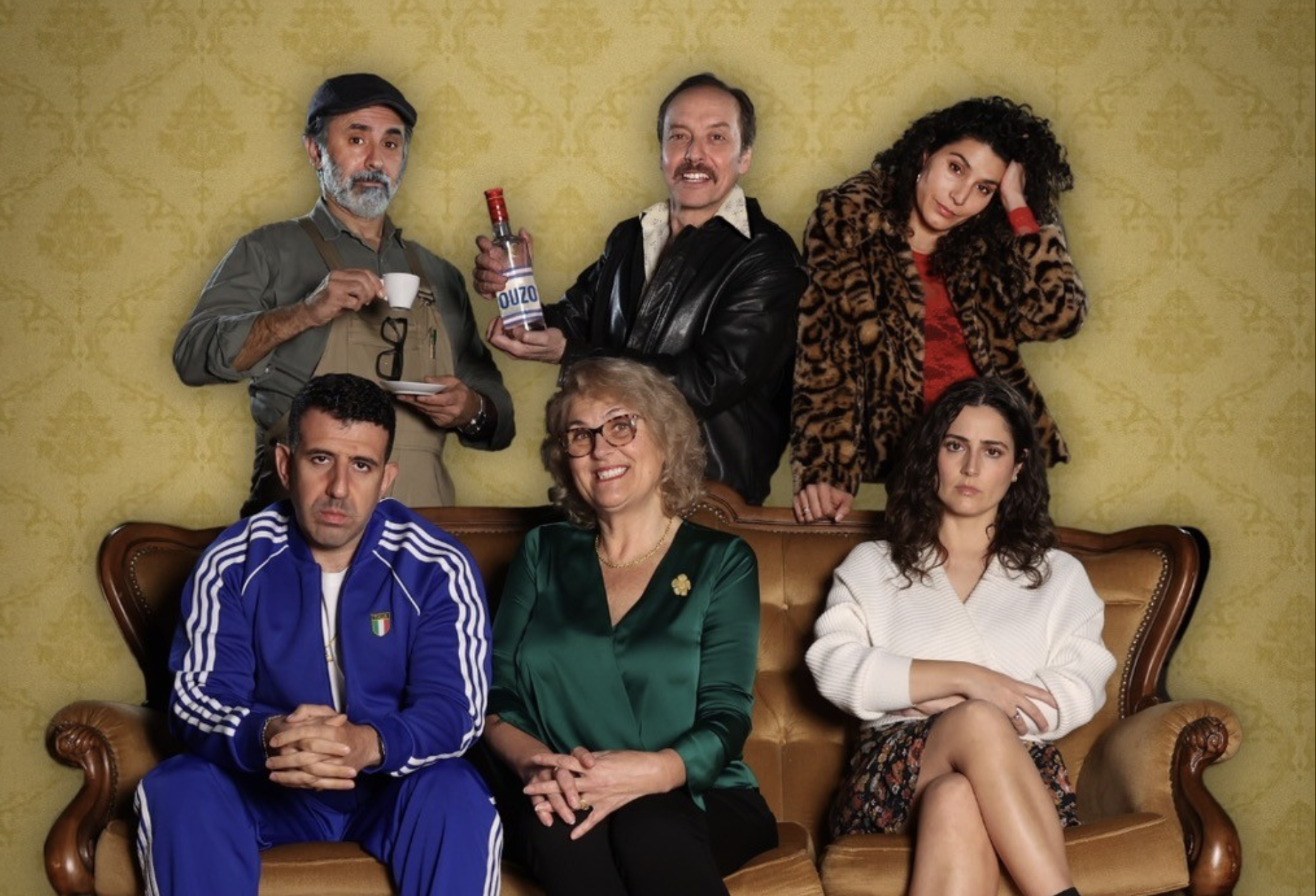
He chose to start again with family and with a story that smells of tomato sauce and mothers who still iron their adult children’s underwear. With The Italian Divorce, on stage at the Williamstown Italian Social Club, Lotito marks his return to the scene with a sharp and tender comedy that explores relationships, identity and freedom – or, rather, the impossibility of ever fully attaining it.
The production marks his return to acting and playwriting. The show is a comical and emotional story about love, parental expectations and the very Italian art of complicating life in the name of family.
Lotito’s career began with these very cultural clashes, with sketches inspired by his childhood spent between Brunswick and Reservoir. A world made up of parents speaking Italian and dialect, children trying to break free and long Sundays defined by never-ending lunches. It’s a world he brought to the big screen with Big Mamma’s Boy, a sweet and funny tribute to a generation suspended between two identities.
In 2012, he moved to Los Angeles, where he worked with actors like Jason Lee, Justin Long and Hilarie Burton. Lotito went on to direct Growing Up Smith, a film widely praised by critics, while continuing to write and produce. But something was missing.
“I worked for years behind the camera,” he said, “but deep down, I missed the stage, the direct connection with the audience. Then, before undergoing heart surgery, I asked myself, ‘What would I regret if I didn’t wake up?’
“I realised I had to go back to acting.”
Part of the answer came in the form of a forgotten script tucked away in a drawer. It was an idea written years earlier for a possible sequel to Big Mamma’s Boy. “It told the story of a man who leaves his partner and moves back in with his parents. It felt perfect for the moment I was living through,” he shared.
“And when I randomly ran into Rosanna Morales, who had played my mother thirty years ago in The Wedding, everything came together.”
That idea became The Italian Divorce, a comedy produced by Joe Accurso, with Lotito also taking the stage in the role of Bruno, a retired carpenter who still works cash-in-hand jobs on the side.
Alongside him is a carefully chosen cast: Davide Mollica plays Pino, an insecure son caught between his mother’s demands, his father’s judgment and everyone’s expectations - except his own.
Rosanna Morales plays Lucia, the iron-fisted matriarch armed with a wooden spoon, who firmly believes that “divorce” is a dirty word. Louisa Mignone plays Teresa, Pino’s independent and proudly single sister. Jeanette Coppolino is Lisa, Pino’s wife, tired of her immature husband and ever-present mother-in-law.
Steve Mouzakis plays Dimitri, the nosy Greek neighbour and backyard philosopher, always equipped with ouzo and unsolicited wisdom.
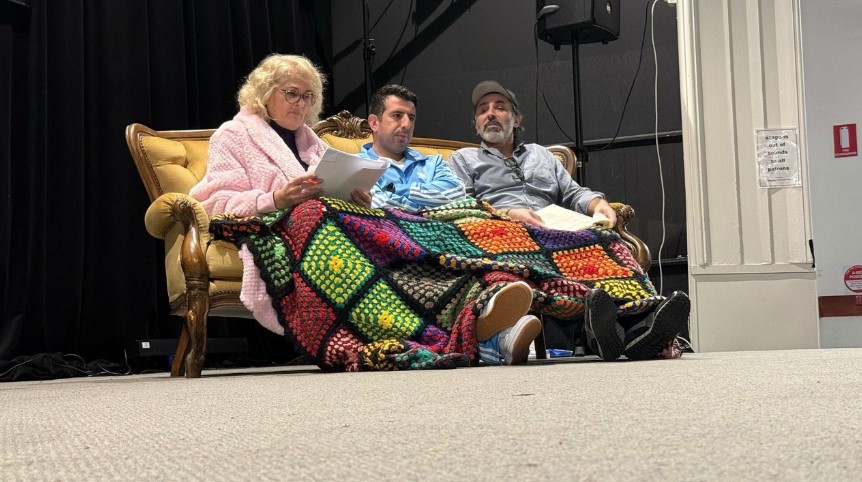
From left to right: Rosanna Morales, Davide Mollica and director Frank Lotito, who play Lucia, Pino and Bruno, respectively
“It’s a comedy about love, identity and the inability to let go,” Lotito added. “It’s for anyone who’s tried to free themselves from their parents’ expectations and ended up with a plate of pasta and more questions than answers.”
In the play, Pino, now 36, is kicked out by his wife and moves back in with his parents, who, ironically, live next door. His mother goes back to ironing his underwear, his father offers advice as if it were still 1972, his sister wants him to move overseas and his wife insists he finally cut the cord. Around him spins a microcosm of family life that is affectionate and intrusive, tragic and comic.
The show, running between Friday, August 29 and Sunday, August 31 with the Saturday show nearly sold out, demonstrates a clear hunger for authentic stories within the local community, told with humour and a sincere love of theatre.
“Artificial intelligence will change everything, even in our industry, it probably already has,” said the director. “But one thing it will never replace is live performance. And in times of crisis, people need to laugh. It’s always been that way.”
In a kind of generational short-circuit between suffocating love and kitchen-table wisdom, The Italian Divorce reveals a universal truth: with family, absurdity is the most honest language. And behind every overbearing mother lies a messy, but powerful form of love.