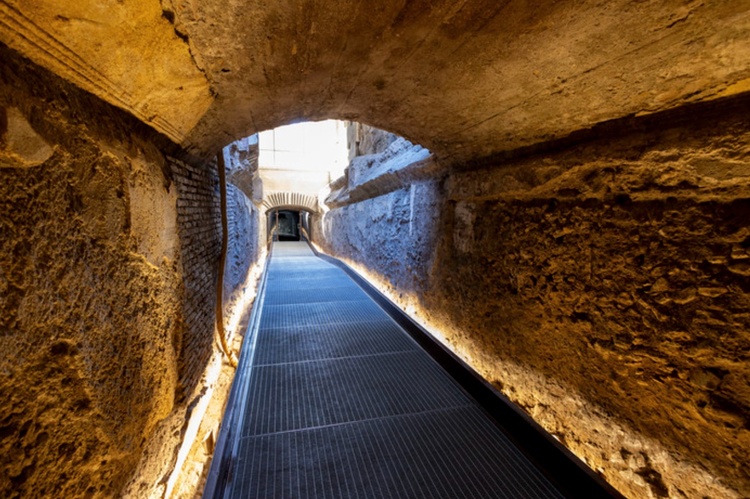
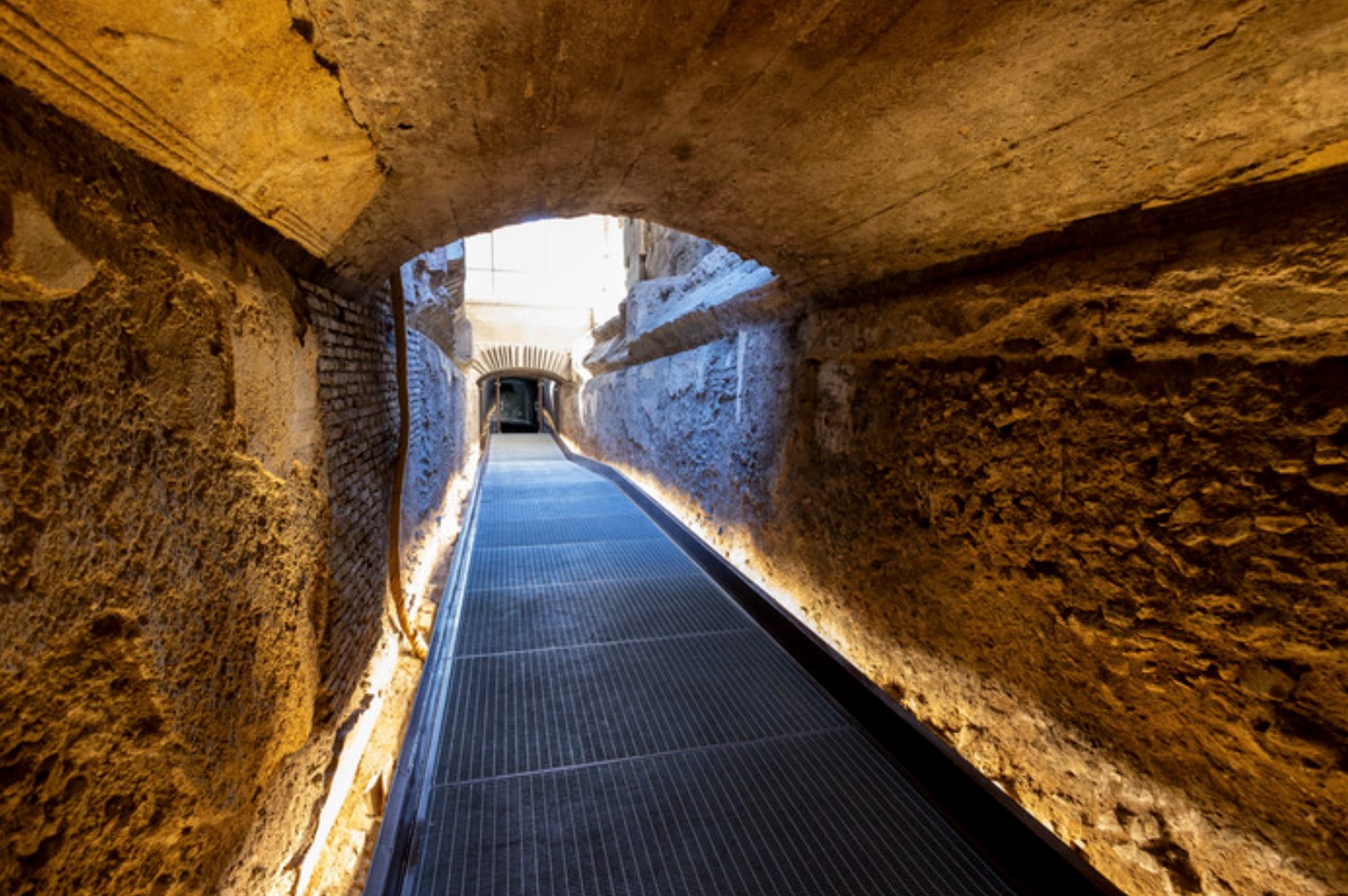
The passage is named after the evil ‘gladiator emperor’ and successor of Marcus Aurelius who was memorably portrayed by Joaquin Phoenix in Ridley Scott’s Gladiator.
Commodus may not have murdered his father Marcus Aurelius as shown in the film, but was, according to Roman historian Tacitus, himself murdered by his personal gladiator and slave Narcissus after incurring the displeasure of most of Rome.
The restoration has fully restored the ancient surfaces: marble-clad walls, where traces of the metal clamps that supported the slabs can still be seen along with stucco decorations on the vault featuring mythological scenes from the myth of Dionysus and Ariadne.
On the niches at the entrance is more art depicting scenes from the arena spectacles.
The opening of the Passage of Commodus is a major new restoration milestone for the Colosseum Archaeological Park.
“We restored the section inside the monument, then the underground corridor continued outside, but no one knows where it led. There are several hypotheses,” said park director Alfonsina Russo
“The first is that it led to the imperial palaces, meaning that the emperor and the imperial family entered the monument from the imperial palaces, unseen by the public.
“The other hypothesis is that it led to the ludus magnus, the gladiators’ training ground and gymnasiums.”
About thirty meters of the passageway have currently been opened, but a second restoration project is expected to begin by the beginning of the new year, involving the section of the tunnel that extends beyond the perimeter of the Colosseum.
The public will be able to observe the restoration of the painted plaster, marble and stucco work almost live, looking through the glass door at the end of the tour.
This will be a unique opportunity to combine the experience of reliving the emperors’ exclusive path during the arena spectacles with the opportunity to share in the care, protection and conservation efforts led by the Colosseum Archaeological Park.
But the Passage of Commodus, MIC Museums General Director Massimo Osanna noted, “will be a place that breaks down cognitive barriers, which is a bit of a problem with our archaeological sites: they often don’t speak, they often don’t tell their stories”.
“Here, however, thanks to a clever use of digital technology, you can see what the passage was like and what decorations have now been lost, with a beautiful reconstruction.
“This is the purpose of the NRRP: to restore cultural sites to everyone and make them belong to everyone.”
ANSA