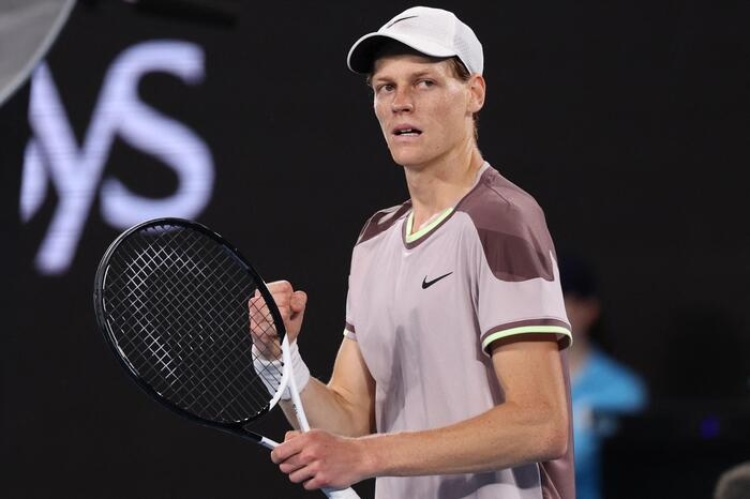
ROME - At a press conference at the Foro Italico on Friday, Jannik Sinner addressed the most pressing topics surrounding his game and the state of tennis at large — prize money distribution, the ATP rankings and his increasingly central rivalry with Carlos Alcaraz — with characteristic directness.
The world number one arrived in his customary measured tone, but his words carried real weight, touching on some of the most sensitive fault lines in the sport today.
On the financial front, Sinner reiterated a view shared by many of the tour's leading figures: the way Grand Slam revenue is distributed needs to change. The issue has moved back to the centre of debate in recent weeks, and the Italian champion did not shy away from it, reaffirming a social awareness that has become increasingly evident in his public statements.
His comments on the rankings were equally telling. Sinner gave the clear impression that he has no interest in treating the world number one position as something to be chased week after week — rather, as a natural byproduct of performing well.
“I play to win titles, not to chase the number one ranking,” he said, summing up a simple but grounded philosophy: what matters are the tournaments that truly count, not an obsessive accumulation of points.
The conversation inevitably turned to his rivalry with Alcaraz, now firmly established as the defining contest of tennis's new era. Here too, Sinner was measured.
“We play for titles, not for the rankings,” he said again, making clear that his rivalry with the Spaniard should be read primarily in sporting terms. No manufactured tension, no personal fixation — just the quiet understanding that two champions of their calibre are destined to compete for the sport's biggest prizes.
The picture that emerges from the Foro Italico is of a Sinner who is mature, focused and fully settled into his role as the standard-bearer of Italian and world tennis.
His words paint a portrait of an athlete who refuses to be drawn into controversy, who looks beyond the numbers on a ranking sheet, and who views his rivalry with Alcaraz as a spur to improvement rather than a source of pressure.
In Rome, then, Sinner sent an unambiguous message: the court remains his priority, and everything else comes second. In a moment when tennis is defined by ever-tighter competition — financial and sporting alike — his voice continues to stand out for its balance and clarity.
In the end, it will always be the court that has the final say. And Sinner, poised between ambition and clear-headedness, has already shown he has the shots to stay where tennis truly matters.
ANSA