MELBOURNE – For 25 years, Monash University’s Prato campus has been bringing Australian students, researchers and academics from around the world to the Tuscan city, driven by a growing commitment to “connect ideas, cultures and people in the heart of Europe”, as the university puts it.
Palazzo Vaj, home to Monash University in Prato since 2001, may initially have been something of a novelty for locals, but its presence has long since become part of everyday life. Residents are now accustomed to seeing Australian students filling the historic centre and becoming involved in the local community.
Among them are David Hickey and Oskar Cislo, who last year took part in the international program for pharmacy students, returning home with not only university credits, but also new connections, a different professional perspective and an even stronger relationship with Italy.
Both are now in the fourth year of their pharmacy degree and were part of the first group from their course to take part in the program at Monash’s Italian campus. The initiative proved so successful that it has already been expanded for 2026, reflecting growing interest in an experience that combines academic learning with cultural immersion.
“I wanted to experience what it was like to study and work in a different country, especially in a field like pharmacy that can be transferred internationally,” Oskar says. “But I also wanted to experience Italy, meet new people and get a real taste of the Italian lifestyle. It was an incredible experience.”
For David, the motivation also came from his mother’s Italian heritage, which has always fuelled his interest in the country’s culture and language. He would like to “learn Italian properly, especially because my mum still has several Italian friends she keeps in touch with. The problem is that, with full-time university and work, it’s difficult to find the time.”
His experience in Prato strengthened that connection with Italy, giving David an even greater sense of belonging to his mother’s culture.
During their stay, the pharmacy students completed a unit focused on research methods, including how to conduct a research project and write a scientific paper. Working in groups, they were then assigned research topics relevant to the local context.
“David and I, for example, looked at the differences between pharmacy degrees in Italy and Australia,” Oskar explains. “We found that in Italy, to work as a hospital pharmacist in a clinical role and have direct input into patient care, you need to complete another five years of postgraduate study. In Australia, that isn’t required because the degree already includes the clinical training needed to work in a hospital.”
To explore the topic further, Oskar and David focused their research on Tuscany, comparing courses offered by universities in the region with their Australian counterparts.
“We visited a community pharmacy in Prato as well as the local hospital. On both occasions, we were able to speak to pharmacists about their studies, how they qualified and their career progression, and compare that with what we know in Australia,” they explain.
“We also met the president of the Italian equivalent of the pharmacists’ professional association,” David adds. “He came to speak to us on several occasions and also showed us the pharmacy he owns. We also attended a talk by an American doctor, who gave us a really interesting lecture. From a professional perspective, it was an incredibly valuable experience.”
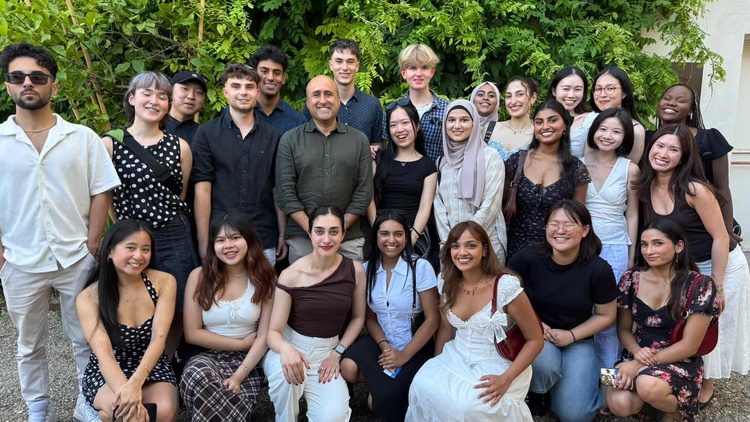
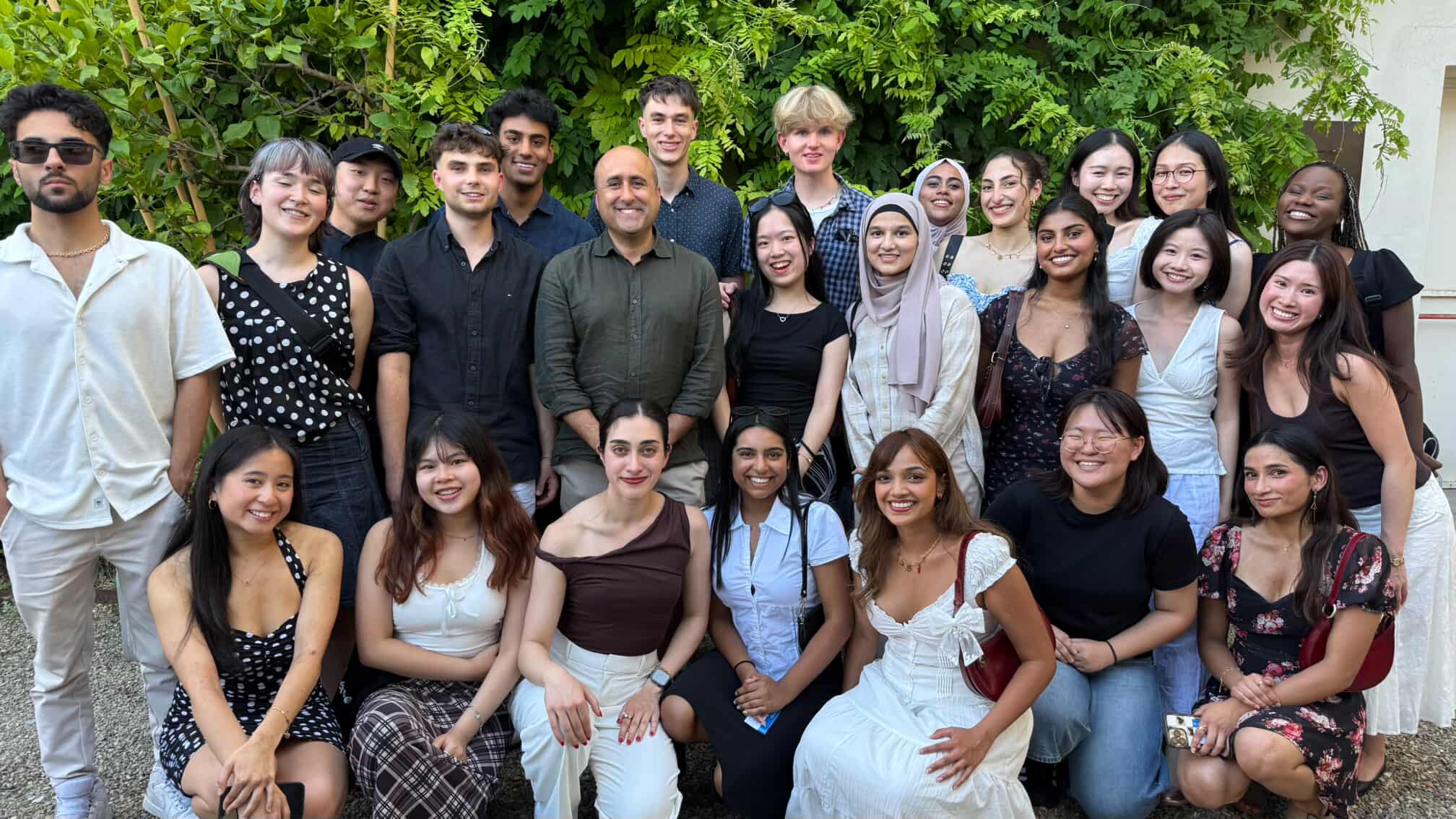
During their three-week stay, the students were also offered a range of activities, including conversation sessions with Italian university students, cooking classes where they met local restaurateurs and learned to make pizza and pasta, as well as guided tours of Prato and trips to other parts of Italy.
“It was honestly one of the highlights of my life,” Oskar says. “I met so many people. The study program was really well paced – not too stressful, but still very stimulating.”
“Italy is completely different from what we’re used to in Australia, and it was amazing to immerse ourselves in another culture and travel around the country.”
The different approach to social life was perhaps one of the things that struck the students most.
“Sitting down for a good meal, taking the time to have a coffee, having a break during the day and making time for family and friends, rather than constantly being caught up in the stress and rush that we often experience here,” Oskar says.
David was equally impressed by the Italian ability to enjoy the moment and by what he describes as a “more relaxed” approach to daily life, with time set aside for breaks, family and friends.
“Obviously, I was there on holiday, so my perception might be a little influenced by that,” he acknowledges. “But even watching the locals, it seemed like there was much less of the hustle and bustle we have here in Australia.”
Another aspect that struck Oskar – as it probably does many visitors to Italy – was “the love Italians have for their own culture and food”.
“Everyone is so proud of their traditions and keen to share them with other people.”
The experience has broadened the horizons of both students, who would not rule out spending time in Italy in the future.
“It’s definitely something I would seriously consider,” David says. “Obviously, I’d have to commit much more to learning the language, but seeing that lifestyle first-hand was amazing.
The main challenge would be the language itself, particularly because, as a pharmacist, it wouldn’t be enough just to speak conversational Italian. I’d also need to learn all the specific medical and pharmaceutical terminology.”